

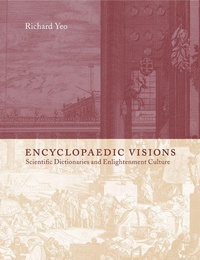
Encyclopaedic Visions
Scientific Dictionaries and Enlightenment Culture
Published on 10. June 2010
Book
Paperback/Softback
360 pages
978-0-521-15292-1 (ISBN)
Description
The eighteenth-century English dictionaries of arts and sciences claimed to contain all knowledge that a person of education should possess. These early encyclopaedias responded to the explosion of information by reducing knowledge to essentials, stressing the need for a coherent account of the sciences, and for some time excluding biography and history. Richard Yeo places these scientific dictionaries in a rich cultural framework of debate that includes the arrangement of knowledge, the Republic of Letters, the Enlightenment public sphere, copyright issues and the specialisation of science. He discusses dilemmas involved in the quest for knowledge to be both organised and readily available, examining assumptions about the organisation, communication and control of knowledge in these works. Elegantly illustrated and accessibly written, Encyclopaedic Visions provides a major contribution to Enlightenment studies and the history of ideas in general.
Reviews / Votes
Review of the hardback: 'Richard Yeo's ambitious study of a significant segment of encyclopaedic development is a contribution to the highly political debate about the dissemination and control of knowledge ... His book is both serious and fascinating. It catches exactly the mixture of intellectual excitement and commercial enterprise that in the Enlightment fuelled the search for the 'Best Book in the Universe''. Judith Hawley, The Guardian Review of the hardback: '... sensitive and engaging study of Enlightenment encyclopaedias'. Nature Review of the hardback: 'Richard Yeo's ambitious study of a significant segment of encyclopaedic development is a contribution to the highly political debate about the dissemination and control of knowledge ... his book is both serious and fascinating. It catches exactly the mixture of intellectual excitement and commercial enterprise that in the Enlightenment fuelled the search for 'the best book in the universe'. The Guardian Review of the hardback: 'Encyclopaedic Visions is thoroughly researched and very well written ... is highly recommended for academic libraries supporting history of science departments, library and information science programs, or history departments with an emphasis on intellectual history or history of the book.' Ursula Ellis, University of Oklahoma Review of the hardback: '... delightful and informative book ...' Australian Association for History, Philosophy and Social Studies of Science Review of the hardback: '... there is ... much to be learnt from this excellent study of the work of British enlightenment encyclopaedists.' Australian Journal of Politics and History Review of the hardback: 'It is a wonderful virtue of Yeo's work that it uses one text to cut across so many pressing problems of Enlightenment science and literary culture ... a fundamentally groundbreaking work.' BrillMore details
Language
English
Place of publication
Cambridge
United Kingdom
Target group
Professional and scholarly
Product notice
Paperback (trade)
Illustrations
Worked examples or Exercises
Dimensions
Height: 246 mm
Width: 189 mm
Thickness: 19 mm
Weight
696 gr
ISBN-13
978-0-521-15292-1 (9780521152921)
Copyright in bibliographic data and cover images is held by Nielsen Book Services Limited or by the publishers or by their respective licensors: all rights reserved.
Schweitzer Classification
Other editions
Additional editions
Book
03/2001
Cambridge University Press
€44.00
Shipment within 15-20 days
Person
Content
Introduction: the encyclopaedic tradition; Part I: 1. Encyclopaedias in the Republic of Letters; 2. Scientific dictionaries and 'compleat' knowledge; 3. Containing knowledge; Part II: 4. From commonplace books to encyclopaedias; 5. 'The best book in the universe': Ephraim Chambers' Cyclopaedia; 6. Communicating the arts and sciences; 7. The Encyclopaedia Britannica and the Scottish Enlightenment; Part III: 8. Copyright and public knowledge; 9. Why dedicate an encyclopaedia to a king?; 10. Editors and experts; Conclusion.