

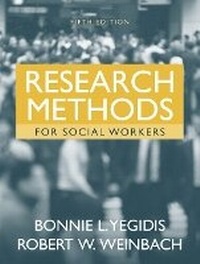
Research Methods for Social Workers
5th Edition
Published on 7. November 2005
Book
Paperback/Softback
360 pages
978-0-205-40818-4 (ISBN)
Description
This research methods text for social work is accessible to students in level and writing style, and its paperback format makes it less expensive than most texts on the market.
The authors are social work instructors who understand the realities of social work practice and have included many social work practice examples. The text is ideal for a one-semester or quarter research methods course for undergraduate or graduate students with little or no prior knowledge of research. Qualitative research methods are discussed and appropriate examples are offered throughout the book, not just in a single chapter.
The fifth edition includes new information on needs assessment, how quantitative and qualitative methods can be used together, more information on ethical issues throughout the text and an updated literature review section.
The authors are social work instructors who understand the realities of social work practice and have included many social work practice examples. The text is ideal for a one-semester or quarter research methods course for undergraduate or graduate students with little or no prior knowledge of research. Qualitative research methods are discussed and appropriate examples are offered throughout the book, not just in a single chapter.
The fifth edition includes new information on needs assessment, how quantitative and qualitative methods can be used together, more information on ethical issues throughout the text and an updated literature review section.
More details
Edition
5th edition
Language
English
Place of publication
United States
Publishing group
Pearson Education (US)
Target group
Professional and scholarly
Dimensions
Height: 241 mm
Width: 10 mm
Thickness: 10 mm
Weight
508 gr
ISBN-13
978-0-205-40818-4 (9780205408184)
Copyright in bibliographic data and cover images is held by Nielsen Book Services Limited or by the publishers or by their respective licensors: all rights reserved.
Schweitzer Classification
Other editions
New editions
Bonnie L. Yegidis | Robert W. Weinbach
Research Methods for Social Workers
Book
06/2008
6th Edition
Pearson
€80.65
Article exhausted; check for reprint
Content
Most chapters conclude with "Summary," "For Discussion," and "References."
Preface.
About the Authors.
I. RESEARCH AND SOCIAL WORK PRACTICE.
1. Towards Evidence-Based Practice.
Historical Antecedents.
Research and Practice - More Similar than Different.
Alternative Knowledge Sources.
Other Problems with Alternative Knowledge Sources.
The Scientific Alternative.
Types of Knowledge.
Basic and Applied Research.
Quantitative and Qualitative Research.
The Traditional Scientific Research Process.
The Environment for Scientific Social Work Research.
2. Ethical Issues in Research.
Treatment of Research Participants.
Other Ethical Obligations of Researchers.
II. THE PLANNING STAGES.
3. Research Problems and Questions.
Why We Begin with Research Problems.
Selecting Research Questions.
4. Finding and Using Existing Knowledge.
What Is the Review of Literature?
Purpose of the Review of Literature.
Potential Sources.
Other, More "Questionable" Sources.
Organizing the Product.
Writing the Report.
5. Focused Research Questions and Research Hypotheses.
Focused Research Questions.
Research Hypotheses.
III. RESEARCH DESIGNS.
6. Definitions and General Characteristics.
What Is a Research Design?
Design Nomenclature.
Cross-Sectional, Pretest--Post-test, or Longitudinal
Exploratory, Explanatory, or Explanatory
What is a "Good" Research Design?
7. Common Methods for Acquiring Research Data.
Secondary Data Analysis.
Original Data Sources.
8. Other Ways to Describe Research.
The Survey.
The Case Study.
Grounded Theory.
Content Analysis.
Historical Research.
Ethnographic Research.
Cross-Cultural Research.
Feminist Research.
Meta-Analysis.
9. Sampling Issues and Concerns.
Terminology.
Probability Sampling.
Non-probability Sampling.
Selecting a Good Sample.
10. Measurement Concepts and Issues.
What Is Measurement?
Preparation for Measurement.
Levels of Measurement.
Criteria for Good Measurement.
Cultural Issues in Measurement.
11. Data Collection Instruments.
Fixed-Alternative and Open-Ended Items.
Composite Indexes and Scales.
Using Existing Instruments.
Revising Existing Instruments.
Constructing New Instruments.
Use of Self Administered Instruments.
12. Analyzing Data and Disseminating Findings.
The Data in Perspective.
Preparing for Data Analysis.
Data Analysis: An Overview.
Interpreting and Reporting the Results.
Disseminating the Results.
IV. EVALUATION RESEARCH.
13. Evaluating Programs.
Use of Logic Models.
Program Evaluation as Applied Research.
Types of Program Evaluations.
Determining the Appropriate Design.
Who Conducts Program Evaluations?
Participating in Program Evaluations: Concerns and Issues.
Other Ethical Issues.
Reports of Program Evaluations.
14. Evaluating Individual Practice Effectiveness.
Before Single System Research.
Single System Research.
Ethical issues.
Preface.
About the Authors.
I. RESEARCH AND SOCIAL WORK PRACTICE.
1. Towards Evidence-Based Practice.
Historical Antecedents.
Research and Practice - More Similar than Different.
Alternative Knowledge Sources.
Other Problems with Alternative Knowledge Sources.
The Scientific Alternative.
Types of Knowledge.
Basic and Applied Research.
Quantitative and Qualitative Research.
The Traditional Scientific Research Process.
The Environment for Scientific Social Work Research.
2. Ethical Issues in Research.
Treatment of Research Participants.
Other Ethical Obligations of Researchers.
II. THE PLANNING STAGES.
3. Research Problems and Questions.
Why We Begin with Research Problems.
Selecting Research Questions.
4. Finding and Using Existing Knowledge.
What Is the Review of Literature?
Purpose of the Review of Literature.
Potential Sources.
Other, More "Questionable" Sources.
Organizing the Product.
Writing the Report.
5. Focused Research Questions and Research Hypotheses.
Focused Research Questions.
Research Hypotheses.
III. RESEARCH DESIGNS.
6. Definitions and General Characteristics.
What Is a Research Design?
Design Nomenclature.
Cross-Sectional, Pretest--Post-test, or Longitudinal
Exploratory, Explanatory, or Explanatory
What is a "Good" Research Design?
7. Common Methods for Acquiring Research Data.
Secondary Data Analysis.
Original Data Sources.
8. Other Ways to Describe Research.
The Survey.
The Case Study.
Grounded Theory.
Content Analysis.
Historical Research.
Ethnographic Research.
Cross-Cultural Research.
Feminist Research.
Meta-Analysis.
9. Sampling Issues and Concerns.
Terminology.
Probability Sampling.
Non-probability Sampling.
Selecting a Good Sample.
10. Measurement Concepts and Issues.
What Is Measurement?
Preparation for Measurement.
Levels of Measurement.
Criteria for Good Measurement.
Cultural Issues in Measurement.
11. Data Collection Instruments.
Fixed-Alternative and Open-Ended Items.
Composite Indexes and Scales.
Using Existing Instruments.
Revising Existing Instruments.
Constructing New Instruments.
Use of Self Administered Instruments.
12. Analyzing Data and Disseminating Findings.
The Data in Perspective.
Preparing for Data Analysis.
Data Analysis: An Overview.
Interpreting and Reporting the Results.
Disseminating the Results.
IV. EVALUATION RESEARCH.
13. Evaluating Programs.
Use of Logic Models.
Program Evaluation as Applied Research.
Types of Program Evaluations.
Determining the Appropriate Design.
Who Conducts Program Evaluations?
Participating in Program Evaluations: Concerns and Issues.
Other Ethical Issues.
Reports of Program Evaluations.
14. Evaluating Individual Practice Effectiveness.
Before Single System Research.
Single System Research.
Ethical issues.