

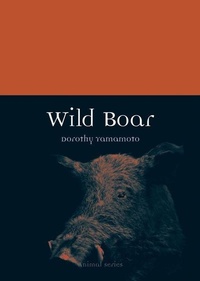
Wild Boar
Will be published approx. on 10. August 2017
Book
Paperback/Softback
224 pages
978-1-78023-761-9 (ISBN)
Description
Tough, resourceful and omnivorous, wild boar are the ancestors of domestic pigs. From earliest times, wild boar have presented humans with both opportunity and threat: they are a valuable food source, but also a
formidable foe carrying tusks that can inflict terrible injuries. Today, boar are impinging on people's lives in new ways, scouting into cities such as Berlin and Tokyo, or establishing populations in areas such as the Forest
of Dean in England.
Wild Boar traces the history of the interaction between humans and wild boar, from the iconic beasts of myth and legend, such as the Calydonian Boar, to the adoption of the boar as a heraldic device - most notably by the doomed English king Richard iii - and the meticulous rules of engagement that grew up around the practice of hunting. The boar's impact upon human bodies is a running theme in legends, stories and reports, and now that hunters are no longer armed with boar spears but with high-velocity rifles, the boars themselves have ballooned in the popular imagination, in the shape of monstrous hybrids such as 'Hogzilla', in keeping with their role as deadly adversary.
Dorothy Yamamoto argues that their former association with masculine valour and heroic combat inflects modern-day attitudes towards wild boar, leading to distorted perceptions of their size, behaviour and the potential threat that they pose. As proposals for including them in schemes for rewilding contend with demands to eradicate them altogether from certain areas, wild boar are a unique focus for much of the current debate about the terms on which we share our planet with other animals.
formidable foe carrying tusks that can inflict terrible injuries. Today, boar are impinging on people's lives in new ways, scouting into cities such as Berlin and Tokyo, or establishing populations in areas such as the Forest
of Dean in England.
Wild Boar traces the history of the interaction between humans and wild boar, from the iconic beasts of myth and legend, such as the Calydonian Boar, to the adoption of the boar as a heraldic device - most notably by the doomed English king Richard iii - and the meticulous rules of engagement that grew up around the practice of hunting. The boar's impact upon human bodies is a running theme in legends, stories and reports, and now that hunters are no longer armed with boar spears but with high-velocity rifles, the boars themselves have ballooned in the popular imagination, in the shape of monstrous hybrids such as 'Hogzilla', in keeping with their role as deadly adversary.
Dorothy Yamamoto argues that their former association with masculine valour and heroic combat inflects modern-day attitudes towards wild boar, leading to distorted perceptions of their size, behaviour and the potential threat that they pose. As proposals for including them in schemes for rewilding contend with demands to eradicate them altogether from certain areas, wild boar are a unique focus for much of the current debate about the terms on which we share our planet with other animals.
More details
Series
Language
English
Place of publication
London
United Kingdom
Product notice
Paperback (trade)
Unsewn / adhesive bound
Illustrations
100 illustrations, 60 in colour
Dimensions
Height: 190 mm
Width: 137 mm
Thickness: 15 mm
Weight
347 gr
ISBN-13
978-1-78023-761-9 (9781780237619)
Copyright in bibliographic data and cover images is held by Nielsen Book Services Limited or by the publishers or by their respective licensors: all rights reserved.
Schweitzer Classification
Other editions
Additional editions
Person
Dorothy Yamamoto is a poet, the co-editor of Animals on the Agenda (1998). She is author of The Boundaries of the Human in Medieval English Literature (2000) and Guinea Pig (Reaktion, 2015) .She lives in Oxford.