

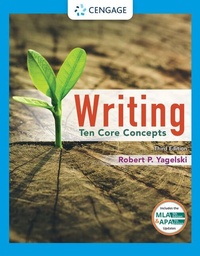
Writing: Ten Core Concepts (w/ MLA9E Updates)
3rd Edition
Published on 8. April 2021
Book
Paperback/Softback
896 pages
978-0-357-50565-6 (ISBN)
Description
Master the fundamentals critical to becoming an effective writer with Yagelski's WRITING: TEN CORE CONCEPTS, 3E. Carefully designed guides, thoroughly integrated with the core concepts, set this book apart as you study key rhetorical moves within analytical, persuasive and narrative writing. Applied assignments challenge you to complete causal analysis, academic arguments and literacy narratives. This edition presents writing as an interaction between writer and reader, teaching you how to use writing skills to participate in important conversations shaping today's lives. This edition features 26 new readings and 11 new sample student essays as well as new chapters on literacy narratives, summary-response essays, annotated bibliographies and presentations. Updates guide you in working with digital resources, expand your critical reading strategies and highlight the latest APA and MLA guidelines. In addition, MindTap digital resources offer new interactive samples and activities.
More details
Edition
3rd edition
Language
English
Place of publication
Belmont, CA
United States
Publishing group
Cengage Learning, Inc
Target group
College/higher education
Edition type
Annotated edition
Product notice
Paperback (trade)
Unsewn / adhesive bound
Dimensions
Height: 231 mm
Width: 183 mm
Thickness: 38 mm
Weight
1451 gr
ISBN-13
978-0-357-50565-6 (9780357505656)
Copyright in bibliographic data and cover images is held by Nielsen Book Services Limited or by the publishers or by their respective licensors: all rights reserved.
Schweitzer Classification
Person
Robert P. Yagelski is associate vice provost and director of the Program in Writing and Critical Inquiry and professor of English education in the Department of Educational Theory and Practice at the State University of New York (SUNY) at Albany. He teaches courses in writing, composition theory and pedagogy, critical pedagogy and qualitative research methods in addition to helping prepare secondary school teachers. Considered a leading voice in composition theory, Dr. Yagelski is widely published in the major journals in the field. He is former director of the Capital District Writing Project, a site of the National Writing Project, and former director of the SUNY-Albany Writing Center. He earned his Ph.D. in rhetoric and composition from The Ohio State University.
Content
Part I: A GUIDE TO WRITING EFFECTIVELY.
1. Why We Write.
Understanding Writing. Writing in College. Writing in the Workplace. Writing as a Citizen. Writing to Understand Ourselves.
2. Ten Core Concepts for Effective Writing.
Core Concept 1: Writing Is a Process of Discovery and Learning. Core Concept 2: Good Writing Fits the Context. Core Concept 3: The Medium Is Part of the Message. Core Concept 4: A Writer Must Have Something to Say. Core Concept 5: A Writer Must Support Claims and Assertions. Core Concept 6: Purpose Determines Form, Style, and Organization in Writing. Core Concept 7: Writing Is a Social Activity. Core Concept 8: Revision Is an Essential Part of Writing. Core Concept 9: There Is Always a Voice in Writing, Even When There Isn't an I. Core Concept 10: Good Writing Means More Than Good Grammar.
3. The Ten Core Concepts in Action.
Step 1: Discover and Explore a Topic. Step 2: Examine the Rhetorical Context. Step 3: Select an Appropriate Medium. Step 4: Have Something to Say. Step 5: Back Up What You Say. Step 6: Establish a Form and Structure for Your Project. Step 7: Get Feedback. Step 8: Revise. Step 9: Strengthen Your Voice. Step 10: Make It Correct.
4. A Student Writer Applies the Core Concepts.
Step 1: Discover and Explore a Topic. Step 2: Examine the Rhetorical Context. Step 3: Select an Appropriate Medium. Step 4: Have Something to Say. Step 5: Back Up What You Say. Step 6: Establish a Form and Structure for Your Project. Step 7: Get Feedback. Step 8: Revise. Step 9: Strengthen Your Voice. Step 10: Make It Correct. Chloe Charles' Final Draft: "Why Is College So Important in the United States?"
Part II: WRITING TO ANALYZE.
5. Understanding Analytical Writing.
Occasions for Analytical Writing. Understanding Analytical Writing in College. Doing Analysis. Features of Analytical Writing. "Why Are People Who Use Illegal Drugs Demonized?" by Gideon Lasco. .
6. Examining Causes and Effects.
Occasions for Causal Analysis. Understanding Causal Analysis. Reading Causal Analysis. " Pandemics and Social Capital: From the Spanish Flu of 1918-19 to COVID-19," by Arnstein Aassve, Guido Alfani, Francesco Gandolfi, and Marco Le Moglie. " Is It Even Possible to Connect '13 Reasons Why' to Teen Suicide?," by Emily Lund. " The Roots of Schizophrenia: The Effects of Growing Up with a Schizophrenic Parent," by Mehr Sharma. Writing Causal Analysis. Writing Projects.
7. Comparing and Synthesizing.
Occasions for Comparing and Synthesizing. Understanding Comparison and Synthesis. Reading Comparative Analysis. " Online Learning during the COVID-19 Pandemic," by Yoshiko Iwai. "The Whole Truth," by Julian Baggini. "Sherlock Holmes Can Teach You to Multitask," by Maria Konnikova. Writing Analysis Involving Comparison and Synthesis. Writing Projects.
8. Conducting Rhetorical Analysis.
Occasions for Rhetorical Analysis. Understanding Rhetorical Analysis. Using Classical Rhetorical Theory for Rhetorical Analysis. Analyzing Images. Reading Rhetorical Analysis. " How DC Mayor Bowser Used Graffiti to Protect Public Space," by Rebekah Modrak. " Earthrise: A Photo That Changed the World," by Simon Torok et al. " Rhetorical Analysis of Cameron Russell's Speech
'Looks aren't everything. Believe me, I'm a model,'," by Kayla Ferderigos. Writing Rhetorical Analysis. Writing Projects.
9. Analyzing Literary Texts.
Occasions for Analyzing Texts. Understanding Textual Analysis. Reading Textual Analysis. "More Than an Elephant in the Room: An Analysis of Hemingway's 'Hills Like White Elephants,''' by Natalie Huebel. "Dangerous Illusions," by Caetlin Benson-Allott. "Watchmen and the Birth of Respect for Graphic Novels," by Karl Allen. Writing Textual Analysis. Writing Projects.
10. Evaluating and Reviewing.
Occasions for Evaluating and Reviewing. Understanding Reviews and Evaluation. Reading Reviews. " Psycho at 60: The Enduring Power of Hitchcock's Shocking Game-Changer," by Scott Tobias. "Review of Destiny," by Trace C. Schuelke. "Review of Thirteen Re
1. Why We Write.
Understanding Writing. Writing in College. Writing in the Workplace. Writing as a Citizen. Writing to Understand Ourselves.
2. Ten Core Concepts for Effective Writing.
Core Concept 1: Writing Is a Process of Discovery and Learning. Core Concept 2: Good Writing Fits the Context. Core Concept 3: The Medium Is Part of the Message. Core Concept 4: A Writer Must Have Something to Say. Core Concept 5: A Writer Must Support Claims and Assertions. Core Concept 6: Purpose Determines Form, Style, and Organization in Writing. Core Concept 7: Writing Is a Social Activity. Core Concept 8: Revision Is an Essential Part of Writing. Core Concept 9: There Is Always a Voice in Writing, Even When There Isn't an I. Core Concept 10: Good Writing Means More Than Good Grammar.
3. The Ten Core Concepts in Action.
Step 1: Discover and Explore a Topic. Step 2: Examine the Rhetorical Context. Step 3: Select an Appropriate Medium. Step 4: Have Something to Say. Step 5: Back Up What You Say. Step 6: Establish a Form and Structure for Your Project. Step 7: Get Feedback. Step 8: Revise. Step 9: Strengthen Your Voice. Step 10: Make It Correct.
4. A Student Writer Applies the Core Concepts.
Step 1: Discover and Explore a Topic. Step 2: Examine the Rhetorical Context. Step 3: Select an Appropriate Medium. Step 4: Have Something to Say. Step 5: Back Up What You Say. Step 6: Establish a Form and Structure for Your Project. Step 7: Get Feedback. Step 8: Revise. Step 9: Strengthen Your Voice. Step 10: Make It Correct. Chloe Charles' Final Draft: "Why Is College So Important in the United States?"
Part II: WRITING TO ANALYZE.
5. Understanding Analytical Writing.
Occasions for Analytical Writing. Understanding Analytical Writing in College. Doing Analysis. Features of Analytical Writing. "Why Are People Who Use Illegal Drugs Demonized?" by Gideon Lasco. .
6. Examining Causes and Effects.
Occasions for Causal Analysis. Understanding Causal Analysis. Reading Causal Analysis. " Pandemics and Social Capital: From the Spanish Flu of 1918-19 to COVID-19," by Arnstein Aassve, Guido Alfani, Francesco Gandolfi, and Marco Le Moglie. " Is It Even Possible to Connect '13 Reasons Why' to Teen Suicide?," by Emily Lund. " The Roots of Schizophrenia: The Effects of Growing Up with a Schizophrenic Parent," by Mehr Sharma. Writing Causal Analysis. Writing Projects.
7. Comparing and Synthesizing.
Occasions for Comparing and Synthesizing. Understanding Comparison and Synthesis. Reading Comparative Analysis. " Online Learning during the COVID-19 Pandemic," by Yoshiko Iwai. "The Whole Truth," by Julian Baggini. "Sherlock Holmes Can Teach You to Multitask," by Maria Konnikova. Writing Analysis Involving Comparison and Synthesis. Writing Projects.
8. Conducting Rhetorical Analysis.
Occasions for Rhetorical Analysis. Understanding Rhetorical Analysis. Using Classical Rhetorical Theory for Rhetorical Analysis. Analyzing Images. Reading Rhetorical Analysis. " How DC Mayor Bowser Used Graffiti to Protect Public Space," by Rebekah Modrak. " Earthrise: A Photo That Changed the World," by Simon Torok et al. " Rhetorical Analysis of Cameron Russell's Speech
'Looks aren't everything. Believe me, I'm a model,'," by Kayla Ferderigos. Writing Rhetorical Analysis. Writing Projects.
9. Analyzing Literary Texts.
Occasions for Analyzing Texts. Understanding Textual Analysis. Reading Textual Analysis. "More Than an Elephant in the Room: An Analysis of Hemingway's 'Hills Like White Elephants,''' by Natalie Huebel. "Dangerous Illusions," by Caetlin Benson-Allott. "Watchmen and the Birth of Respect for Graphic Novels," by Karl Allen. Writing Textual Analysis. Writing Projects.
10. Evaluating and Reviewing.
Occasions for Evaluating and Reviewing. Understanding Reviews and Evaluation. Reading Reviews. " Psycho at 60: The Enduring Power of Hitchcock's Shocking Game-Changer," by Scott Tobias. "Review of Destiny," by Trace C. Schuelke. "Review of Thirteen Re