

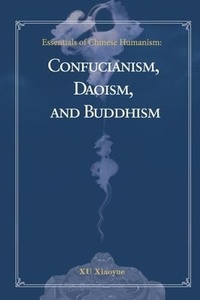
Essentials of Chinese Humanism
Confucianism, Daoism, and Buddhism
2nd Edition
Published on 10. March 2023
Book
Hardback
285 pages
978-1-62643-091-4 (ISBN)
Description
Professor Xu Xiaoyue, a top-notch scholar specializing in ancient Chinese philosophies and religions, displays essential constituents of Chinese humanism before readers. According to him, key concepts such as Confucian ten virtues, Daoist Way and Buddhist metaphysical voidness play quite a significant role in shaping the Chinese humanism, which not only is historically indispensable to the creation of traditional Chinese culture but it also realistically matters to present-day China's cultural reconstruction in the world that is being remolded by the roots.
More details
Edition
2nd edition
Language
English
Place of publication
Los Angeles
United States
Target group
Professional and scholarly
Product notice
sewn/stitched
Cloth over boards
Illustrations
15 illustrations
Dimensions
Height: 157 mm
Width: 237 mm
Thickness: 25 mm
Weight
600 gr
ISBN-13
978-1-62643-091-4 (9781626430914)
Copyright in bibliographic data and cover images is held by Nielsen Book Services Limited or by the publishers or by their respective licensors: all rights reserved.
Schweitzer Classification
Other editions
Additional editions
Xu Xiaoyue Xu
Essentials of Chinese Humanism
E-Book
05/2023
Bridge 21 Publications
€64.49
Available for download
Persons
Xu Xiaoyue is Professor of Philosophy and Religious Study. He had been the Librarian of Nanjing Library. Currently, Professor Xu presides over Institute of Chinese Culture of Nanjing University. Chi Zhen, Ph.D. (2007), National University of Singapore, is Associate Research Fellow at Shanghai Academy of Social Sciences (SASS).
Content
Chapter 1 The Chinese Humanism
1.1 The Chinese Humanism
1) The Humanistic Sprit of Confucianism, Daoism and Buddhism
2) The Confucian Humanism and Reconstruction of Chinese Civilization
1.2 Ten Virtues
1) Ren, or benevolence
2) Yi, or righteousness
3) Li, or proprieties
4) Zhi, or wisdom
5) Xin, or faithfulness
6) Xiao, or filial piety
7) Ti, or fraternal duties
8) Zhong, or loyalty
9) Lian, or incorruptibleness
10) Chi, or sense of shame
Chapter 2 Three Great Teachings I.
2.1 Confucianism
(1) Confucian School
(2) Confucius and his idea of ren (benevolence)
(3) An intellectual exploration of Mencius
2.2 Daoism
(1) Daoist School and Daoism as a religion
(2) Laozi and his Dao, or the Way
(3) Daoist discourses on the adjustment of controversies and idea of freedom
2.3 Buddha and his teachings
(1) Buddhism
(2) The Buddhist "kong," or the metaphysical emptiness/voidness
Chapter 3 Three Great Teachings II.
3.1 The roles that Confucianism, Daoism and Buddhism historically played
3.2 Essences and core values of Confucianism, Daoism and Buddhism
3.3 The Unity of Confucian, Daoist and Buddhist Values and Methodologies
3.4 Confucian and Daoist Ecological Thoughts
Chapter 4 Guoxue, or the National Learning
1) What is guoxue, or the National Learning?
2) Where does guoxue lie in?
3) A historical sketch of conventional Chinese scholarship and thoughts
1.1 The Chinese Humanism
1) The Humanistic Sprit of Confucianism, Daoism and Buddhism
2) The Confucian Humanism and Reconstruction of Chinese Civilization
1.2 Ten Virtues
1) Ren, or benevolence
2) Yi, or righteousness
3) Li, or proprieties
4) Zhi, or wisdom
5) Xin, or faithfulness
6) Xiao, or filial piety
7) Ti, or fraternal duties
8) Zhong, or loyalty
9) Lian, or incorruptibleness
10) Chi, or sense of shame
Chapter 2 Three Great Teachings I.
2.1 Confucianism
(1) Confucian School
(2) Confucius and his idea of ren (benevolence)
(3) An intellectual exploration of Mencius
2.2 Daoism
(1) Daoist School and Daoism as a religion
(2) Laozi and his Dao, or the Way
(3) Daoist discourses on the adjustment of controversies and idea of freedom
2.3 Buddha and his teachings
(1) Buddhism
(2) The Buddhist "kong," or the metaphysical emptiness/voidness
Chapter 3 Three Great Teachings II.
3.1 The roles that Confucianism, Daoism and Buddhism historically played
3.2 Essences and core values of Confucianism, Daoism and Buddhism
3.3 The Unity of Confucian, Daoist and Buddhist Values and Methodologies
3.4 Confucian and Daoist Ecological Thoughts
Chapter 4 Guoxue, or the National Learning
1) What is guoxue, or the National Learning?
2) Where does guoxue lie in?
3) A historical sketch of conventional Chinese scholarship and thoughts