


Introduction to Digital Human Modeling
Published on 13. June 2025
Book
Paperback/Softback
546 pages
978-0-443-21998-6 (ISBN)
Description
Introduction to Digital Human Modeling bridges the gap in current literature by providing a comprehensive resource on digital human modeling for beginners and researchers. The content includes step-by-step procedures for building a digital human model, fundamental human kinematics and dynamics, advanced topics such as motion prediction and injury prevention, and industrial applications.
The book covers theoretical concepts and experimental validation, including human anatomy, degrees of freedom, skeletal and musculoskeletal modeling, equations of motion, reach envelopes, lifting prediction, muscle fatigue model, and injury analysis. It teaches readers how to build simulation-based human models, set up equations of motion, analyze human biomechanics, and utilize simulations and experiments to study worker injuries.
Furthermore, the book introduces both fundamental and advanced digital human modeling methods and optimization techniques aimed at improving performance and preventing injuries in manual material handling, as well as addressing lifting and gait biomechanics and ergonomics.
The book covers theoretical concepts and experimental validation, including human anatomy, degrees of freedom, skeletal and musculoskeletal modeling, equations of motion, reach envelopes, lifting prediction, muscle fatigue model, and injury analysis. It teaches readers how to build simulation-based human models, set up equations of motion, analyze human biomechanics, and utilize simulations and experiments to study worker injuries.
Furthermore, the book introduces both fundamental and advanced digital human modeling methods and optimization techniques aimed at improving performance and preventing injuries in manual material handling, as well as addressing lifting and gait biomechanics and ergonomics.
More details
Series
Language
English
Place of publication
San Diego
United States
Publishing group
Elsevier Science Publishing Co Inc
Target group
College/higher education
Professional and scholarly
Product notice
Paperback (trade)
Unsewn / adhesive bound
Dimensions
Height: 234 mm
Width: 193 mm
Thickness: 27 mm
Weight
1129 gr
ISBN-13
978-0-443-21998-6 (9780443219986)
Copyright in bibliographic data and cover images is held by Nielsen Book Services Limited or by the publishers or by their respective licensors: all rights reserved.
Schweitzer Classification
Other editions
Additional editions
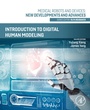
Yujiang Xiang | James Yang
Introduction to Digital Human Modeling
E-Book
05/2025
Elsevier
€140.99
Available for download
Persons
Dr. Yujiang (Mike) Xiang is currently an associate professor in the Department of Mechanical and Aerospace Engineering at Oklahoma State University. He received his B.S. and M.S. degrees in Automotive Engineering from Tsinghua University, China. In 2008, he earned his Ph.D. from the University of Iowa. His current research interests include human dynamics and control, human motion prediction, musculoskeletal modeling, exoskeletons, and human-robot interaction. Dr. James Yang is a Full Professor and the Director of the Human-Centric Design Research Lab, Associate Chair for Graduate Affairs at Texas Tech University. He holds B.S. and M.S. degrees in automotive engineering from Jilin University in China and a Ph.D. in mechanical engineering from the University of Iowa. He has served as a faculty member at Tsinghua University and as a research engineer at the University of Iowa. Dr. Yang is a fellow of SAE and ASME, a senior member of IEEE, and Fulbright Scholar. He serves as an associate editor for several international journals in the fields of human-machine systems, biomechanics, ergonomics, and healthcare engineering. He has received various national and international awards. His research interests include digital human modeling and simulation, human digital twin, biomechanics, healthcare engineering, and driver behavior modeling for autonomous vehicles.
Content
1. Introduction
2. Anthropometric modeling
3. Human Anatomy and Kinematic Skeleton
4. Danevit-Hartenberg Method
5. Kinematics and Sensitivity Analysis
6. Dynamics and Sensitivity Analysis
7. Numerical Interpolation
8. Reach Envelop
9. Posture Prediction
10. Hand modeling
11. Joint Strength Surface
12. Skeletal Lifting Prediction Using Sequential Quadratic Programming Algorithm
13. Musculoskeletal Lifting Prediction and OpenSim Model
14. Gait
15. Jumping
16. Sit-to-stand
17. Multi-objective optimization on digital human modeling
18. Fatigue Model
19. Lifting Posture Prediction with Fatigue
20. Repetitive Lifting Prediction with Fatigue
21. Collaborative lifting
22. Experiments
2. Anthropometric modeling
3. Human Anatomy and Kinematic Skeleton
4. Danevit-Hartenberg Method
5. Kinematics and Sensitivity Analysis
6. Dynamics and Sensitivity Analysis
7. Numerical Interpolation
8. Reach Envelop
9. Posture Prediction
10. Hand modeling
11. Joint Strength Surface
12. Skeletal Lifting Prediction Using Sequential Quadratic Programming Algorithm
13. Musculoskeletal Lifting Prediction and OpenSim Model
14. Gait
15. Jumping
16. Sit-to-stand
17. Multi-objective optimization on digital human modeling
18. Fatigue Model
19. Lifting Posture Prediction with Fatigue
20. Repetitive Lifting Prediction with Fatigue
21. Collaborative lifting
22. Experiments