

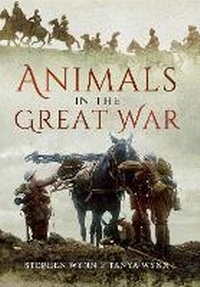
Animals in the Great War
Published on 17. June 2019
Book
Hardback
117 pages
978-1-4738-3804-8 (ISBN)
Description
Animals in the Great War looks at the use of animals by all sides in the Great War and to what effect. In the main, it focuses greatly on horses, dogs and pigeons but also addresses the war efforts of other animals.
In the early years of the war horses were, to a large extent, the only form of transport that was available to the British Army, ranging from use by cavalry units, artillery units as well others such as the Army Ordnance Corps for the conveying of ammunition supplies to men fighting at the front. Britain sent an estimated one million horses to fight in the war, most of them to France and Belgium, but only 60,000 of them ever returned home, and only then were they returned because of the intervention of Winston Churchill.
Dogs also played a major role in the war, especially in the trenches on the Western Front. They were used as mascots by the different regiments and in some cases, they were companions for homesick soldiers. They were also used for sentry duties in the trenches as well as catching rats, and they were used as messengers and to sniff out wounded soldiers in No Man's Land.
Besides their immediate handlers who looked after their everyday needs, there was the Royal Army Veterinary Corps to tend to their wounds after they had been injured in the execution of their duties.
Animals in the Great War explores how everyday domestic animals were transformed into remarkable wartime heroes, who more than did their bit for the war effort.
In the early years of the war horses were, to a large extent, the only form of transport that was available to the British Army, ranging from use by cavalry units, artillery units as well others such as the Army Ordnance Corps for the conveying of ammunition supplies to men fighting at the front. Britain sent an estimated one million horses to fight in the war, most of them to France and Belgium, but only 60,000 of them ever returned home, and only then were they returned because of the intervention of Winston Churchill.
Dogs also played a major role in the war, especially in the trenches on the Western Front. They were used as mascots by the different regiments and in some cases, they were companions for homesick soldiers. They were also used for sentry duties in the trenches as well as catching rats, and they were used as messengers and to sniff out wounded soldiers in No Man's Land.
Besides their immediate handlers who looked after their everyday needs, there was the Royal Army Veterinary Corps to tend to their wounds after they had been injured in the execution of their duties.
Animals in the Great War explores how everyday domestic animals were transformed into remarkable wartime heroes, who more than did their bit for the war effort.
More details
Language
English
Place of publication
South Yorkshire
United Kingdom
Publishing group
Pen & Sword Books Ltd
Illustrations
32 black and white illustrations
Dimensions
Height: 234 mm
Width: 156 mm
ISBN-13
978-1-4738-3804-8 (9781473838048)
Copyright in bibliographic data and cover images is held by Nielsen Book Services Limited or by the publishers or by their respective licensors: all rights reserved.
Schweitzer Classification
Other editions
Additional editions
Stephen Wynn | Tanya Wynn
Animals in the Great War
E-Book
11/2020
Pen & Sword Military
€7.48
Available for download
Persons
Animals in the Great War is written by husband and wife, Stephen and Tanya Wynn. This is the second book they have written together, having previously collaborated on Women in the Great War. Stephen has written numerous titles in the military history genre over the years. His first book, Two Sons in a Warzone, was published in 2010. It is the true story of his sons first tours in Afghanistan. One of them was injured and the other was shot and wounded.