

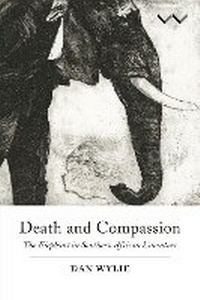
Death and Compassion
The Elephant in Southern African Literature
Will be published approx. on 1. October 2018
Book
Hardback
280 pages
978-1-77614-446-4 (ISBN)
Description
Traces the literary history of the elephant, and its role in South Africa's cultural imaginary
Elephants are in dire straits - again. They were virtually extirpated from much of Africa by European hunters in the eighteenth and nineteenth centuries, but their numbers resurged for a while in the heyday of late-colonial conservation efforts in the twentieth. Now, according to one estimate, an elephant is being killed every 15 minutes. This is at the same time that the reasons for being especially compassionate and protective towards elephants are now so well-known that they have become almost a cliche: their high intelligence, rich emotional lives including a capacity for mourning, caring matriarchal societal structures, that strangely charismatic grace. Saving elephants is one of the iconic conservation struggles of our time.
As a society we must aspire to understand how and why people develop compassion - or fail to do so - and what stories we tell ourselves about animals that reveal the relationship between ourselves and animals. This book is the first study to probe the primary features, and possible effects, of some major literary genres as they pertain to elephants south of the Zambezi over three centuries: indigenous forms, early European travelogues, hunting accounts, novels, game ranger memoirs, scientists' accounts, and poems. It examines what these literatures imply about the various and diverse attitudes towards elephants, about who shows compassion towards them, in what ways and why. It is the story of a developing contestation between death and compassion, between those who kill and those who love and protect.
Elephants are in dire straits - again. They were virtually extirpated from much of Africa by European hunters in the eighteenth and nineteenth centuries, but their numbers resurged for a while in the heyday of late-colonial conservation efforts in the twentieth. Now, according to one estimate, an elephant is being killed every 15 minutes. This is at the same time that the reasons for being especially compassionate and protective towards elephants are now so well-known that they have become almost a cliche: their high intelligence, rich emotional lives including a capacity for mourning, caring matriarchal societal structures, that strangely charismatic grace. Saving elephants is one of the iconic conservation struggles of our time.
As a society we must aspire to understand how and why people develop compassion - or fail to do so - and what stories we tell ourselves about animals that reveal the relationship between ourselves and animals. This book is the first study to probe the primary features, and possible effects, of some major literary genres as they pertain to elephants south of the Zambezi over three centuries: indigenous forms, early European travelogues, hunting accounts, novels, game ranger memoirs, scientists' accounts, and poems. It examines what these literatures imply about the various and diverse attitudes towards elephants, about who shows compassion towards them, in what ways and why. It is the story of a developing contestation between death and compassion, between those who kill and those who love and protect.
More details
Language
English
Place of publication
Johannesburg
South Africa
Target group
Professional and scholarly
Product notice
Trade binding
Dimensions
Height: 229 mm
Width: 152 mm
ISBN-13
978-1-77614-446-4 (9781776144464)
Copyright in bibliographic data and cover images is held by Nielsen Book Services Limited or by the publishers or by their respective licensors: all rights reserved.
Schweitzer Classification
Person
Dan Wylie is a lecturer in the English Department at Rhodes University, Grahamstown. He has published three books on the Zulu leader Shaka; a memoir, Dead Leaves: Two years in the Rhodesian war (2002); and several volumes of poetry.