

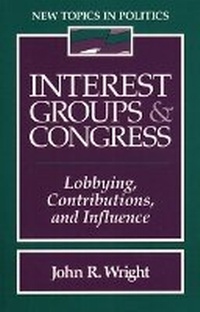
Interest Groups and Congress
Lobbying, Contributions and Influence
Published on 21. April 1998
Book
Paperback/Softback
214 pages
978-0-02-430301-1 (ISBN)
Description
Interest Groups, Congress (supplement), American Government (supplement).
In Interest Groups and Congress, John Wright surveys the history, organization, aims and processes of interest groups to explain how they influence and affect public policy and opinion in the US Congress. Throughout, he hews to a consistent and unifying theme: that interest groups wield influence through "the strategic presentation of specialized information to members of congress." This "information model" is a refinement of earlier theories, which presumed aggressive - and even unethical - influence strategies. As part of the respected New Topics in Politics series, Interest Groups and Congress presents theoretical models and research paradigms to undergraduates in a fresh, accessible way. Wright skillfully employs real world case studies and examples to bring the theories to life, and avoids the use of specialized or technical jargon. Examples include the efforts of gay rights groups to overturn the ban on gays in the military, the maneuverings of organizations both for and against health reform, and lobbying over the Bork nomination to the Supreme Court. As such, the book provides a bridge between the abstract and technical research in the field, and the intuitive and practical demands of the student, and serves not only as a core text for classes on Interest Groups, but as a welcome supplement for the Congress or American Government course.
In Interest Groups and Congress, John Wright surveys the history, organization, aims and processes of interest groups to explain how they influence and affect public policy and opinion in the US Congress. Throughout, he hews to a consistent and unifying theme: that interest groups wield influence through "the strategic presentation of specialized information to members of congress." This "information model" is a refinement of earlier theories, which presumed aggressive - and even unethical - influence strategies. As part of the respected New Topics in Politics series, Interest Groups and Congress presents theoretical models and research paradigms to undergraduates in a fresh, accessible way. Wright skillfully employs real world case studies and examples to bring the theories to life, and avoids the use of specialized or technical jargon. Examples include the efforts of gay rights groups to overturn the ban on gays in the military, the maneuverings of organizations both for and against health reform, and lobbying over the Bork nomination to the Supreme Court. As such, the book provides a bridge between the abstract and technical research in the field, and the intuitive and practical demands of the student, and serves not only as a core text for classes on Interest Groups, but as a welcome supplement for the Congress or American Government course.
More details
Language
English
Place of publication
United States
Publishing group
Pearson Education (US)
Target group
College/higher education
Dimensions
Height: 210 mm
Width: 137 mm
Thickness: 15 mm
Weight
300 gr
ISBN-13
978-0-02-430301-1 (9780024303011)
Copyright in bibliographic data and cover images is held by Nielsen Book Services Limited or by the publishers or by their respective licensors: all rights reserved.
Schweitzer Classification
Other editions
New editions
John R. Wright
Interest Groups and Congress
Lobbying, Contributions and Influence (Longman Classics Series)
Book
10/2003
Pearson
€90.36
Article is exhausted; no reprint
Content
1. Introduction
The Puzzle of Interest Group Influence
2. The History, Organization, and Regulation of Interest Groups. The Evolution of Interest Groups. Constitutional Underpinnings. The Formation and Maintenance of Interest Groups. The Organization of Interests. Political Organizations and the Legal Environment. Controlling Factions: Regulation and the Endurance of Political Interests.
3. Interest Groups, Congress, and Public Policy.
Interest Group Participation Before Congress. Formulation of Bills. Committee Hearings and Markups. Floor and Conference Action. The Defensive Advantage. Interest Group Participation Beyond Congress: Agencies and the Courts. Participation Before the Courts. Participation Before Administrative Agencies. The Family and Medical Leave Act: A Case Study of Interest Groups and Policymaking. Interest Group Lobbying and Legislators' Policy Calculations. Advertising Campaigns. Washington Contacting. Grassroots Mobilization. The Legislators' Policy Position.
4. Legislative Lobbying.
The Objectives of Organized Interests: Access and Influence. Access. Influence. The Uncertainty of Legislative Decisionmaking. Uncertainty about Reelection. Uncertainty about the Legislative Process and Policy Performance. The Information Specialties of Organized Interests. Constituency Preferences and Reelection. Legislative Process and Policy Performance. The Strategic Use of Information. Lobbying on Robert Bork's Nomination to the Supreme Court. Lobbying on Gays in the Military. Misrepresentation as a Lobbying Strategy. Checking Misrepresentation. Lobbying and Influence in American Politics.
5. Political Action Committees.
The History and Characteristics of PACs. A Bit of History. The Types, Number, and Sizes of PACs. The Allocation of PAC Money. PAC Contributions and the Exchange of Votes and Favors. The Statistical Relationship between Contributions and Votes. Theoretical Models of Money and Influence. PACs and Information. Information and the Operation of PACs. PACs, Information, and Access. PACs and Representation.
6. Consequences of Interest Group Politics.
Policy Gridlock. The Changing Nature of Interest Group Politics. Gridlock and Information. Governmental Growth and Inefficiency. Growth and Information. Political Inequality. Inequality and Information. Interest Groups, Representation, and Legislating.
7. Conclusion.
The Puzzle of Interest Group Influence
2. The History, Organization, and Regulation of Interest Groups. The Evolution of Interest Groups. Constitutional Underpinnings. The Formation and Maintenance of Interest Groups. The Organization of Interests. Political Organizations and the Legal Environment. Controlling Factions: Regulation and the Endurance of Political Interests.
3. Interest Groups, Congress, and Public Policy.
Interest Group Participation Before Congress. Formulation of Bills. Committee Hearings and Markups. Floor and Conference Action. The Defensive Advantage. Interest Group Participation Beyond Congress: Agencies and the Courts. Participation Before the Courts. Participation Before Administrative Agencies. The Family and Medical Leave Act: A Case Study of Interest Groups and Policymaking. Interest Group Lobbying and Legislators' Policy Calculations. Advertising Campaigns. Washington Contacting. Grassroots Mobilization. The Legislators' Policy Position.
4. Legislative Lobbying.
The Objectives of Organized Interests: Access and Influence. Access. Influence. The Uncertainty of Legislative Decisionmaking. Uncertainty about Reelection. Uncertainty about the Legislative Process and Policy Performance. The Information Specialties of Organized Interests. Constituency Preferences and Reelection. Legislative Process and Policy Performance. The Strategic Use of Information. Lobbying on Robert Bork's Nomination to the Supreme Court. Lobbying on Gays in the Military. Misrepresentation as a Lobbying Strategy. Checking Misrepresentation. Lobbying and Influence in American Politics.
5. Political Action Committees.
The History and Characteristics of PACs. A Bit of History. The Types, Number, and Sizes of PACs. The Allocation of PAC Money. PAC Contributions and the Exchange of Votes and Favors. The Statistical Relationship between Contributions and Votes. Theoretical Models of Money and Influence. PACs and Information. Information and the Operation of PACs. PACs, Information, and Access. PACs and Representation.
6. Consequences of Interest Group Politics.
Policy Gridlock. The Changing Nature of Interest Group Politics. Gridlock and Information. Governmental Growth and Inefficiency. Growth and Information. Political Inequality. Inequality and Information. Interest Groups, Representation, and Legislating.
7. Conclusion.