


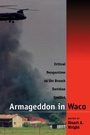
Armageddon in Waco
Critical Perspectives on the Branch Davidian Conflict
Published on 20. September 1995
Book
Hardback
420 pages
978-0-226-90844-1 (ISBN)
Description
On February 28, 1993, the United States Bureau of Alcohol, Tobacco, and Firearms (BATF) launched a major assault against a small religious community in central Texas. One hundred agents, armed with automatic and semi-automatic weapons, invaded the compound, purportedly to carry out a single search-and-arrest warrant. The raid went badly; four agents were killed, and by the end of the day the settlement was surrounded by armoured tanks and combat helicopters. After a 51-day standoff, the United States Justice Department approved a plan to use CS gas against those barricaded inside. Whether by accident or plan, tanks carrying the CS gas caused the compound to explode in fire, killing all 74 men, women and children inside. Could the tragedy have been prevented? Was it necessary for the BATF agents to do what they did? What could have been done differently? This text offers a wide-ranging analysis of events surrounding Waco. Contributors seek to explore all facets of the confrontation in an attempt to understand one of the most confusing government actions in American history. The book begins with the history of the Branch Davidians and the story of its leader, David Koresh.
Chapters show how the Davidians came to trouble authorities, why the group was labelled a "cult," and how authorities used unsubstantiated allegations of child abuse to strengthen their case against the sect. The media's role is examined next in essays that consider the effect on coverage of lack of time and resources, the orchestration of public relations by government officials, the restricted access to the site or to evidence, and the ideologies of the journalists themselves. Several contributors then explore the relation of violence to religion, comparing Waco to Jonestown. Finally, the role played by "experts" and "consultants" in defining such conflicts is explored by two contributors who had active roles as scholarly experts during and after the siege. The legal and consitutional implications of the government's actions are also analyzed.
Chapters show how the Davidians came to trouble authorities, why the group was labelled a "cult," and how authorities used unsubstantiated allegations of child abuse to strengthen their case against the sect. The media's role is examined next in essays that consider the effect on coverage of lack of time and resources, the orchestration of public relations by government officials, the restricted access to the site or to evidence, and the ideologies of the journalists themselves. Several contributors then explore the relation of violence to religion, comparing Waco to Jonestown. Finally, the role played by "experts" and "consultants" in defining such conflicts is explored by two contributors who had active roles as scholarly experts during and after the siege. The legal and consitutional implications of the government's actions are also analyzed.
More details
Edition
New edition
Language
English
Place of publication
Chicago
United States
Publishing group
The University of Chicago Press
Target group
College/higher education
Professional and scholarly
Edition type
New edition
Illustrations
Ill.
Dimensions
Height: 220 mm
Width: 150 mm
Weight
710 gr
ISBN-13
978-0-226-90844-1 (9780226908441)
Copyright in bibliographic data is held by Nielsen Book Services Limited or its licensors: all rights reserved.
Schweitzer Classification
Other editions
Additional editions
E-Book
05/2024
1st Edition
University of Chicago Press
from
€37.20
Available for download