

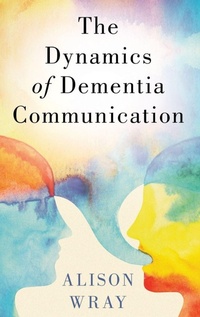
The Dynamics of Dementia Communication
Published on 15. July 2020
Book
Hardback
352 pages
978-0-19-091780-7 (ISBN)
Description
WINNER of the 2021 British Association for Applied Linguistics Book prize
It is well recognized that when people are living with a dementia, effective communication can be a challenge for both them and those they interact with. Despite a plethora of good advice, it can be surprisingly hard to sustain constructive communicative behaviours and to integrate them successfully into routine daily care and interaction.
The Dynamics of Dementia Communication asks why that is. What is it about communication, as a human social and cognitive practice, that makes it so difficult to manage the disruptions caused by dementia? Why is it so common to feel awkward, confused or irritated when talking with a person living with a dementia? Why is the experience of living with a dementia so personally and socially devastating? What approaches to communication would work best, and why?
To answer these questions, the book integrates information from a wide range of different sources, covering the biological, social, and emotional factors associated with the dementia experience. New concepts and theoretical perspectives offer novel ways of thinking about the challenges of communication generally, and in the context of dementia. Topics explored include whether it is acceptable to deceive people living with a dementia and why society's failure to support people living with a dementia and their carers is so devastating. The final chapter suggests what people living with a dementia need if communication is to promote and protect everyone's well-being.
By providing a deeper understanding of what topples the best-intentioned attempts at interaction, and by explaining why poor communication affects everyone involved, this book sets new agendas for improving the welfare of people living with a dementia, their families, and professional carers.
It is well recognized that when people are living with a dementia, effective communication can be a challenge for both them and those they interact with. Despite a plethora of good advice, it can be surprisingly hard to sustain constructive communicative behaviours and to integrate them successfully into routine daily care and interaction.
The Dynamics of Dementia Communication asks why that is. What is it about communication, as a human social and cognitive practice, that makes it so difficult to manage the disruptions caused by dementia? Why is it so common to feel awkward, confused or irritated when talking with a person living with a dementia? Why is the experience of living with a dementia so personally and socially devastating? What approaches to communication would work best, and why?
To answer these questions, the book integrates information from a wide range of different sources, covering the biological, social, and emotional factors associated with the dementia experience. New concepts and theoretical perspectives offer novel ways of thinking about the challenges of communication generally, and in the context of dementia. Topics explored include whether it is acceptable to deceive people living with a dementia and why society's failure to support people living with a dementia and their carers is so devastating. The final chapter suggests what people living with a dementia need if communication is to promote and protect everyone's well-being.
By providing a deeper understanding of what topples the best-intentioned attempts at interaction, and by explaining why poor communication affects everyone involved, this book sets new agendas for improving the welfare of people living with a dementia, their families, and professional carers.
Reviews / Votes
This author's commitment to person-centered care, specifically addressing the person living with a dementia as well as the challenges and needs of the caregiver, can only be described as exceptional...Highly recommended. Upper-division undergraduates. Graduate students, faculty, and professionals. * L.R. Barley, York College, CUNY, CHOICE * ...ambitious, original, comprehensive and thoughtful... * Lars-Christer Hyden, Journal of Pragmatics * Alison Wray has taken our understanding about the social and communicative aspects around Alzheimer's dementia several steps forward with this book. Her volume offers a most nuanced discussion about communicating with people that have this dementia and a most up-to-date review of scholarship on the social aspects of this condition. It is very much a must-read for any serious scholar in linguistics, communication, and dementia." * Vaidehi Ramanathan, Professor of Linguistics, The University of California, Davis, CA * Professor Wray's excellent and stimulating book could become the 'go to' resource for in-depth discussions about language, linguistics, communication, and brain changes associated with particular types of dementia. Complex issues are thoughtfully presented and explained in a clear, compelling narrative. The text is scholarly without being stuffy or pedantic, and Parts and Chapters can be read as individual units of interest. Wray obviously has a working knowledge of communication and relationships with people living with a dementia, their caregivers, and professional partners. The warmth, humour, and expertise invite us to join in the explorations alongside the author. She invites us to ponder our own knowledge and assumptions and improve our person-centred practice. We couldn't ask for much more from a book in this field." * Danuta Lipinska, Specialist in Ageing & Dementia Care, Training Consultant, Counsellor, Supervisor, 'My Home Life' Action Learning Facilitator, London, England * In this thought-provoking book Wray challenges us to move away from a singular focus on the myriad ways in which discourse can be shaped by dementia toward a reconsideration of these effects against the backdrop of communication more generally. Especially refreshing is her intricate discussion of the impact of understanding individuals living with dementia as being 'different in degree' vs. 'different in kind' from their healthy interactional partners. An invigorating read for anyone who reaches across disciplines at the intersection of dementia and communication." * Heidi E. Hamilton, PhD, Professor of Linguistics, Georgetown University, Washington, D.C. * Pinning down 'dementia communication' is notoriously difficult, and there is tension between individual variation in behaviours and symptoms and the call for, as it were, instructional manuals on how to communicate effectively in the context of dementia. Wray achieves a synthesis of solid theoretical foundations with practical information that will inform health care and eldercare practice and stimulate further research. Central to Wray's arguments is a model of communicative impact, defined as an individual's success in using communication to make desired changes in the world through the agency of others. A key message that cannot be emphasized enough is that "communication is not an optional extra" but rather that real communication, which allows persons with dementia to achieve communicative impact, is of the utmost importance for their well-being." * Nicole Mueller, PhD, Professor and Head of Speech and Hearing Sciences, School of Clinical Therapies, University College Cork, Ireland * Wray's development of the Communicative Impact model emphasizes what speakers seek to do or to change in their social environments through their talk. She offers intriguing insights into how persons with dementia may be working out the meaning of what is said to them, picking through their available linguistic resources to craft an effective and appropriate response, or interiorly debating about how their contributions might be heard. Nevertheless, despite their well-intentioned mutual decipherment, both parties sometimes misfire, and misconstruals are not uncommon. Wray offers a series of novel concepts that capture the complexity (and humanity) of communication in dementia. Based on wide-ranging scholarship and deep reflection, this book opens new pathways for improving communication. More than an intellectual tour-de-force, it is an act of compassion." * Robert Schrauf, PhD, Professor and Department Head of Applied Linguistics, Penn State University, University Park, PA *More details
Language
English
Place of publication
New York
United States
Target group
Professional and scholarly
Dimensions
Height: 240 mm
Width: 161 mm
Thickness: 24 mm
Weight
696 gr
ISBN-13
978-0-19-091780-7 (9780190917807)
Copyright in bibliographic data and cover images is held by Nielsen Book Services Limited or by the publishers or by their respective licensors: all rights reserved.
Schweitzer Classification
Other editions
Additional editions
Alison Wray
The Dynamics of Dementia Communication
E-Book
03/2020
OUP eBook
€66.49
Available for download
Alison Wray
The Dynamics of Dementia Communication
E-Book
03/2020
OUP eBook
€66.49
Available for download
Person
Alison Wray took her BA and D.Phil in linguistics at the University of York, UK. After completing a postdoctoral research project on singers' pronunciation in the Department of Music at York, she held a lectureship in linguistics at the then College of Ripon and York St John (now York St John University). In 1996 she was appointed Assistant Director of the Wales Applied Language Research Unit at Swansea University, and in 1999 became a Senior Research Fellow at Cardiff University. She became a (full) Professor at Cardiff in 2005 and a Research Professor in 2007. She is internationally known for her research into formulaic language, publishing two seminal books on the topic in 2002 and 2008. Since 2008 she has focussed on understanding the challenges of communication by and with people living with a dementia and has presented on this topic in countries around the world.
Content
FOREWORD
Should You Read This Book?
Summary of the Main Ideas in the Book
Is This Book for You?
How the Book Came About
PART ONE: CONTEXTS SHAPING COMMUNICATION
CHAPTER ONE: THE CHALLENGES OF COMMUNICATION IN THE DEMENTIA CONTEXT
1.1 Why Is It Difficult to Sustain Effective Communication Practices in Dementia Interaction?
1.2 Overview of the Book
1.3 Key Concepts
1.3.1 Defining 'Dementia'
1.3.2 Defining 'Communication'
1.4 Core Orientations
1.4.1 Personhood
1.4.2 Recognising the Role of Ego
1.5 Concluding Remarks
CHAPTER TWO: THE BIOLOGICAL DETERMINANTS OF DEMENTIA COMMUNICATION
2.1 How Do the Brain Changes Associated with Diseases of Dementia Affect Communication?
2.2 Exploring the Language of People with Alzheimer's Disease
2.2.1 Overview of Alzheimer's Disease
2.2.2 The Impact of Alzheimer's Disease on Language
2.2.3 The Impact of Alzheimer's Disease on Pragmatic Capabilities
2.2.4 Language as a Marker of Future Alzheimer's Disease
2.3 Language and Communication in Fronto-temporal Lobar Degeneration
2.3.1 Overview of Fronto-temporal Lobar Degeneration
2.3.2 The Impact of Semantic Dementia on Communication
2.4 The Impact on Language and Communication of Other Dementias
2.5 Pinning Down 'Dementia Communication'
2.6 Variation in Susceptibility to Diseases of Dementia and Their Symptoms
2.6.1 Why Do the Brain Changes Affect People and Their Communication Differently?
2.6.2 Genetic Disposition to Diseases Causing Dementia
2.6.3 Environmental Factors
2.6.4 'Rementia' and Temporary Lucidity
2.6.5 Brain and Cognitive Reserve
2.7 Concluding Remarks
CHAPTER THREE: THE ROLE OF MEMORY IN COMMUNICATION
3.1 What Constraints on Communication are Imposed by Memory Deficits in Dementia?
3.2 Long-Term Memory
3.2.1 Declarative Memory
3.2.2 Implicit Memory
3.2.3 Emotional Memory
3.3 Short-Term and Working Memory
3.4 How We Bring Information Back to Mind
3.5 Memory Changes in Normal Aging and in Dementia
3.6 The Impact of Memory Impairment on Communication
3.7 A Deeper Look at Episodic Memory and Communication
3.7.1 Episodic Memory and Autonoetic Experience
3.7.2 The Unreliability of Episodic Memory
3.7.3 The Impact of Losing Reliable Episodic Memory
3.8 Concluding Remarks
CHAPTER FOUR: THE SOCIAL CONSTRUCTION OF DEMENTIA
4.1 How Do Social Attitudes and Contexts Shape How We Interact with People Living with a Dementia?
4.2 Social and Emotional Factors Exacerbating Dementia Symptoms
4.3 The Construction of Dementia as a Disease
4.3.1 The Medicalization of Age-related Degenerative Diseases
4.3.2 The Commodification of Dementia Research
4.3.3 Defining People by Test Results
4.3.4 Mild Cognitive Impairment and the Boundary with 'Normal Functioning'
4.3.5 How People Living with a Dementia are Treated
4.4 Dementia as a Social Burden
4.4.1 Western Attitudes to Dementia and Care
4.4.2 Alternative Perceptions of Dementia
4.5 The Protection Afforded by 'Social Reserve'
4.5.1 What is Social Reserve?
4.5.2 Social Reserve and Social Capital
4.6 Concluding Remarks
CHAPTER FIVE: THE EXPERIENCE OF DEMENTIA COMMUNICATION
5.1 How Do Constraints on Communication Shape the Experiences of People Living with a Dementia and Their Carers?
5.2 Communicating When You Have a Dementia
5.2.1 Communicating the Dementia Experience
5.2.2 What People Living with a Dementia Say They Need
5.3 How Family and Professional Carers Communicate with People Living with a Dementia
5.3.1 The Emotional Burdens that Carers Bring to an Interaction
5.3.2 The Expression of Carers' Emotional Burden
5.3.3 Interaction between Professional vs Family Carers
5.4 Conceptualising Emotional Reserve
5.5 Concluding Remarks
CHAPTER SIX: APPROACHES TO EFFECTIVE COMMUNICATION IN CARE
6.1 How Do Approaches to Care Attempt to Address Challenges in Communication?
6.2 Person-centred and Relationship-centred Care
6.3 How to Communicate Well with People Living with a Dementia
6.3.1 Communication Parameters in Care Approaches
6.3.2 Content
6.3.3 Presentation of Information
6.3.4 Pragmatics and Contextual Expectations
6.3.5 Delivery
6.3.6 Environment
6.3.7 Attention to the Person's Needs
6.3.8 Affective Orientation
6.3.9 Nonverbal Communication
6.3.10 Widening the Scope of Communication
6.4 Concluding Remarks
PART TWO: CONCEPTUALISING COMMUNICATION
CHAPTER SEVEN: COMMUNICATION PROCESSES
7.1 How Do We Achieve Impact through Communication?
7.2 Overview of the Communicative Impact Model
7.2.1 The Three Components
7.2.2 The Role of the Hearer
7.3 Exploring the Context Component
7.4 Exploring the Resources Component
7.5 Exploring the Processing Component
7.6 Matters Arising
7.6.1 The Dynamics of Three or More
7.6.2 How Can We Judge Our Communicative Impact?
7.6.3 Why Does CI Work? What's in It for the Hearer?
7.7 Concluding Remarks
CHAPTER EIGHT: CONCEPTUALISING COMMUNICATION
8.1 How is the Communicative Impact Model Theoretically Justified?
8.2 Humans' Drive to Create a Comfortable World
8.2.1 An Evolutionary Impetus
8.2.2 Humans' Priorities in Modifying their World
8.2.3 Altruism: Promoting the Well-being of Others
8.3 Pragmatic Theory and the Context Component
8.4 Getting What We Want
8.5 Knowing What to Say: the Use of Context
8.5.1 Defining 'Context'
8.5.2 Using Context for Communicative Impact
8.5.3 Building and Structuring Context through Schemas
8.6 Formulating Output
8.6.1 Navigating Explicitness
8.6.2 From Selection to Execution
8.7 Concluding Remarks
PART THREE: APPLICATIONS AND IMPLICATIONS
CHAPTER NINE: DRIVERS OF DISRUPTED COMMUNICATION
9.1 Why Is Dementia So Disruptive to Communication?
9.2 The Role of Context in Sustaining Effective Communication
9.2.1 Contextual Gaps as a Catalyst for Low Social and Emotional Reserve
9.2.2 Pronouns as a 'Case Study' of Context in Communication
9.3 Dementia Communication: Problems and Responses
9.4 Unintended Consequences of Meeting Problems with Solutions
9.5 Awkward Pragmatic Gaps
9.6 Insights from Second Language Interaction
9.7 Concluding Remarks
CHAPTER TEN: DIFFERENT IN DEGREE OR KIND? HOW PEOPLE LIVING WITH A DEMENTIA ARE POSITIONED
10.1 How Does the Conceptual Positioning of People Living with a Dementia Impact on Communication?
10.1.1 Exploring Degree and Kind
10.1.2 Manifestations of the Degree and Kind Perspectives
10.2 The Carers' Paradox
10.3 Deception in Dementia Interaction
10.3.1 Defining Deception
10.3.2 Nuances of Deception and Truth-telling
10.3.3 Arguments for and Against Deceiving People Living with a Dementia
10.3.4 Case Study: Specialized Early Care for Alzheimer's (SPECAL)
10.3.5 How Do Deceptive Practices Relate to Degree and Kind?
10.3.6 Unrealistic Expectations?
10.4 Reconceptualising Degree and Kind
10.5 Concluding Remarks
CHAPTER ELEVEN: AN AGENDA FOR IMPROVING COMMUNICATION IN THE DEMENTIA CONTEXT
11.1 What Are the Priorities for Improving Communication by and with People Living with Dementia?
11.1.1 Why We Communicate
11.1.2 How Dementia Disrupts Communication
11.1.3 Emotional and Social Reserve
11.1.4 Difference in Degree and Kind
11.1.5 Carers' Paradox and Awkward Pragmatic Gaps
11.2 What Do People Living with a Dementia Need from Their Interlocutors?
11.2.1 Opportunities for Communication
11.2.2 Real Communication
11.2.3 Communicative Support
11.2.4 Kindness and Compassion
11.2.5 Empowerment: Alternative Routes to Communicative Impact
11.2.6 Insight and Flexibility
11.2.7 Building Social and Emotional Reserve
11.2.8 Respect and Dignity
11.2.9 Navigating Truth and Deception
11.3 Towards Better Communication
11.3.1 Linking New Ideas to Existing Practice
11.3.2 Mapping Effective Practices for the Interlocutor as Hearer and Speaker
11.4 Kindness and the Communicative Agenda in Care
11.5 Concluding Remarks
REFERENCES
ENDNOTES
Should You Read This Book?
Summary of the Main Ideas in the Book
Is This Book for You?
How the Book Came About
PART ONE: CONTEXTS SHAPING COMMUNICATION
CHAPTER ONE: THE CHALLENGES OF COMMUNICATION IN THE DEMENTIA CONTEXT
1.1 Why Is It Difficult to Sustain Effective Communication Practices in Dementia Interaction?
1.2 Overview of the Book
1.3 Key Concepts
1.3.1 Defining 'Dementia'
1.3.2 Defining 'Communication'
1.4 Core Orientations
1.4.1 Personhood
1.4.2 Recognising the Role of Ego
1.5 Concluding Remarks
CHAPTER TWO: THE BIOLOGICAL DETERMINANTS OF DEMENTIA COMMUNICATION
2.1 How Do the Brain Changes Associated with Diseases of Dementia Affect Communication?
2.2 Exploring the Language of People with Alzheimer's Disease
2.2.1 Overview of Alzheimer's Disease
2.2.2 The Impact of Alzheimer's Disease on Language
2.2.3 The Impact of Alzheimer's Disease on Pragmatic Capabilities
2.2.4 Language as a Marker of Future Alzheimer's Disease
2.3 Language and Communication in Fronto-temporal Lobar Degeneration
2.3.1 Overview of Fronto-temporal Lobar Degeneration
2.3.2 The Impact of Semantic Dementia on Communication
2.4 The Impact on Language and Communication of Other Dementias
2.5 Pinning Down 'Dementia Communication'
2.6 Variation in Susceptibility to Diseases of Dementia and Their Symptoms
2.6.1 Why Do the Brain Changes Affect People and Their Communication Differently?
2.6.2 Genetic Disposition to Diseases Causing Dementia
2.6.3 Environmental Factors
2.6.4 'Rementia' and Temporary Lucidity
2.6.5 Brain and Cognitive Reserve
2.7 Concluding Remarks
CHAPTER THREE: THE ROLE OF MEMORY IN COMMUNICATION
3.1 What Constraints on Communication are Imposed by Memory Deficits in Dementia?
3.2 Long-Term Memory
3.2.1 Declarative Memory
3.2.2 Implicit Memory
3.2.3 Emotional Memory
3.3 Short-Term and Working Memory
3.4 How We Bring Information Back to Mind
3.5 Memory Changes in Normal Aging and in Dementia
3.6 The Impact of Memory Impairment on Communication
3.7 A Deeper Look at Episodic Memory and Communication
3.7.1 Episodic Memory and Autonoetic Experience
3.7.2 The Unreliability of Episodic Memory
3.7.3 The Impact of Losing Reliable Episodic Memory
3.8 Concluding Remarks
CHAPTER FOUR: THE SOCIAL CONSTRUCTION OF DEMENTIA
4.1 How Do Social Attitudes and Contexts Shape How We Interact with People Living with a Dementia?
4.2 Social and Emotional Factors Exacerbating Dementia Symptoms
4.3 The Construction of Dementia as a Disease
4.3.1 The Medicalization of Age-related Degenerative Diseases
4.3.2 The Commodification of Dementia Research
4.3.3 Defining People by Test Results
4.3.4 Mild Cognitive Impairment and the Boundary with 'Normal Functioning'
4.3.5 How People Living with a Dementia are Treated
4.4 Dementia as a Social Burden
4.4.1 Western Attitudes to Dementia and Care
4.4.2 Alternative Perceptions of Dementia
4.5 The Protection Afforded by 'Social Reserve'
4.5.1 What is Social Reserve?
4.5.2 Social Reserve and Social Capital
4.6 Concluding Remarks
CHAPTER FIVE: THE EXPERIENCE OF DEMENTIA COMMUNICATION
5.1 How Do Constraints on Communication Shape the Experiences of People Living with a Dementia and Their Carers?
5.2 Communicating When You Have a Dementia
5.2.1 Communicating the Dementia Experience
5.2.2 What People Living with a Dementia Say They Need
5.3 How Family and Professional Carers Communicate with People Living with a Dementia
5.3.1 The Emotional Burdens that Carers Bring to an Interaction
5.3.2 The Expression of Carers' Emotional Burden
5.3.3 Interaction between Professional vs Family Carers
5.4 Conceptualising Emotional Reserve
5.5 Concluding Remarks
CHAPTER SIX: APPROACHES TO EFFECTIVE COMMUNICATION IN CARE
6.1 How Do Approaches to Care Attempt to Address Challenges in Communication?
6.2 Person-centred and Relationship-centred Care
6.3 How to Communicate Well with People Living with a Dementia
6.3.1 Communication Parameters in Care Approaches
6.3.2 Content
6.3.3 Presentation of Information
6.3.4 Pragmatics and Contextual Expectations
6.3.5 Delivery
6.3.6 Environment
6.3.7 Attention to the Person's Needs
6.3.8 Affective Orientation
6.3.9 Nonverbal Communication
6.3.10 Widening the Scope of Communication
6.4 Concluding Remarks
PART TWO: CONCEPTUALISING COMMUNICATION
CHAPTER SEVEN: COMMUNICATION PROCESSES
7.1 How Do We Achieve Impact through Communication?
7.2 Overview of the Communicative Impact Model
7.2.1 The Three Components
7.2.2 The Role of the Hearer
7.3 Exploring the Context Component
7.4 Exploring the Resources Component
7.5 Exploring the Processing Component
7.6 Matters Arising
7.6.1 The Dynamics of Three or More
7.6.2 How Can We Judge Our Communicative Impact?
7.6.3 Why Does CI Work? What's in It for the Hearer?
7.7 Concluding Remarks
CHAPTER EIGHT: CONCEPTUALISING COMMUNICATION
8.1 How is the Communicative Impact Model Theoretically Justified?
8.2 Humans' Drive to Create a Comfortable World
8.2.1 An Evolutionary Impetus
8.2.2 Humans' Priorities in Modifying their World
8.2.3 Altruism: Promoting the Well-being of Others
8.3 Pragmatic Theory and the Context Component
8.4 Getting What We Want
8.5 Knowing What to Say: the Use of Context
8.5.1 Defining 'Context'
8.5.2 Using Context for Communicative Impact
8.5.3 Building and Structuring Context through Schemas
8.6 Formulating Output
8.6.1 Navigating Explicitness
8.6.2 From Selection to Execution
8.7 Concluding Remarks
PART THREE: APPLICATIONS AND IMPLICATIONS
CHAPTER NINE: DRIVERS OF DISRUPTED COMMUNICATION
9.1 Why Is Dementia So Disruptive to Communication?
9.2 The Role of Context in Sustaining Effective Communication
9.2.1 Contextual Gaps as a Catalyst for Low Social and Emotional Reserve
9.2.2 Pronouns as a 'Case Study' of Context in Communication
9.3 Dementia Communication: Problems and Responses
9.4 Unintended Consequences of Meeting Problems with Solutions
9.5 Awkward Pragmatic Gaps
9.6 Insights from Second Language Interaction
9.7 Concluding Remarks
CHAPTER TEN: DIFFERENT IN DEGREE OR KIND? HOW PEOPLE LIVING WITH A DEMENTIA ARE POSITIONED
10.1 How Does the Conceptual Positioning of People Living with a Dementia Impact on Communication?
10.1.1 Exploring Degree and Kind
10.1.2 Manifestations of the Degree and Kind Perspectives
10.2 The Carers' Paradox
10.3 Deception in Dementia Interaction
10.3.1 Defining Deception
10.3.2 Nuances of Deception and Truth-telling
10.3.3 Arguments for and Against Deceiving People Living with a Dementia
10.3.4 Case Study: Specialized Early Care for Alzheimer's (SPECAL)
10.3.5 How Do Deceptive Practices Relate to Degree and Kind?
10.3.6 Unrealistic Expectations?
10.4 Reconceptualising Degree and Kind
10.5 Concluding Remarks
CHAPTER ELEVEN: AN AGENDA FOR IMPROVING COMMUNICATION IN THE DEMENTIA CONTEXT
11.1 What Are the Priorities for Improving Communication by and with People Living with Dementia?
11.1.1 Why We Communicate
11.1.2 How Dementia Disrupts Communication
11.1.3 Emotional and Social Reserve
11.1.4 Difference in Degree and Kind
11.1.5 Carers' Paradox and Awkward Pragmatic Gaps
11.2 What Do People Living with a Dementia Need from Their Interlocutors?
11.2.1 Opportunities for Communication
11.2.2 Real Communication
11.2.3 Communicative Support
11.2.4 Kindness and Compassion
11.2.5 Empowerment: Alternative Routes to Communicative Impact
11.2.6 Insight and Flexibility
11.2.7 Building Social and Emotional Reserve
11.2.8 Respect and Dignity
11.2.9 Navigating Truth and Deception
11.3 Towards Better Communication
11.3.1 Linking New Ideas to Existing Practice
11.3.2 Mapping Effective Practices for the Interlocutor as Hearer and Speaker
11.4 Kindness and the Communicative Agenda in Care
11.5 Concluding Remarks
REFERENCES
ENDNOTES