

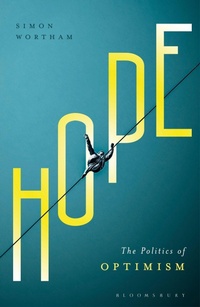
Hope
The Politics of Optimism
Published on 14. November 2019
Book
Hardback
184 pages
978-1-350-10529-4 (ISBN)
Description
A colourful map of the current conflict between pessimism and optimism in Western politics and theory, Hope attempts to reveal both the deep history and contemporary necessity of political hopefulness.
Starting in the 17th century with Spinoza, Wortham tells the story of the various fallacies and insights of pessimism and optimism through the 18th century with the help of Kant and Voltaire through to the famously nihilistic writings of Nietzsche and the 20th century works of thinkers such as Benjamin, Arendt, Kristeva and Fanon (to name but a few). He explores the contemporary significance of ideas such as affirmation, sovereignty, violence, therapy, existentialism and, of course, the oft maligned notion of 'hopefulness' to create a politics of optimism which avoids the pitfalls of uncritical acceptance of the status quo or the newest political idea.
Short chapters written in an engaging narrative manner enable the reader to follow the story of political optimism over the last 4 centuries inspiring a new way of thinking about the transformative uses of hopefulness.
Starting in the 17th century with Spinoza, Wortham tells the story of the various fallacies and insights of pessimism and optimism through the 18th century with the help of Kant and Voltaire through to the famously nihilistic writings of Nietzsche and the 20th century works of thinkers such as Benjamin, Arendt, Kristeva and Fanon (to name but a few). He explores the contemporary significance of ideas such as affirmation, sovereignty, violence, therapy, existentialism and, of course, the oft maligned notion of 'hopefulness' to create a politics of optimism which avoids the pitfalls of uncritical acceptance of the status quo or the newest political idea.
Short chapters written in an engaging narrative manner enable the reader to follow the story of political optimism over the last 4 centuries inspiring a new way of thinking about the transformative uses of hopefulness.
Reviews / Votes
Neo-liberalism's savage hegemony shapes subjects and affects together:jaded, pessimistic, indifferent, or their twins, entrepreneurial, risk-taking, long-range, even "future-proof" subjects. Can we still hope-for forms of association, action, the distribution of resources and enjoyment, other than those marked and made by this hegemonic formation? What grounds are there for optimism? Simon Morgan Wortham makes from the materials of the Western Enlightenment a genealogy for a politics of optimism-substantially groundless, necessary. By showing that thought is never either "past-proof" or "future-proof"
Hope: The Politics of Optimism rigorously and lucidly redefines politics for our torn present. -- Jacques Lezra, Professor and Chair, Department of Hispanic Studies University of California--Riverside, United States Simon Wortham's eminently readable new book unfolds the dialectic of hope from Spinoza to Balibar. Hope: The Politics of Optimism traces with brilliance and insight this constitutive oscillation between optimism and despair across modern leftist thought, to argue that even the bleakest nihilism remains grounded in the originary affirmation of all enunciation, from which depths critique can hope, finally, to put real limits to power. -- Nick Nesbitt, Professor of Languages and Literatures, Princeton University, USA
More details
Language
English
Place of publication
London
United Kingdom
Publishing group
Bloomsbury Publishing PLC
Target group
College/higher education
Dimensions
Height: 209 mm
Width: 132 mm
Thickness: 13 mm
Weight
291 gr
ISBN-13
978-1-350-10529-4 (9781350105294)
Copyright in bibliographic data and cover images is held by Nielsen Book Services Limited or by the publishers or by their respective licensors: all rights reserved.
Schweitzer Classification
Other editions
Additional editions
E-Book
11/2019
1st Edition
Bloomsbury Academic
€28.49
Available for download
Person
Simon Wortham is Professor of Critical Humanities, Kingston University London, UK. He is author of Resistance and Psychoanalysis (2017), Samuel Weber: Acts of Reading (2017), Modern Thought in Pain: Philosophy, Politics, Psychoanalysis (2015), The Poetics of Sleep (Bloomsbury, 2013), The Derrida Dictionary (Bloomsbury, 2010), Derrida: Writing Events (Bloomsbury, 2008), Experimenting: Essays with Samuel Weber (2007), Counter-Institutions (2006) and Rethinking the University (2009)
Content
Acknowledgements
Hope against hope
Twenty-two short essays on the politics of optimism
Immanuel Kant, Choosing what is best
Voltaire, Bien (tout est)
Arthur Schopenhauer, Eating the other
Benedict de Spinoza, Hope, faith and judgement
Friedrich Nietzsche, Imperfect nihilism
Maurice Blanchot, Hope and poetry
Jacques Derrida, Yes, yes
Emmanuel Levinas, Sociality and solitude
Sigmund Freud, 'A time-consuming business'
Melanie Klein, 'Therapeutic pessimism' in Kristeva's view
Julia Kristeva, 'Psychoanalysis-a Counterdepressant'
Walter Benjamin, 'Pessimism all along the line'
Theodor Adorno, 'Hurrah-optimism'
Hannah Arendt, 'The right to expect miracles'
Slavoj Zizek, Hopeless courage (with Hegel and Badiou)
Franz Kafka, 'Plenty of hope, an infinite amount of hope-but not for us' (re-reading Walter Benjamin)
Jacques Derrida, Hegel, Bataille, negativity and affirmation
Frantz Fanon, Recognition and conflict
Hannah Arendt, Violence and power
Etienne Balibar, Politics and psychoanalysis
Hans Kelsen, Politics and the 'impolitical'
Sigmund Freud, Super-ego politics
index
Hope against hope
Twenty-two short essays on the politics of optimism
Immanuel Kant, Choosing what is best
Voltaire, Bien (tout est)
Arthur Schopenhauer, Eating the other
Benedict de Spinoza, Hope, faith and judgement
Friedrich Nietzsche, Imperfect nihilism
Maurice Blanchot, Hope and poetry
Jacques Derrida, Yes, yes
Emmanuel Levinas, Sociality and solitude
Sigmund Freud, 'A time-consuming business'
Melanie Klein, 'Therapeutic pessimism' in Kristeva's view
Julia Kristeva, 'Psychoanalysis-a Counterdepressant'
Walter Benjamin, 'Pessimism all along the line'
Theodor Adorno, 'Hurrah-optimism'
Hannah Arendt, 'The right to expect miracles'
Slavoj Zizek, Hopeless courage (with Hegel and Badiou)
Franz Kafka, 'Plenty of hope, an infinite amount of hope-but not for us' (re-reading Walter Benjamin)
Jacques Derrida, Hegel, Bataille, negativity and affirmation
Frantz Fanon, Recognition and conflict
Hannah Arendt, Violence and power
Etienne Balibar, Politics and psychoanalysis
Hans Kelsen, Politics and the 'impolitical'
Sigmund Freud, Super-ego politics
index