


Organization Design
Description
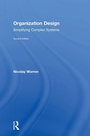
Organization Design equips readers with advanced tools and frameworks for understanding and re-designing organisations by simplifying complex roles, processes, and structures. Now in a fully updated third edition, it introduces new pedagogical features to spotlight significant debates and encourage critical reflection on core ideas.
Grounded in both research and practical experience, this book offers a balanced approach to organizational efficiency and complexity, complemented by actionable insights throughout and supporting online material. Drawing on Russell Ackoff's system theory, Worren emphasises the interconnected nature of all organizational elements as a key to support strategic goals. The book is designed around broad thematic areas: from a review of foundational theory to core components of organization design, methodologies for re-design projects, and a diagnostic framework for complex organizations. This structured division enables readers to follow chapters consecutively or consult each section independently.
Rigorous in focus, this textbook serves as an authoritative source that bridges academia and the professional world. Students, scholars, and practitioners alike will benefit from its comprehensive guidance and pragmatic orientation.
More details
Other editions
Additional editions
Previous edition
Person
Nicolay Worren is professor in the School of Economics and Business at the Norwegian University of Life Sciences. He has published articles in leading academic journals, including Strategic Management Journal and Academy of Management Review. Before entering academia in 2015, he was a management consultant and advised clients in more than 25 organization re-design projects. He holds a master's degree in psychology from McGill University and received his doctorate in management studies from Oxford University. He writes a blog: www.organizationdesign.net
Content
Preface 1. Why design matters 2. Organizational complexity 3. Traditional organizational forms 4. Designing multidimensional organizations 5. Designing sub-units 6. Clarifying accountability 7. Configuring interfaces 8. Managing the organization design process 9. Simplifying complex organizations Glossary