

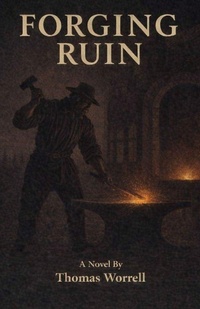
Forging Ruin
Description
In 1818, six-year-old Richard Jones watches liquid iron pour from the tap hole at Hanover Furnace in the New Jersey Pine Barrens and does not flinch. His father Benjamin, a Quaker ironmaster managing forty-four thousand acres of timber and bog ore, sees in the boy the ambition that will either continue the family's enterprise or destroy it.
Forging Ruin follows Richard from that first encounter with molten iron through seven decades of building, losing, and building again. He inherits an ironworks already once surrendered to creditors and reclaimed by his father's quiet persistence. He masters the Pine Barrens iron trade, marries Alice Woodmansie, and expands beyond the furnace - investing in zinc smelting at Newark, founding the Florence Iron Works on the Delaware River, and reaching toward railroads, land companies, and industrial patents that stretch his resources to the breaking point. When the Civil War takes his eldest son Ivins at twenty-five, the loss extinguishes something in Richard that no patent or partnership can reignite.
The novel traces the full arc of a nineteenth-century American industrialist whose gifts - invention, vision, relentless forward motion - are inseparable from the forces that undo him. Richard's zinc oxide process is ruled abandoned by the courts and handed to a competitor. His foundry is sold at sheriff's sale. His bankruptcy is a matter of public record. Yet in the final movement of his life, he places a family ring - carried from Wales two centuries earlier - into the hands of his grandson William, a young pharmacist from a small house in Pemberton, and in that gesture transfers something the courts and creditors could never reach.
Book Three of The Line of the Black Water, Forging Ruin is a work of historical fiction drawn from twenty years of archival research into one family's entanglement with the iron industry, land speculation, patent law, and the American impulse to build beyond what the ground can hold.