

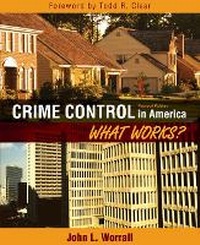
Crime Control in America
What Works?
2nd Edition
Published on 19. February 2008
Book
Paperback/Softback
464 pages
978-0-205-59339-2 (ISBN)
Description
Crime Control in America introduces readers to the many methods of crime control and reviews the research concerning their effectiveness.
The text covers policing, prosecution and courts, and legislative methods of crime control. It also moves beyond the justice system and examines the effectiveness of crime control at the individual, family, school, and community levels. Finally, it covers environmental criminology, juvenile crime control, and explanations of large-scale crime trends, particularly the reductions witnessed during the 1990s.
The text covers policing, prosecution and courts, and legislative methods of crime control. It also moves beyond the justice system and examines the effectiveness of crime control at the individual, family, school, and community levels. Finally, it covers environmental criminology, juvenile crime control, and explanations of large-scale crime trends, particularly the reductions witnessed during the 1990s.
More details
Edition
2nd edition
Language
English
Place of publication
United States
Publishing group
Pearson Education (US)
Target group
Professional and scholarly
Dimensions
Height: 190 mm
Width: 230 mm
Thickness: 25 mm
Weight
662 gr
ISBN-13
978-0-205-59339-2 (9780205593392)
Copyright in bibliographic data and cover images is held by Nielsen Book Services Limited or by the publishers or by their respective licensors: all rights reserved.
Schweitzer Classification
Other editions
New editions
Book
02/2014
3rd Edition
Pearson
€91.60
Article exhausted; check for reprint
Previous edition
Book
09/2005
Pearson
€69.51
Article exhausted; check for reprint
Content
I. INTRODUCTION.
1. Identifying and Evaluating Crime Control.
Introduction.
The Crime Problem in America.
Approaches, Not Just Policies.
On the Importance of Definitions.
Evaluating Success: An Impossible Task?
Displacement and Diffusion.
The Tentative Nature of Scientific Knowledge.
How Resources Dictate Public Policy and Guide Research.
Academic Crusaders and Bandwagon Science.
How Crime Control is Accomplished: A Preview of What's to Come.
Does it Work?
Conclusion.
2. Crime Control Perspectives.
Introduction.
Operational Perspectives.
Political Perspectives.
Other Perspectives.
Goals of Crime Control.
Conclusion.
II. LAW ENFORCEMENT APPROACHES.
3. Traditional Policing.
Introduction.
The Theory of Traditional Policing.
Does Hiring More Cops Reduce Crime?
Freeing Up Resources.
Removing Supposed Procedural Restraints.
The Problem With Being Reactive and Random.
Bring in the Detectives.
Other Traditional Approaches to Policing.
Conclusion.
4. Proactive Policing, Directed Control and other Advancements
Introduction.
Proactive Arrests.
Interrogations and Enhanced Supervision.
Directed Patrol.
The Broken Windows Law Enforcement Approach.
Police-Corrections Partnerships.
More Partnering: Multijurisdictional Drug Task Forces.
Compstat.
Conclusion.
5. Community Involvement in Policing.
Introduction.
Community Justice.
Problem-Oriented Policing.
Community Policing: Some History.
Community Policing: What is It?
Community Policing: Is It Really Happening?
Structural Change.
The Definition Problem Rears Its Head.
Research on Community Policing's Effectiveness.
Conclusion.
6. Prosecutors and Crime Control.
Introduction.
The Harder Side of Prosecution.
The Softer Side of Prosecution.
A Plea Bargaining Pandemic?
Conclusion.
III. COURTS, CORRECTIONS, AND LEGISLATIVE APPROACHES.
7. Crime Control Though Legislation.
Introduction.
Legislative Bans
Gun Control
Sex Offender Laws
Laws Aimed at Contemporary Problems
Conclusion.
8. Crime Control in the Courts and Beyond.
Introduction.
Courts and Incapacitation
Diversion
Shaming
Restorative Justice
Anti-Gang Injunctions
Problem-Solving Courts
Conclusion.
9. Sentencing.
Introduction.
Non-Prison Sentences
Types of Prison Sentences
Does Sentence Length Matter?
Determining Sentencing
Sentence Enhancements
Mandatory Sentencing
Supermax Prisons
Capital Punishment
Castration
Conclusion.
10. Probation, Parole, and Intermediate Sanctions.
Introduction.
The Organization and Administration of Probation and Parole
Probation and Parole Issues
Intermediate Sanctions
Conclusion.
11. Rehabilitation, Treatment, and Job Training.
Introduction.
Criminals are Not Created Equal
Rehabilitation
Treatment
Job Training
More Lessons From Meta Analysis
Conclusion.
IV. APPROACHES BEYOND THE CRIMINAL JUSTICE SYSTEM.
12. Individual, Family, and Household Crime Control.
Introduction.
Individual Crime Control.
Household and Family Crime Control.
Conclusion.
13. Crime Control in the Community and in Schools.
Introduction.
Community Crime Control.
School-Based Crime Control.
Conclusion.
14. Reducing Criminal Opportunities Through Environmental Manipulation.
Introduction.
A Quick Return to Theory.
How Environmental Manipulation Occurs.
The Effectiveness of Environmental Manipulations.
Conclusion.
V. JUVENILE CRIME CONTROL.
15. Juvenile Crime Control.
Introduction.
Juvenile Crime.
Differences Between the Adult and Juvenile Justice Systems.
Recent Reforms in Juvenile Justice.
Making Sense of Juvenile Crime Control.
Juvenile Crime Prevention.
Juvenile Crime Control.
Conclusion.
VI. CONCLUSION.
16. Putting It All Together, Explaining Crime Trends.
Introduction.
A Quick Review.
Three Important Themes.
Explaining Crime Trends.
Conclusion.
1. Identifying and Evaluating Crime Control.
Introduction.
The Crime Problem in America.
Approaches, Not Just Policies.
On the Importance of Definitions.
Evaluating Success: An Impossible Task?
Displacement and Diffusion.
The Tentative Nature of Scientific Knowledge.
How Resources Dictate Public Policy and Guide Research.
Academic Crusaders and Bandwagon Science.
How Crime Control is Accomplished: A Preview of What's to Come.
Does it Work?
Conclusion.
2. Crime Control Perspectives.
Introduction.
Operational Perspectives.
Political Perspectives.
Other Perspectives.
Goals of Crime Control.
Conclusion.
II. LAW ENFORCEMENT APPROACHES.
3. Traditional Policing.
Introduction.
The Theory of Traditional Policing.
Does Hiring More Cops Reduce Crime?
Freeing Up Resources.
Removing Supposed Procedural Restraints.
The Problem With Being Reactive and Random.
Bring in the Detectives.
Other Traditional Approaches to Policing.
Conclusion.
4. Proactive Policing, Directed Control and other Advancements
Introduction.
Proactive Arrests.
Interrogations and Enhanced Supervision.
Directed Patrol.
The Broken Windows Law Enforcement Approach.
Police-Corrections Partnerships.
More Partnering: Multijurisdictional Drug Task Forces.
Compstat.
Conclusion.
5. Community Involvement in Policing.
Introduction.
Community Justice.
Problem-Oriented Policing.
Community Policing: Some History.
Community Policing: What is It?
Community Policing: Is It Really Happening?
Structural Change.
The Definition Problem Rears Its Head.
Research on Community Policing's Effectiveness.
Conclusion.
6. Prosecutors and Crime Control.
Introduction.
The Harder Side of Prosecution.
The Softer Side of Prosecution.
A Plea Bargaining Pandemic?
Conclusion.
III. COURTS, CORRECTIONS, AND LEGISLATIVE APPROACHES.
7. Crime Control Though Legislation.
Introduction.
Legislative Bans
Gun Control
Sex Offender Laws
Laws Aimed at Contemporary Problems
Conclusion.
8. Crime Control in the Courts and Beyond.
Introduction.
Courts and Incapacitation
Diversion
Shaming
Restorative Justice
Anti-Gang Injunctions
Problem-Solving Courts
Conclusion.
9. Sentencing.
Introduction.
Non-Prison Sentences
Types of Prison Sentences
Does Sentence Length Matter?
Determining Sentencing
Sentence Enhancements
Mandatory Sentencing
Supermax Prisons
Capital Punishment
Castration
Conclusion.
10. Probation, Parole, and Intermediate Sanctions.
Introduction.
The Organization and Administration of Probation and Parole
Probation and Parole Issues
Intermediate Sanctions
Conclusion.
11. Rehabilitation, Treatment, and Job Training.
Introduction.
Criminals are Not Created Equal
Rehabilitation
Treatment
Job Training
More Lessons From Meta Analysis
Conclusion.
IV. APPROACHES BEYOND THE CRIMINAL JUSTICE SYSTEM.
12. Individual, Family, and Household Crime Control.
Introduction.
Individual Crime Control.
Household and Family Crime Control.
Conclusion.
13. Crime Control in the Community and in Schools.
Introduction.
Community Crime Control.
School-Based Crime Control.
Conclusion.
14. Reducing Criminal Opportunities Through Environmental Manipulation.
Introduction.
A Quick Return to Theory.
How Environmental Manipulation Occurs.
The Effectiveness of Environmental Manipulations.
Conclusion.
V. JUVENILE CRIME CONTROL.
15. Juvenile Crime Control.
Introduction.
Juvenile Crime.
Differences Between the Adult and Juvenile Justice Systems.
Recent Reforms in Juvenile Justice.
Making Sense of Juvenile Crime Control.
Juvenile Crime Prevention.
Juvenile Crime Control.
Conclusion.
VI. CONCLUSION.
16. Putting It All Together, Explaining Crime Trends.
Introduction.
A Quick Review.
Three Important Themes.
Explaining Crime Trends.
Conclusion.