

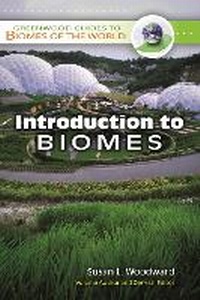
Introduction to Biomes
Published on 30. November 2008
Book
Hardback
184 pages
978-0-313-33997-4 (ISBN)
Description
Introduction to Biomes is both a standalone summary to the concept of biomes and an introduction to the 8-volume series Greenwood Guides to Biomes of the World.
The volume covers:
* The biome concept and brief descriptions of vegetation, climate and distribution of the terrestrial and of the range of freshwater and aquatic biomes covered in the set.
* Classifying life - how scientists discuss the taxonomic hierarchy and how it has been used to determine how to divide the world into regions based on living organisms.
* The ecosystem concept - how this and other major concepts from ecology that are key to understanding biomes.
* Terrestrial environments - the various climatic variables and climate types, and a discussion of our changing planet
* Aquatic environments and life - how lifeforms and food chains make aquatic environments distinct from terrestrial biomes. Maps, photos, diagrams, drawings, and tables accompany the text, as do sidebars that highlight habitats, species, and ecological relationships.
The volume includes a bibliography of accessible resources for further research.
The volume covers:
* The biome concept and brief descriptions of vegetation, climate and distribution of the terrestrial and of the range of freshwater and aquatic biomes covered in the set.
* Classifying life - how scientists discuss the taxonomic hierarchy and how it has been used to determine how to divide the world into regions based on living organisms.
* The ecosystem concept - how this and other major concepts from ecology that are key to understanding biomes.
* Terrestrial environments - the various climatic variables and climate types, and a discussion of our changing planet
* Aquatic environments and life - how lifeforms and food chains make aquatic environments distinct from terrestrial biomes. Maps, photos, diagrams, drawings, and tables accompany the text, as do sidebars that highlight habitats, species, and ecological relationships.
The volume includes a bibliography of accessible resources for further research.
Reviews / Votes
For middle and high school students and undergraduates, Woodward, editor of the biomes series and former professor of biogeography and physical geography at Radford U., presents an introduction to biomes. She discusses the concept of the biome and other geographic trends exhibited by life, including taxonomic and evolutionary patterns, related ecological concepts such as ecosystems and soils, and environmental factors that affect the nature of terrestrial and aquatic biomes at the global scale. Use of scientific terminology is minimized. * SciTech Book News *More details
Series
Language
English
Place of publication
United States
Publishing group
Bloomsbury Publishing Plc
Target group
College/higher education
Interest Age: From 7 to 17 years
Dimensions
Height: 254 mm
Width: 178 mm
Weight
567 gr
ISBN-13
978-0-313-33997-4 (9780313339974)
Copyright in bibliographic data and cover images is held by Nielsen Book Services Limited or by the publishers or by their respective licensors: all rights reserved.
Schweitzer Classification
Other editions
Additional editions
Susan L. Woodward
Introduction to Biomes
E-Book
11/2008
1st Edition
Greenwood Press
€64.99
Available for download
Person
Susan L. Woodward received her PhD in geography from the University of California, Los Angeles, in 1976. She taught undergraduate courses in biogeography and physical geography for 22 years at Radford University in Virginia, before retiring in 2006. Author of Biomes of Earth, published by Greenwood Press in 2003, she continues to learn and write about our natural environment. Her travels have allowed her to see first hand some of the world's major terrestrial biomes and at least glimpse marine habitats in the United States, Russia, China, Brazil, Chile, Ecuador, Peru, South Africa, and Namibia.
Content
Preface
Chapter 1. Introduction to the Biome Concept
Chapter 2. Patterns of Life
Chapter 3. Ecological Concepts Important to the Study of Biomes.
Chapter 4. Major Environmental Factors in Terrestrial Biomes
Chapter 5. Major Environmental Factors in Aquatic Biomes
Appendix: representative climate data
Glossary
Bibliography
Index
Chapter 1. Introduction to the Biome Concept
Chapter 2. Patterns of Life
Chapter 3. Ecological Concepts Important to the Study of Biomes.
Chapter 4. Major Environmental Factors in Terrestrial Biomes
Chapter 5. Major Environmental Factors in Aquatic Biomes
Appendix: representative climate data
Glossary
Bibliography
Index