

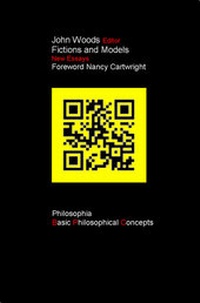
Fictions and Models
New Essays - Vorwort Nancy Cartwright
1st Edition
Published on 15. November 2010
Book
Paperback/Softback
444 pages
978-3-88405-099-6 (ISBN)
Description
Noch vor 40 Jahren war die philosophische Analyse der Fiktion ein rudimentärer Zweig der Sprachphilosophie. Heute handelt es sich um ein sehr aktives Forschungsprogramm, dessen theoretische Berechtigung und beständige Kraft sowohl durch die Schnelligkeit seines Wachstums als auch durch das Anwachsen des Einfallsreichtums, die Kühnheit und - manche würden auch sagen - durch die Dynamik seiner Einsichten dokumentiert wird. Das frühe Werk an Fiktion beschränkte sich auf die Beziehungen der Sprachphilosophie und der analytischen Ästhetik. Heute ist der Rahmen breiter. Über seine Behandlung im Rahmen literarischer Semantik hinaus, ist der Begriff der Fiktion auch Gegenstand der Philosophie, der Mathematik und der Wissenschaftsphilosophie geworden, im Besonderen auch der Wissenschaft, die im Bereich der Metaphysik und Erkenntnistheorie, der Ethik und im Recht auf Modellen basiert. Eine zentrale Frage des gegenwärtigen Forschungsprogramms besteht darin: was geschieht, wenn Philosophen die Fiktion innerhalb nicht-literarischer Kontexte behandeln. Wird die Natur des Begriffes Fiktion in Frage gestellt? Kommt er ins Schwimmen? Ist es eine Fiktion eigener Art, die maßgeschneidert ist für ihre entsprechenden literarischen Anwendungen? Oder handelt es sich um einen generischen Begriff, für den die literarische und nicht-literarische Fiktion Instantiationen sind.
Dies ist nur eine der vielen Fragen, die die gegenwärtige Forschung antreibt. "Fictions und Models" gibt diese Themen in die Hände hervorragender Autoren: Robert Howell, Amie Thomasson, Mark Balaguer, Otávio Bueno, Mauricio Suárez, Roman Frigg, Jody Azzouni, Alexis Burgess, Giovanni Tuzet, John Woods und dessen Koautor Alirio Rosales sind die Beiträger. Nancy Cartwright hat ein Vorwort beigesteuert. Das Ergebnis ist ein Buch von eindrucksvollem Reichtum, das das Forschungsprogramm über Fiktion in einer beachtlichen Weise vorantreibt.
Dies ist nur eine der vielen Fragen, die die gegenwärtige Forschung antreibt. "Fictions und Models" gibt diese Themen in die Hände hervorragender Autoren: Robert Howell, Amie Thomasson, Mark Balaguer, Otávio Bueno, Mauricio Suárez, Roman Frigg, Jody Azzouni, Alexis Burgess, Giovanni Tuzet, John Woods und dessen Koautor Alirio Rosales sind die Beiträger. Nancy Cartwright hat ein Vorwort beigesteuert. Das Ergebnis ist ein Buch von eindrucksvollem Reichtum, das das Forschungsprogramm über Fiktion in einer beachtlichen Weise vorantreibt.
More details
Series
Language
English
Place of publication
München
Germany
Target group
College/higher education
Professional and scholarly
Das Buch wendet sich an wissenschaftlich Interessierte auf den Gebieten Sprachphilosophie, Wissenschaftstheorie, Metaphysik, Erkenntnistheorie, Ethik
Dimensions
Height: 21 cm
Width: 14 cm
Weight
580 gr
ISBN-13
978-3-88405-099-6 (9783884050996)
Schweitzer Classification
Person
Contributors Biographies
Nancy Cartwright
Nancy Cartwright is Professor of Philosophy in the Department of Philosophy, Logic and Scientific Method at the London School of Economics and in the Department of Philosophy and in Science Studies at the University of California, San Diego. For many years she directed LSE's Centre for Philosophy of Natural and Social Science and is currently president of the Philosophy of Science Association and immediate past president of the American Phi-losophical Association, Pacific Division. Her early work was in philosophy of physics at Stanford; since going to LSE she has fo-cused in the philosophy of social and economic science and most recently on evidence for evidence-based policy. For 7 years she helped lead teams at LSE studying modeling in natural and social science.
She is a fellow of the British Academy, of the German Academy of Natural Science, and of the American Philosophical Society, a recipient of a MacArthur Fellowship, and a member of the Ameri-can Academy of Arts and Sciences.
Robert Howell
Robert Howell is professor of philosophy at the University at Al-bany, SUNY (State University of New York at Albany), and a graduate of the University of Michigan (Ph.D.) and Kenyon Col-lege (A.B.). He has taught also at the University of Illinois (Ur-bana), Stanford University, and, as a visitor, at The Johns Hopkins University and Moscow State University. His research has been supported by the American Council of Learned Societies, the Na-tional Endowment for the Humanities, the Institute for Advanced Study, and the Fulbright program. He has published essays on the semantics and metaphysics of fiction and on the ontology of art. In addition, he works in the history of modern philosophy, focusing on Kant's theoretical philosophy. (See especially Kant's Transcen-dental Deduction, 1992.) The Kantian tradition has deep relations to recent work on fiction - some well-known, some unexpected - which he hopes to explore in future research.
Amie Thomasson
Amie Thomasson is Professor and Parodi Senior Scholar in Aes-thetics at the University of Miami. She is the author of Ordinary Objects (Oxford University Press, 2007), Fiction and Metaphysics (Cambridge University Press, 1999), and co-editor (with David W. Smith) of Phenomenology and Philosophy of Mind (Oxford Uni-versity Press, 2005). In addition she has published numerous book chapters and articles on topics in metaphysics, metaontology, fic-tion, philosophy of mind and phenomenology, the philosophy of art, and social ontology. She is currently working on problems regarding modality, existence questions, and the methods of meta-physics.
email: thomasson@miami.edu
website: http://sites.google.com/site/amiethomasson/
Mark Balaguer
Mark Balaguer is professor of philosophy at California State Uni-versity, Los Angeles. He is the author of *Platonism and Anti-Platonism in Mathematics* (Oxford University Press, 1998), *Free Will as an Open Scientific Problem* (MIT Press, 2010), and nu-merous articles in the areas of metaphysics, philosophy of mathe-matics, philosophy of language, and metaethics.
Otávio Bueno
Otávio Bueno is Professor of Philosophy at the University of Miami. He has held visiting professorships or fellowships at Princeton University, University of York (in the UK), University of Leeds, and at the University of São Paulo. His research concentrates in philosophy of science, philosophy of mathematics, and philosophy of logic. He has published widely in journals and collections, including: Noûs, Mind, Philosophy of Science, Synthese, Journal of Philosophical Logic, Studies in History and Philosophy of Science, British Journal for the Philosophy of Science, Analysis, Erkenntnis, History and Philosophy of Logic, and Logique et Analyse. He is the author of two books, Constructive Empiricism: A Restatement and Defense (CLE, 1999), and Elements of Paraconsistent Set Theory (CLE, 1998; with Newton da Costa and Jean-Yves Béziau). And he edited New Waves in Philosophy of Mathematics (Palgrave-Macmillan, 2009; with Øystein Linnebo).
e-mail: otaviobueno@mac.com
http://web.me.com/otaviobuno/Site/Otavio_Bueno.html
Mauricio Suárez
Mauricio Suárez is currently Professor Titular (Associate Professor) in Logic and Philosophy of Science at Madrid's Complutense Uni-versity. He became interested in scientific fictions during his year as postdoctoral fellow at Northwestern University (1997-98). Later on he organised a pioneering international conference on the topic in Madrid in February 2006, and edited a corresponding volume (Fic-tions in Science, Routledge, 2009). He has published widely on the philosophy of quantum mechanics, modelling and representation, and scientific epistemology, in journals such as Erkenntnis, Studies in History and Philosophy of Modern Physics, Foundations of Phys-ics, Philosophy of Science, British Journal for the Philosophy of Science, History of the Human Sciences, Blackwell Compass. He edited Probabilities, Causes and Propensities in Physics (Springer, forthcoming), and co-edited the Proceedings of the founding con-ference of the European Philosophy of Science Association (EPSA), which he organised in Madrid in 2007.
Roman Frigg
Roman Frigg is a Reader in Philosophy at the London School of Economics and Deputy Director of the Centre for Natural and So-cial Science (CPNSS). He holds a PhD in Philosophy from the University of London and MSc's both in theoretical physics and philosophy from the University of Basel, Switzerland. His main research interests are in general philosophy of science and philoso-phy of physics. He has published papers on scientific modelling, quantum mechanics, the foundations of statistical mechanics, ran-domness, chaos, complexity theory, probability, computer simula-tions, and he is currently working on book on models and theories. Further information can be found on www.romanfrigg.org.
Jody Azzouni
Jody Azzouni has published books and articles in a wide range of interconnected disciplines: philosophy of science, philosophy of mathematics, philosophy of Logic, metaphysics, and epistemology His previous books are: Deflating existential consequence: A case for nominalism (2004, Oxford University Press), Knowledge and reference in empirical science (2000, Routledge), Metaphysical myths, mathematical practice: The ontology and epistemology of the exact science (1994, Cambridge University Press), and Track-ing reason: Proof, consequence and truth (2006, Oxford Univer-sity Press). His new book Talking about nothing: Numbers, hallu-cinations and fictions will be out in the later part of 2010. lt is be-ing published by Oxford University Press. He is currently a profes-sor of philosophy at Tufts University.
Alexis Burgess
Alexis Burgess is Assistant Professor of Philosophy at Stanford University. He works mainly on issues at the intersection of meta-physics and the philosophy of language. With John P. Burgess, he is co-author of Truth, forthcoming from Princeton University Press.
Alirio Rosales
Alirio Rosales is a PhD student in the Department of Philosophy at the University of British Columbia, where he is also affiliated with the Biodiversity Research Centre. After 15 years of postgraduate research and undergraduate teaching at the Central University of Venezuela in Caracas, and after completing an MA in philosophy of science, he opted for PhD-studies overseas. He works on differ-ent aspects of the philosophy and history of scientific models, with an emphasis on idealization and on explanation. His primary scien-tific interests are population genetics and evolutionary ecology. Other involvements include philosophy of mind, metaphysics, epistemology, philosophy of physics, the philosophy of mathemat-ics, Kant, and the history of analytic philosophy and philosophy of science.
John Woods
John Woods is Director of The Abductive Systems Group at the University of British Columbia, and the Charles S. Peirce Visiting Professor of Logic in the Group on Logic, Information and Com-putation at King's College London. Woods' work on fiction arises from his 1969 paper, "Fictionality and the Logic of Relations", and is developed further in The Logic of Fiction (Mouton, 1974), re-issued in 2009 with a Foreword by Nicholas Griffin. His new book on fiction, Sherlock's Member: New Perspectives on the Semantics of Fiction, is scheduled to appear in late 2010 or early 2011. Also in preparation is Seductions and Shortcuts: Error in the Cognitive Economy. Woods is Fellow of the Royal Society of Canada, Fellow of the Netherlands Institute for Advanced Studies, recipient of the Queen's Jubilee Gold Medal, and President Emeritus of the Uni-versity of Lethbridge. Further information can be found on his website at www.johnwoods.ca. He may also be contacted at jhwoods@interchange.ubc.ca.
Giovanni Tuzet
Giovanni Tuzet studied law and philosophy in Turin and Paris XII; he wrote his Ph.D. dissertation on Peirce's theory of inference. Formerly post-doc researcher at the universities of Lausanne, Swit-zerland, and Ferrara, Italy, he presently teaches, as assistant profes-sor, Philosophy of Law and Legal Argumentation at Bocconi Uni-versity in Milan, Italy. His areas of interest include epistemology, philosophy of logic, normative sciences and, in particular, philoso-phy of law.
His writings include La prima inferenza. L'abduzione di C.S. Peirce fra scienza e diritto (Giappichelli, 2006), "Projectual Ab-duction" (Logic Journal of the IGPL, 2006), and several papers on legal reasoning and argumentation. With D. Canale he edited the volume The Rules of Inference. Inferentialism in Law and Philoso-phy (Egea, 2009).Bocconi University
giovanni.tuzet@unibocconi.it
Nancy Cartwright
Nancy Cartwright is Professor of Philosophy in the Department of Philosophy, Logic and Scientific Method at the London School of Economics and in the Department of Philosophy and in Science Studies at the University of California, San Diego. For many years she directed LSE's Centre for Philosophy of Natural and Social Science and is currently president of the Philosophy of Science Association and immediate past president of the American Phi-losophical Association, Pacific Division. Her early work was in philosophy of physics at Stanford; since going to LSE she has fo-cused in the philosophy of social and economic science and most recently on evidence for evidence-based policy. For 7 years she helped lead teams at LSE studying modeling in natural and social science.
She is a fellow of the British Academy, of the German Academy of Natural Science, and of the American Philosophical Society, a recipient of a MacArthur Fellowship, and a member of the Ameri-can Academy of Arts and Sciences.
Robert Howell
Robert Howell is professor of philosophy at the University at Al-bany, SUNY (State University of New York at Albany), and a graduate of the University of Michigan (Ph.D.) and Kenyon Col-lege (A.B.). He has taught also at the University of Illinois (Ur-bana), Stanford University, and, as a visitor, at The Johns Hopkins University and Moscow State University. His research has been supported by the American Council of Learned Societies, the Na-tional Endowment for the Humanities, the Institute for Advanced Study, and the Fulbright program. He has published essays on the semantics and metaphysics of fiction and on the ontology of art. In addition, he works in the history of modern philosophy, focusing on Kant's theoretical philosophy. (See especially Kant's Transcen-dental Deduction, 1992.) The Kantian tradition has deep relations to recent work on fiction - some well-known, some unexpected - which he hopes to explore in future research.
Amie Thomasson
Amie Thomasson is Professor and Parodi Senior Scholar in Aes-thetics at the University of Miami. She is the author of Ordinary Objects (Oxford University Press, 2007), Fiction and Metaphysics (Cambridge University Press, 1999), and co-editor (with David W. Smith) of Phenomenology and Philosophy of Mind (Oxford Uni-versity Press, 2005). In addition she has published numerous book chapters and articles on topics in metaphysics, metaontology, fic-tion, philosophy of mind and phenomenology, the philosophy of art, and social ontology. She is currently working on problems regarding modality, existence questions, and the methods of meta-physics.
email: thomasson@miami.edu
website: http://sites.google.com/site/amiethomasson/
Mark Balaguer
Mark Balaguer is professor of philosophy at California State Uni-versity, Los Angeles. He is the author of *Platonism and Anti-Platonism in Mathematics* (Oxford University Press, 1998), *Free Will as an Open Scientific Problem* (MIT Press, 2010), and nu-merous articles in the areas of metaphysics, philosophy of mathe-matics, philosophy of language, and metaethics.
Otávio Bueno
Otávio Bueno is Professor of Philosophy at the University of Miami. He has held visiting professorships or fellowships at Princeton University, University of York (in the UK), University of Leeds, and at the University of São Paulo. His research concentrates in philosophy of science, philosophy of mathematics, and philosophy of logic. He has published widely in journals and collections, including: Noûs, Mind, Philosophy of Science, Synthese, Journal of Philosophical Logic, Studies in History and Philosophy of Science, British Journal for the Philosophy of Science, Analysis, Erkenntnis, History and Philosophy of Logic, and Logique et Analyse. He is the author of two books, Constructive Empiricism: A Restatement and Defense (CLE, 1999), and Elements of Paraconsistent Set Theory (CLE, 1998; with Newton da Costa and Jean-Yves Béziau). And he edited New Waves in Philosophy of Mathematics (Palgrave-Macmillan, 2009; with Øystein Linnebo).
e-mail: otaviobueno@mac.com
http://web.me.com/otaviobuno/Site/Otavio_Bueno.html
Mauricio Suárez
Mauricio Suárez is currently Professor Titular (Associate Professor) in Logic and Philosophy of Science at Madrid's Complutense Uni-versity. He became interested in scientific fictions during his year as postdoctoral fellow at Northwestern University (1997-98). Later on he organised a pioneering international conference on the topic in Madrid in February 2006, and edited a corresponding volume (Fic-tions in Science, Routledge, 2009). He has published widely on the philosophy of quantum mechanics, modelling and representation, and scientific epistemology, in journals such as Erkenntnis, Studies in History and Philosophy of Modern Physics, Foundations of Phys-ics, Philosophy of Science, British Journal for the Philosophy of Science, History of the Human Sciences, Blackwell Compass. He edited Probabilities, Causes and Propensities in Physics (Springer, forthcoming), and co-edited the Proceedings of the founding con-ference of the European Philosophy of Science Association (EPSA), which he organised in Madrid in 2007.
Roman Frigg
Roman Frigg is a Reader in Philosophy at the London School of Economics and Deputy Director of the Centre for Natural and So-cial Science (CPNSS). He holds a PhD in Philosophy from the University of London and MSc's both in theoretical physics and philosophy from the University of Basel, Switzerland. His main research interests are in general philosophy of science and philoso-phy of physics. He has published papers on scientific modelling, quantum mechanics, the foundations of statistical mechanics, ran-domness, chaos, complexity theory, probability, computer simula-tions, and he is currently working on book on models and theories. Further information can be found on www.romanfrigg.org.
Jody Azzouni
Jody Azzouni has published books and articles in a wide range of interconnected disciplines: philosophy of science, philosophy of mathematics, philosophy of Logic, metaphysics, and epistemology His previous books are: Deflating existential consequence: A case for nominalism (2004, Oxford University Press), Knowledge and reference in empirical science (2000, Routledge), Metaphysical myths, mathematical practice: The ontology and epistemology of the exact science (1994, Cambridge University Press), and Track-ing reason: Proof, consequence and truth (2006, Oxford Univer-sity Press). His new book Talking about nothing: Numbers, hallu-cinations and fictions will be out in the later part of 2010. lt is be-ing published by Oxford University Press. He is currently a profes-sor of philosophy at Tufts University.
Alexis Burgess
Alexis Burgess is Assistant Professor of Philosophy at Stanford University. He works mainly on issues at the intersection of meta-physics and the philosophy of language. With John P. Burgess, he is co-author of Truth, forthcoming from Princeton University Press.
Alirio Rosales
Alirio Rosales is a PhD student in the Department of Philosophy at the University of British Columbia, where he is also affiliated with the Biodiversity Research Centre. After 15 years of postgraduate research and undergraduate teaching at the Central University of Venezuela in Caracas, and after completing an MA in philosophy of science, he opted for PhD-studies overseas. He works on differ-ent aspects of the philosophy and history of scientific models, with an emphasis on idealization and on explanation. His primary scien-tific interests are population genetics and evolutionary ecology. Other involvements include philosophy of mind, metaphysics, epistemology, philosophy of physics, the philosophy of mathemat-ics, Kant, and the history of analytic philosophy and philosophy of science.
John Woods
John Woods is Director of The Abductive Systems Group at the University of British Columbia, and the Charles S. Peirce Visiting Professor of Logic in the Group on Logic, Information and Com-putation at King's College London. Woods' work on fiction arises from his 1969 paper, "Fictionality and the Logic of Relations", and is developed further in The Logic of Fiction (Mouton, 1974), re-issued in 2009 with a Foreword by Nicholas Griffin. His new book on fiction, Sherlock's Member: New Perspectives on the Semantics of Fiction, is scheduled to appear in late 2010 or early 2011. Also in preparation is Seductions and Shortcuts: Error in the Cognitive Economy. Woods is Fellow of the Royal Society of Canada, Fellow of the Netherlands Institute for Advanced Studies, recipient of the Queen's Jubilee Gold Medal, and President Emeritus of the Uni-versity of Lethbridge. Further information can be found on his website at www.johnwoods.ca. He may also be contacted at jhwoods@interchange.ubc.ca.
Giovanni Tuzet
Giovanni Tuzet studied law and philosophy in Turin and Paris XII; he wrote his Ph.D. dissertation on Peirce's theory of inference. Formerly post-doc researcher at the universities of Lausanne, Swit-zerland, and Ferrara, Italy, he presently teaches, as assistant profes-sor, Philosophy of Law and Legal Argumentation at Bocconi Uni-versity in Milan, Italy. His areas of interest include epistemology, philosophy of logic, normative sciences and, in particular, philoso-phy of law.
His writings include La prima inferenza. L'abduzione di C.S. Peirce fra scienza e diritto (Giappichelli, 2006), "Projectual Ab-duction" (Logic Journal of the IGPL, 2006), and several papers on legal reasoning and argumentation. With D. Canale he edited the volume The Rules of Inference. Inferentialism in Law and Philoso-phy (Egea, 2009).Bocconi University
giovanni.tuzet@unibocconi.it
Content
Content PAGE
Nancy Cartwright
Foreword 09
John Woods
Preface 21
Literary Fictions
I. Robert Howell
Literary Fictions, Real and Unreal 27
II. Amie Thomasson
Fiction, Existence and Indeterminacy 109
Fictions in Mathematics
III. Mark Balaguer
Fictionalism, Mathematical Facts
and Logical/Modal Facts 149
IV. Otávio Bueno
Can Set Theory be Nominalized?
A Fictionalist Response 191
Fictions in Science
V. Mauricio Suárez
Fictions, Inference, and Realism 225
VI. Roman Frigg
Fiction and Science 247
Fictions in Metaphysics
VII. Jody Azzouni
Partial Ontic Fictionalism 289
VIII. Alexis Burgess
Metaphysics as Make-Believe:
Confessions of a Reformed Fictionalist 325
Theories of Fiction:
Prospects for Unification
IX. John Woods and Alirio Rosales 345
Unifying the Fictional
X. Giovanni Tuzet
How Fictions are Credible 389
Index 421
Abstracts 429
Contributors Biographies 437
Nancy Cartwright
Foreword 09
John Woods
Preface 21
Literary Fictions
I. Robert Howell
Literary Fictions, Real and Unreal 27
II. Amie Thomasson
Fiction, Existence and Indeterminacy 109
Fictions in Mathematics
III. Mark Balaguer
Fictionalism, Mathematical Facts
and Logical/Modal Facts 149
IV. Otávio Bueno
Can Set Theory be Nominalized?
A Fictionalist Response 191
Fictions in Science
V. Mauricio Suárez
Fictions, Inference, and Realism 225
VI. Roman Frigg
Fiction and Science 247
Fictions in Metaphysics
VII. Jody Azzouni
Partial Ontic Fictionalism 289
VIII. Alexis Burgess
Metaphysics as Make-Believe:
Confessions of a Reformed Fictionalist 325
Theories of Fiction:
Prospects for Unification
IX. John Woods and Alirio Rosales 345
Unifying the Fictional
X. Giovanni Tuzet
How Fictions are Credible 389
Index 421
Abstracts 429
Contributors Biographies 437