

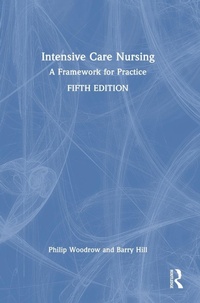
Intensive Care Nursing
A Framework for Practice
5th Edition
Published on 20. January 2025
Book
Hardback
602 pages
978-1-032-50320-2 (ISBN)
Description
The fifth edition of this essential text provides a comprehensive overview of working in intensive care. Written for critical care nurses practising at Level 3, it is fully updated to ensure the evidence base is up to date and the content reflects contemporary best practice.
Intensive Care Nursing covers patient-focused issues of bedside nursing; the technical knowledge necessary to care safely for ICU patients; the more common and specialised disease processes and treatments encountered; and how nurses can use their knowledge and skills to develop their own and others' practice. This feature includes all-new chapters on maternal critical care and principles of pharmacology for intensive care nursing. The chapters include numerous pedagogical features to aid readers in transferring their learning, such as boxes highlighting implications for practice, further reading sections, and clinical scenarios with questions.
Intensive Care Nursing is essential reading for student and qualified nurses and allied health professionals working with critically ill patients, particularly those undertaking post-registration training in the area.
Intensive Care Nursing covers patient-focused issues of bedside nursing; the technical knowledge necessary to care safely for ICU patients; the more common and specialised disease processes and treatments encountered; and how nurses can use their knowledge and skills to develop their own and others' practice. This feature includes all-new chapters on maternal critical care and principles of pharmacology for intensive care nursing. The chapters include numerous pedagogical features to aid readers in transferring their learning, such as boxes highlighting implications for practice, further reading sections, and clinical scenarios with questions.
Intensive Care Nursing is essential reading for student and qualified nurses and allied health professionals working with critically ill patients, particularly those undertaking post-registration training in the area.
More details
Edition
5th edition
Language
English
Place of publication
London
United Kingdom
Publishing group
Taylor & Francis Ltd
Target group
College/higher education
Professional and scholarly
Postgraduate, Professional, and Undergraduate
Illustrations
57 s/w Tabellen, 56 s/w Abbildungen, 56 s/w Zeichnungen
57 Tables, black and white; 56 Line drawings, black and white; 56 Illustrations, black and white
Dimensions
Height: 250 mm
Width: 175 mm
Thickness: 38 mm
Weight
1233 gr
ISBN-13
978-1-032-50320-2 (9781032503202)
Copyright in bibliographic data and cover images is held by Nielsen Book Services Limited or by the publishers or by their respective licensors: all rights reserved.
Schweitzer Classification
Other editions
Additional editions
Book
01/2025
5th Edition
Routledge
€52.50
Shipment within 10-20 days
E-Book
01/2025
5th Edition
Routledge
€55.49
Available for download
E-Book
01/2025
5th Edition
Routledge
€55.49
Available for download
Previous edition
Book
09/2018
4th Edition
Routledge
€200.89
Article exhausted; check for reprint
Persons
The late Philip Woodrow was a practice development nurse in critical care at East Kent Hospitals University Foundation Trust, UK. He authored the first four editions of Intensive Care Nursing, as well as Nursing Acutely Ill Adults and High Dependency Nursing Care.
Barry Hill is a professor of acute and critical care nursing and head of the School for Nursing and Midwifery at Buckinghamshire New University, UK. Internationally recognised in education, he has authored 9 books and over 60 book chapters and published over 100 articles in peer-reviewed journals. Currently, Barry is the consultant editor for the International Journal of Advancing Practice (IJAP) and the clinical editor for the British Journal of Nursing (BJN).
Barry Hill is a professor of acute and critical care nursing and head of the School for Nursing and Midwifery at Buckinghamshire New University, UK. Internationally recognised in education, he has authored 9 books and over 60 book chapters and published over 100 articles in peer-reviewed journals. Currently, Barry is the consultant editor for the International Journal of Advancing Practice (IJAP) and the clinical editor for the British Journal of Nursing (BJN).
Content
Part 1: Contexts of Care
1. Nursing Perspectives
2. Humanism
3. Psychological Care
Part 2: Fundamental
4. Artificial Ventilation
5. Airway Management
6. Sedation
7. Acute Pain Management
8. Thermoregulation
9. Nutrition and Bowel Care
10. Mouthcare
11. Eyecare
12. Tissue Viability
13. Children in Adult ICUs
14. Maternal Intensive and Critical Care
15. Older Patients in ICU
16. Infection Prevention and Control
17. Pandemic Planning
Part 3: Monitoring
18. Respiratory Monitoring
19. Gas Carriage
20. Blood Gas Interpretation
21. Haemodynamic Monitoring
22. Blood Results
23. ECGs and Dysrhythmias
24. Neurological Monitoring
Part 4: Micropathologies
25. Cellular Pathology
26. Immunity and Immunodeficiency
27. Haemostasis
Part 5: Respiratory
28. Acute Respiratory Distress Syndrome (ARDS)
29. Alternative Ventilation
Part 6: Cardiovascular
30. Acute Coronary Syndromes
31. Coronary Surgery and Interventions
32. Shock
33. Sepsis
34. Fluid Management
35. Inotropes and Vasopressors
36. Vascular Surgery
Part 7: Neurological
37. Central Nervous System Injury
38. Peripheral Neurological Pathologies
Part 8: Abdominal
39. Acute Kidney Injury
40. Haemofiltration
41. Gastrointestinal Bleeds
42. Liver Failure
43. Obstetric Admissions to ICU
44. Organ Donation
Part 9: Metabolic
45. Severe Acute Pancreatitis
46. Diabetic Crises
47. Self-poisoning
Part 10: Professional
48. Transferring Critically Ill Patients
49. Professional Perspectives
50. Managing the ICU
51. Costs of Intensive Care
52. Applied Pharmacology in Intensive Care
1. Nursing Perspectives
2. Humanism
3. Psychological Care
Part 2: Fundamental
4. Artificial Ventilation
5. Airway Management
6. Sedation
7. Acute Pain Management
8. Thermoregulation
9. Nutrition and Bowel Care
10. Mouthcare
11. Eyecare
12. Tissue Viability
13. Children in Adult ICUs
14. Maternal Intensive and Critical Care
15. Older Patients in ICU
16. Infection Prevention and Control
17. Pandemic Planning
Part 3: Monitoring
18. Respiratory Monitoring
19. Gas Carriage
20. Blood Gas Interpretation
21. Haemodynamic Monitoring
22. Blood Results
23. ECGs and Dysrhythmias
24. Neurological Monitoring
Part 4: Micropathologies
25. Cellular Pathology
26. Immunity and Immunodeficiency
27. Haemostasis
Part 5: Respiratory
28. Acute Respiratory Distress Syndrome (ARDS)
29. Alternative Ventilation
Part 6: Cardiovascular
30. Acute Coronary Syndromes
31. Coronary Surgery and Interventions
32. Shock
33. Sepsis
34. Fluid Management
35. Inotropes and Vasopressors
36. Vascular Surgery
Part 7: Neurological
37. Central Nervous System Injury
38. Peripheral Neurological Pathologies
Part 8: Abdominal
39. Acute Kidney Injury
40. Haemofiltration
41. Gastrointestinal Bleeds
42. Liver Failure
43. Obstetric Admissions to ICU
44. Organ Donation
Part 9: Metabolic
45. Severe Acute Pancreatitis
46. Diabetic Crises
47. Self-poisoning
Part 10: Professional
48. Transferring Critically Ill Patients
49. Professional Perspectives
50. Managing the ICU
51. Costs of Intensive Care
52. Applied Pharmacology in Intensive Care