

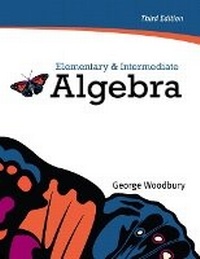
Elementary & Intermediate Algebra plus MyMathLab/MyStatLab -- Access Card Package
3rd Edition
Published on 22. February 2013
Book
Mixed media product
976 pages
978-0-321-76020-3 (ISBN)
Description
ALERT: Before you purchase, check with your instructor or review your course syllabus to ensure that you select the correct ISBN. Several versions of Pearson's MyLab & Mastering products exist for each title, including customized versions for individual schools, and registrations are not transferable. In addition, you may need a CourseID, provided by your instructor, to register for and use Pearson's MyLab & Mastering products.
Packages
Access codes for Pearson's MyLab & Mastering products may not be included when purchasing or renting from companies other than Pearson; check with the seller before completing your purchase.
Used or rental books
If you rent or purchase a used book with an access code, the access code may have been redeemed previously and you may have to purchase a new access code.
Access codes
Access codes that are purchased from sellers other than Pearson carry a higher risk of being either the wrong ISBN or a previously redeemed code. Check with the seller prior to purchase.
--Developmental mathematics is the gateway to success in academics and in life. George Woodbury strives to provide his students with a complete learning package that empowers them for success in developmental mathematics and beyond. The Woodbury suite consists of a combined text written from the ground up to minimize overlap between elementary and intermediate algebra, a new workbook that helps students make connections between skills and concepts, and a robust set of MyMathLab resources.
Note: this item is for the textbook only; supplements are available separately.
Packages
Access codes for Pearson's MyLab & Mastering products may not be included when purchasing or renting from companies other than Pearson; check with the seller before completing your purchase.
Used or rental books
If you rent or purchase a used book with an access code, the access code may have been redeemed previously and you may have to purchase a new access code.
Access codes
Access codes that are purchased from sellers other than Pearson carry a higher risk of being either the wrong ISBN or a previously redeemed code. Check with the seller prior to purchase.
--Developmental mathematics is the gateway to success in academics and in life. George Woodbury strives to provide his students with a complete learning package that empowers them for success in developmental mathematics and beyond. The Woodbury suite consists of a combined text written from the ground up to minimize overlap between elementary and intermediate algebra, a new workbook that helps students make connections between skills and concepts, and a robust set of MyMathLab resources.
Note: this item is for the textbook only; supplements are available separately.
More details
Other editions
Previous edition
George Woodbury
Elementary and Intermediate Algebra
Book
03/2008
2nd Edition
Pearson
€103.98
Article exhausted; check for reprint
Person
George Woodbury earned his bachelor's degree in mathematics from the University of California-Santa Barbara in 1990 and his master's degree in mathematics from California State University-Northridge in 1994. He currently teaches at College of the Sequoias in Visalia, CA, just outside of Fresno. He has been honored as an instructor by both his students and his colleagues. Aside from teaching and writing, George served as the department chair of the math/engineering division from 1999 through 2004.
Content
1. Review of Real Numbers
1.1. Integers, Opposites, and Absolute Values
1.2. Operations with Integers
1.3. Fractions
1.4. Operations with Fractions
1.5. Decimals and Percents
1.6. Basic Statistics
1.7. Exponents and Order of Operations
1.8 Introduction to Algebra
2. Linear Equations
2.1. Introduction to Linear Equations
2.2. Solving Linear Equations: A General Strategy
2.3. Problem Solving; Applications of Linear Equations
2.4. Applications Involving Percentages; Ration and Proportion
2.5. Linear Inequalities
3. Graphing Linear Equations
3.1. The Rectangular Coordinate System; Equations in Two Variables
3.2. Graphing Linear Equations and Their Intercepts
3.3. Slope of a Line
3.4. Linear Functions
3.5. Parallel and Perpendicular Lines
3.6. Equations of Lines
3.7. Linear Inequalities
4. Systems of Equations
4.1. Systems of Linear Equations; Solving Systems by Graphing
4.2. Solving Systems of Equations by Using the Substitution Method
4.3. Solving Systems of Equations by Using the Addition Method
4.4. Applications of Systems of Equations
4.5. Systems of Linear Inequalities
5. Exponents and Polynomials
5.1. Exponents
5.2. Negative Exponents; Scientific Notation
5.3. Polynomials; Addition and Subtraction of Polynomials
5.4. Multiplying Polynomials
5.5. Dividing of Polynomials
6. Factoring and Quadratic Equations
6.1. An Introduction to Factoring; the Greatest Common Factor; Factoring by Grouping
6.2. Factoring Trinomials of the Form x2 + bx + c
6.3. Factoring Trinomials of the Form ax2 + bx + c, where a ? 1
6.4. Factoring Special Binomials
6.5. Factoring Polynomials: A General Strategy
6.6. Solving Quadratic Equations by Factoring
6.7. Quadratic Functions
6.8. Applications of Quadratic Equations and Quadratic Functions
7. Rational Expressions and Equations
7.1. Rational Expressions and Functions
7.2. Multiplication and Division of Rational Expressions
7.3. Addition and Subtraction of Rational Expressions That Have the Same Denominator
7.4. Addition and Subtraction of Rational Expressions That Have Different Denominators
7.5. Complex Fractions
7.6. Rational Equations
7.7. Applications of Rational Equations
8. A Transition
8.1. Linear Equations and Absolute Value Equations
8.2. Linear Inequalities and Absolute Value Inequalities
8.3. Graphing Linear Equations and Functions; Graphing Absolute Value Functions
8.4. Review of Factoring; Quadratic Equations and Rational Equations
8.5. Systems of Equations (Two Equations in Two Unknowns, Three Equations in Three Unknowns)
9. Radical Expressions and Equations
9.1. Square Roots; Radical Notation
9.2. Rational Exponents
9.3. Simplifying, Adding, and Subtracting Radical Expressions
9.4. Multiplying and Dividing Radical Expressions
9.5. Radical Equations and Applications of Radical Equations
9.6. The Complex Numbers
10. Quadratic Equations
10.1. Solving Quadratic Equations by Extracting Square Roots; Completing the Square
10.2. The Quadratic Formula
10.3. Equations That Are Quadratic in Form
10.4. Graphing Quadratic Equations
10.5. Applications Using Quadratic Equations
10.6. Quadratic and Rational Inequalities
11. Functions
11.1. Review of Functions
11.2. Linear Functions
11.3. Quadratic Functions
11.4. Other Functions and Their Graphs
11.5. The Algebra of Functions
11.6. Inverse Functions
12. Logarithmic and Exponential Functions
12.1. Exponential Functions
12.2. Logarithmic Functions
12.3. Properties of Logarithms
12.4. Exponential and Logarithmic Equations
12.5. Applications of Exponential and Logarithmic Functions
12.6. Graphing Exponential and Logarithmic Functions
13. Conic Sections
13.1. Parabolas
13.2. Circles
13.3. Ellipses
13.4. Hyperbolas
13.5. Nonlinear Systems of Equations
14. Sequences, Series, and the Binomial Theorem
14.1. Sequences and Series
14.2. Arithmetic Sequences and Series
14.3. Geometric Sequences and Series
14.4. The Binomial Theorem
Appendices
A-1. Synthetic Division
A-2. Using Matrices to Solve Systems of Equations
1.1. Integers, Opposites, and Absolute Values
1.2. Operations with Integers
1.3. Fractions
1.4. Operations with Fractions
1.5. Decimals and Percents
1.6. Basic Statistics
1.7. Exponents and Order of Operations
1.8 Introduction to Algebra
2. Linear Equations
2.1. Introduction to Linear Equations
2.2. Solving Linear Equations: A General Strategy
2.3. Problem Solving; Applications of Linear Equations
2.4. Applications Involving Percentages; Ration and Proportion
2.5. Linear Inequalities
3. Graphing Linear Equations
3.1. The Rectangular Coordinate System; Equations in Two Variables
3.2. Graphing Linear Equations and Their Intercepts
3.3. Slope of a Line
3.4. Linear Functions
3.5. Parallel and Perpendicular Lines
3.6. Equations of Lines
3.7. Linear Inequalities
4. Systems of Equations
4.1. Systems of Linear Equations; Solving Systems by Graphing
4.2. Solving Systems of Equations by Using the Substitution Method
4.3. Solving Systems of Equations by Using the Addition Method
4.4. Applications of Systems of Equations
4.5. Systems of Linear Inequalities
5. Exponents and Polynomials
5.1. Exponents
5.2. Negative Exponents; Scientific Notation
5.3. Polynomials; Addition and Subtraction of Polynomials
5.4. Multiplying Polynomials
5.5. Dividing of Polynomials
6. Factoring and Quadratic Equations
6.1. An Introduction to Factoring; the Greatest Common Factor; Factoring by Grouping
6.2. Factoring Trinomials of the Form x2 + bx + c
6.3. Factoring Trinomials of the Form ax2 + bx + c, where a ? 1
6.4. Factoring Special Binomials
6.5. Factoring Polynomials: A General Strategy
6.6. Solving Quadratic Equations by Factoring
6.7. Quadratic Functions
6.8. Applications of Quadratic Equations and Quadratic Functions
7. Rational Expressions and Equations
7.1. Rational Expressions and Functions
7.2. Multiplication and Division of Rational Expressions
7.3. Addition and Subtraction of Rational Expressions That Have the Same Denominator
7.4. Addition and Subtraction of Rational Expressions That Have Different Denominators
7.5. Complex Fractions
7.6. Rational Equations
7.7. Applications of Rational Equations
8. A Transition
8.1. Linear Equations and Absolute Value Equations
8.2. Linear Inequalities and Absolute Value Inequalities
8.3. Graphing Linear Equations and Functions; Graphing Absolute Value Functions
8.4. Review of Factoring; Quadratic Equations and Rational Equations
8.5. Systems of Equations (Two Equations in Two Unknowns, Three Equations in Three Unknowns)
9. Radical Expressions and Equations
9.1. Square Roots; Radical Notation
9.2. Rational Exponents
9.3. Simplifying, Adding, and Subtracting Radical Expressions
9.4. Multiplying and Dividing Radical Expressions
9.5. Radical Equations and Applications of Radical Equations
9.6. The Complex Numbers
10. Quadratic Equations
10.1. Solving Quadratic Equations by Extracting Square Roots; Completing the Square
10.2. The Quadratic Formula
10.3. Equations That Are Quadratic in Form
10.4. Graphing Quadratic Equations
10.5. Applications Using Quadratic Equations
10.6. Quadratic and Rational Inequalities
11. Functions
11.1. Review of Functions
11.2. Linear Functions
11.3. Quadratic Functions
11.4. Other Functions and Their Graphs
11.5. The Algebra of Functions
11.6. Inverse Functions
12. Logarithmic and Exponential Functions
12.1. Exponential Functions
12.2. Logarithmic Functions
12.3. Properties of Logarithms
12.4. Exponential and Logarithmic Equations
12.5. Applications of Exponential and Logarithmic Functions
12.6. Graphing Exponential and Logarithmic Functions
13. Conic Sections
13.1. Parabolas
13.2. Circles
13.3. Ellipses
13.4. Hyperbolas
13.5. Nonlinear Systems of Equations
14. Sequences, Series, and the Binomial Theorem
14.1. Sequences and Series
14.2. Arithmetic Sequences and Series
14.3. Geometric Sequences and Series
14.4. The Binomial Theorem
Appendices
A-1. Synthetic Division
A-2. Using Matrices to Solve Systems of Equations