

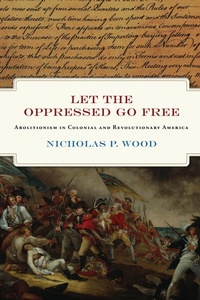
Let the Oppressed Go Free
Abolitionism in Colonial and Revolutionary America
Published on 4. November 2025
Book
Hardback
384 pages
978-1-5128-2832-0 (ISBN)
Description
Tenacious activism by Quakers, African Americans, and antislavery evangelicals made antislavery central to the American Revolution
In Let the Oppressed Go Free, Nicholas P. Wood presents the opponents of slavery who sustained and expanded the antislavery movement during the American Revolution in the face of widespread hostility. These early abolitionists were inspired by antislavery theology: the view that slavery was a sinful form of oppression that would provoke God's wrath against slaveholding societies. These principles were first advanced by a handful of Quakers and Puritans as early as the 1600s, but they did not become widespread until the second half of the eighteenth century. Quakers embraced antislavery theology during the French and Indian War, which they interpreted as divine chastisement for the sin of colonial slavery. Citing the prophet Isaiah, they pledged to please the Lord by letting the oppressed go free.
Antislavery theology became even more prominent during the American Revolution. When Parliament provoked an imperial crisis in the 1760s, abolitionists argued it was further evidence of God's anger over slavery. The outbreak of war in 1775 made these arguments increasingly persuasive. Let the Oppressed Go Free demonstrates that antislavery activism during the Revolution by Quakers, African Americans, and evangelical patriots was more sophisticated and influential than historians have recognized. The northern states that began abolishing slavery during the Revolution did so in response to tenacious agitation and generally described their actions as designed to earn God's blessing.
Let the Oppressed Go Free challenges many common assumptions about abolitionism and the American Revolution. Wood demonstrates that religion remained central to abolitionism rather than being displaced by "secular" arguments about natural rights. And whereas some have argued that the Revolutionary War hindered antislavery progress and fueled racism, Wood shows that the war accelerated reform.
In Let the Oppressed Go Free, Nicholas P. Wood presents the opponents of slavery who sustained and expanded the antislavery movement during the American Revolution in the face of widespread hostility. These early abolitionists were inspired by antislavery theology: the view that slavery was a sinful form of oppression that would provoke God's wrath against slaveholding societies. These principles were first advanced by a handful of Quakers and Puritans as early as the 1600s, but they did not become widespread until the second half of the eighteenth century. Quakers embraced antislavery theology during the French and Indian War, which they interpreted as divine chastisement for the sin of colonial slavery. Citing the prophet Isaiah, they pledged to please the Lord by letting the oppressed go free.
Antislavery theology became even more prominent during the American Revolution. When Parliament provoked an imperial crisis in the 1760s, abolitionists argued it was further evidence of God's anger over slavery. The outbreak of war in 1775 made these arguments increasingly persuasive. Let the Oppressed Go Free demonstrates that antislavery activism during the Revolution by Quakers, African Americans, and evangelical patriots was more sophisticated and influential than historians have recognized. The northern states that began abolishing slavery during the Revolution did so in response to tenacious agitation and generally described their actions as designed to earn God's blessing.
Let the Oppressed Go Free challenges many common assumptions about abolitionism and the American Revolution. Wood demonstrates that religion remained central to abolitionism rather than being displaced by "secular" arguments about natural rights. And whereas some have argued that the Revolutionary War hindered antislavery progress and fueled racism, Wood shows that the war accelerated reform.
More details
Series
Language
English
Place of publication
Pennsylvania
United States
Target group
Professional and scholarly
College/higher education
Product notice
Paper over boards
Illustrations
10 illus.
Dimensions
Height: 231 mm
Width: 155 mm
Thickness: 33 mm
Weight
726 gr
ISBN-13
978-1-5128-2832-0 (9781512828320)
Copyright in bibliographic data and cover images is held by Nielsen Book Services Limited or by the publishers or by their respective licensors: all rights reserved.
Schweitzer Classification
Person
Nicholas P. Wood is Associate Professor of History at Spring Hill College.