

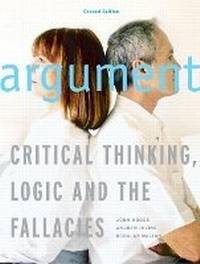
Argument
Critical Thinking, Logic, and the Fallacies, Second Canadian Edition
2nd Edition
Published on 10. December 2003
Book
Paperback/Softback
384 pages
978-0-13-039938-0 (ISBN)
Description
This text is designed for the Critical Thinking and Logic courses found in philosophy and general education departments at both universities and colleges.
The most unique feature of the text is its solid foundation in logic. The discussion of fallacies is integrated with logic in a way not seen in other texts. This treatment provides students with tools to evaluate their own and other peoples thinking logically as well as analyze and assess an argument.
The most unique feature of the text is its solid foundation in logic. The discussion of fallacies is integrated with logic in a way not seen in other texts. This treatment provides students with tools to evaluate their own and other peoples thinking logically as well as analyze and assess an argument.
More details
Edition
2nd edition
Language
English
Place of publication
United States
Publishing group
Pearson Education (US)
Target group
Professional and scholarly
Dimensions
Height: 100 mm
Width: 100 mm
Thickness: 100 mm
Weight
100 gr
ISBN-13
978-0-13-039938-0 (9780130399380)
Copyright in bibliographic data and cover images is held by Nielsen Book Services Limited or by the publishers or by their respective licensors: all rights reserved.
Schweitzer Classification
Other editions
Previous edition
Book
08/2002
Prentice-Hall (Canada)
€63.13
Article exhausted; check for reprint
Content
(NOTE: Each chapter concludes with a Summary.)
Introduction.
I. ARGUMENTS.
1. The Quarrel.
Arguments, Fallacies, and Logic.
The Quarrel.
The Ad Baculum.
The Ad Hominem.
2. The Debate.
The Debate.
Mill's Model of Debate.
A Critique of Mill's Model.
The Ad Populum: Boosterism.
The Ad Populum: Popularity.
The Ad Verecundiam.
Appeals to Misery and other Emotive Fallacies.
3. Dialectic.
Aristotle's Basic Rules of Dialectic.
Eight Revised Rules of Dialectic.
The Ad Ignorantiam.
The Fallacy of Complex Question.
II. LOGIC.
4. Elementary Logic.
Entailment.
Conjunction, Disjunction, and Negation.
Conditionals and Biconditionals.
Testing Arguments for Validity.
The Truth-Table Test for Validity.
Fallacies of Relevance.
5. Formal and Informal Logic.
Logical Form.
Formal Logic.
Begging the Question.
Equivocation and Amphiboly.
The Paradox of the Liar.
6. Formal Deductive Systems.
Formal Systems.
System P.
Working in System P.
Evaluating System P.
7. Nonclassical Propositional Logics.
System RP.
Evaluating System RP.
Modal Logics.
Epistemic and Deontic Logics.
Multi-valued Logics.
8. Term Logic.
Aristotle's Categorical Propositions.
Immediate Inference.
The Syllogism.
9. Predicate Logic.
Motivating Predicate Logic.
Extending System P.
Working in System PL.
Extending System PL.
10. Inductive Logic and Scientific Reasoning.
Induction: Narrow and Wide2. Inductive Logic.
The Elements of Probability Theory.
Hasty Generalization and Related Fallacies.
A Causal Fallacy.
Causal Reasoning.
III. APPLYING LOGIC TO ARGUMENTS.
11. Economic Reasoning.
The Fallacy of Composition and Division.
Analytical Remarks about Composition and Division.
Expected Utility, Sure-thing, and Minimax Principles.
Group Decisions and the Prisoner's Dilemma.
12. Legal Reasoning.
Burden of Proof versus Standard of Proof.
Evidence, Testimony, and Expert Opinion.
Legal Precedent and Analogical Argument.
Legal Facts and Legal Justification.
13. Artificial Intelligence.
Artificial Intelligence, Logic, and Computability.
Expert Systems.
Plausibility Screening.
Plausible Argument.
Theories of Belief Revision.
Can Machines Think?
14. Issues in the Philosophy of Logic.
Choosing the Right Logic.
Paraconsistent Logics.
The Enlightenment Ideal.
Appendix.
Solutions to Selected Exercises.
Selected Readings.
Index.
Introduction.
I. ARGUMENTS.
1. The Quarrel.
Arguments, Fallacies, and Logic.
The Quarrel.
The Ad Baculum.
The Ad Hominem.
2. The Debate.
The Debate.
Mill's Model of Debate.
A Critique of Mill's Model.
The Ad Populum: Boosterism.
The Ad Populum: Popularity.
The Ad Verecundiam.
Appeals to Misery and other Emotive Fallacies.
3. Dialectic.
Aristotle's Basic Rules of Dialectic.
Eight Revised Rules of Dialectic.
The Ad Ignorantiam.
The Fallacy of Complex Question.
II. LOGIC.
4. Elementary Logic.
Entailment.
Conjunction, Disjunction, and Negation.
Conditionals and Biconditionals.
Testing Arguments for Validity.
The Truth-Table Test for Validity.
Fallacies of Relevance.
5. Formal and Informal Logic.
Logical Form.
Formal Logic.
Begging the Question.
Equivocation and Amphiboly.
The Paradox of the Liar.
6. Formal Deductive Systems.
Formal Systems.
System P.
Working in System P.
Evaluating System P.
7. Nonclassical Propositional Logics.
System RP.
Evaluating System RP.
Modal Logics.
Epistemic and Deontic Logics.
Multi-valued Logics.
8. Term Logic.
Aristotle's Categorical Propositions.
Immediate Inference.
The Syllogism.
9. Predicate Logic.
Motivating Predicate Logic.
Extending System P.
Working in System PL.
Extending System PL.
10. Inductive Logic and Scientific Reasoning.
Induction: Narrow and Wide2. Inductive Logic.
The Elements of Probability Theory.
Hasty Generalization and Related Fallacies.
A Causal Fallacy.
Causal Reasoning.
III. APPLYING LOGIC TO ARGUMENTS.
11. Economic Reasoning.
The Fallacy of Composition and Division.
Analytical Remarks about Composition and Division.
Expected Utility, Sure-thing, and Minimax Principles.
Group Decisions and the Prisoner's Dilemma.
12. Legal Reasoning.
Burden of Proof versus Standard of Proof.
Evidence, Testimony, and Expert Opinion.
Legal Precedent and Analogical Argument.
Legal Facts and Legal Justification.
13. Artificial Intelligence.
Artificial Intelligence, Logic, and Computability.
Expert Systems.
Plausibility Screening.
Plausible Argument.
Theories of Belief Revision.
Can Machines Think?
14. Issues in the Philosophy of Logic.
Choosing the Right Logic.
Paraconsistent Logics.
The Enlightenment Ideal.
Appendix.
Solutions to Selected Exercises.
Selected Readings.
Index.