

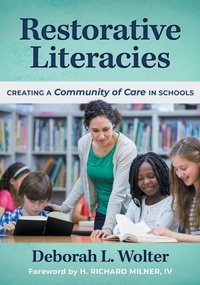
Restorative Literacies
Creating a Community of Care in Schools
Will be published approx. on 12. March 2021
Book
Paperback/Softback
160 pages
978-0-8077-6520-3 (ISBN)
Description
Through eight compelling stories of restorative literacies, Wolter explores the complex relationships among cognition, metacognition, identity, behavior in schools, and literacies. Based on the principles of restorative justice, restorative literacies are designed to help educators repair harm, restore relationships, and expand the concept of literacy for some of our most disenfranchised and disengaged students. Restorative literacies are not just about growing readers and writers per se. They are about creating a community of care that involves students, teachers, administrators, and families so that all students experience racially, culturally, linguistically, and economically responsive instruction in multiple forms of literacies. Drawing on the author's rich experiences cultivating a love of reading among her students and studying the practices of other educators, Restorative Literacies advances a provocative set of examples about centering the voice and stories of people in our quest to humanize and reimagine how we care for, about, and with others.Book Features:
Presents a literacy model of restorative justice that includes participation from teachers, principals, administrators, and parents.
Contains engaging narratives from elementary and secondary schools to illustrate concepts and strategies.
Explores compassionate listening as a conscious process of assuring that all involved are fully heard, a skill that requires removing assumptions, judgement, and bias.
Identifies practices that take a positive view of learners, as opposed to referring students to special education.
Uses restoration as an alternative to pushout practices that are designed to control students and often prevent them from reaching their capacity.
Presents a literacy model of restorative justice that includes participation from teachers, principals, administrators, and parents.
Contains engaging narratives from elementary and secondary schools to illustrate concepts and strategies.
Explores compassionate listening as a conscious process of assuring that all involved are fully heard, a skill that requires removing assumptions, judgement, and bias.
Identifies practices that take a positive view of learners, as opposed to referring students to special education.
Uses restoration as an alternative to pushout practices that are designed to control students and often prevent them from reaching their capacity.
More details
Series
Language
English
Place of publication
New York
United States
Target group
Professional and scholarly
Product notice
Paperback (trade)
Unsewn / adhesive bound
Dimensions
Height: 221 mm
Width: 150 mm
Thickness: 20 mm
Weight
227 gr
ISBN-13
978-0-8077-6520-3 (9780807765203)
Copyright in bibliographic data and cover images is held by Nielsen Book Services Limited or by the publishers or by their respective licensors: all rights reserved.
Schweitzer Classification
Persons
Deborah L. Wolter is a retired literacy consultant for Student Intervention and Support Services in Ann Arbor (Michigan) Public Schools. Her books include Reading Upside Down: Identifying and Addressing Opportunity Gaps in Literacy Instruction.
Content
Contents
Foreword?H. Richard Milner IV?vii
Preface: Everyone Has a Story?ix
Whose Stories Get Told??x
Chapter Overview?xi
Acknowledgments?xv
1.?What Are Restorative Literacies??1
Response, Repair, and Restoration?2
How Restorative Justice Informs Restorative Literacies?3
Considering the Community?4
Relationships Among Identity, Behavior, and Literacies?5
Humanity, Justice, and a Natural Sense of Curiosity?7
Children's Rights to Read?8
Relationships Among Responsive Teaching, Sustainability, and Restorative Practices?10
Restorative Literacies?13
2.?Noticing the Language of Stories?15
Noticing the Language of Stories?16
Hearing the Language of Silence?19
Watching for Deficit Language?21
Hearing the Language of Race?22
Listening to Goals Instead of Systems?24
3.?Compassionate Listening?28
Active Listening and Observing?29
Multiple Lenses?32
Developing Relationships?36
Trauma-Informed Listening?37
Responding to Difficult Behavior?38
Upholding Voices?40
4.?Thinking About Literacies ?42
Defining Literacies?43
Expanding the Literary Canon?45
Minding Gaps Between Reading Processes and Reading Instruction?50
Literacies in Context?56
5.?Restoring Relationships?58
Testing and Vulnerability?59
Fostering Love of Literacies?60
Literacies in Communities and Schools?61
Access, Library Culture, and Diversity?62
Motivation and Engagement?65
Fostering Choice in Reading?67
Scaffolding Strategic Reading?71
Time and Space for Voluminous Reading?72
6.?Repairing Harm 74
Dismantling Labels and Categories?75
Groups and Circles?78
Characters in a Restorative Circle?82
Restorative Circles With Multiple Lenses?83
Restorative Circles on Disciplinary Literacy?84
Strategic Reading in Restorative Circles?86
Thoughtfully Choosing and Abandoning Books?87
7.?Strengthening Learning With Agency 89
Deeper Inclusion?91
Inquiry and Equity?92
Active Learning and Agency?95
8.?Developing Leadership and Sustainability 98
Defining Leadership?99
Toward Sharing Power?101
Opportunities for Developing Leadership?102
A New Collaboration?104
9.?Recognizing Literacies and Identities?108
Uncovering Identities?109
Decentering Whiteness?111
Toxic Positivity?115
Fostering Readers' Identities?116
Conclusion: Restorative Literacies and Restorative Care?118
Stories of Humanity?119
References?122
Index?135
About the Author?144
Foreword?H. Richard Milner IV?vii
Preface: Everyone Has a Story?ix
Whose Stories Get Told??x
Chapter Overview?xi
Acknowledgments?xv
1.?What Are Restorative Literacies??1
Response, Repair, and Restoration?2
How Restorative Justice Informs Restorative Literacies?3
Considering the Community?4
Relationships Among Identity, Behavior, and Literacies?5
Humanity, Justice, and a Natural Sense of Curiosity?7
Children's Rights to Read?8
Relationships Among Responsive Teaching, Sustainability, and Restorative Practices?10
Restorative Literacies?13
2.?Noticing the Language of Stories?15
Noticing the Language of Stories?16
Hearing the Language of Silence?19
Watching for Deficit Language?21
Hearing the Language of Race?22
Listening to Goals Instead of Systems?24
3.?Compassionate Listening?28
Active Listening and Observing?29
Multiple Lenses?32
Developing Relationships?36
Trauma-Informed Listening?37
Responding to Difficult Behavior?38
Upholding Voices?40
4.?Thinking About Literacies ?42
Defining Literacies?43
Expanding the Literary Canon?45
Minding Gaps Between Reading Processes and Reading Instruction?50
Literacies in Context?56
5.?Restoring Relationships?58
Testing and Vulnerability?59
Fostering Love of Literacies?60
Literacies in Communities and Schools?61
Access, Library Culture, and Diversity?62
Motivation and Engagement?65
Fostering Choice in Reading?67
Scaffolding Strategic Reading?71
Time and Space for Voluminous Reading?72
6.?Repairing Harm 74
Dismantling Labels and Categories?75
Groups and Circles?78
Characters in a Restorative Circle?82
Restorative Circles With Multiple Lenses?83
Restorative Circles on Disciplinary Literacy?84
Strategic Reading in Restorative Circles?86
Thoughtfully Choosing and Abandoning Books?87
7.?Strengthening Learning With Agency 89
Deeper Inclusion?91
Inquiry and Equity?92
Active Learning and Agency?95
8.?Developing Leadership and Sustainability 98
Defining Leadership?99
Toward Sharing Power?101
Opportunities for Developing Leadership?102
A New Collaboration?104
9.?Recognizing Literacies and Identities?108
Uncovering Identities?109
Decentering Whiteness?111
Toxic Positivity?115
Fostering Readers' Identities?116
Conclusion: Restorative Literacies and Restorative Care?118
Stories of Humanity?119
References?122
Index?135
About the Author?144