

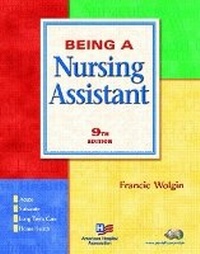
Being a Nursing Assistant
9th Edition
Published on 9. September 2004
Book
Mixed media product
800 pages
978-0-13-182873-5 (ISBN)
Description
For Nursing Assisting Courses.
This comprehensive text, endorsed by the American Hospital Association, sets the standard for nursing assistants working across the entire care continuum-in acute, subacute, long term care, and home health. Each copy of the text comes packaged with a freeCD-ROM and is accompanied by a free Companion Website (www.prenhall.com/wolgin).
This comprehensive text, endorsed by the American Hospital Association, sets the standard for nursing assistants working across the entire care continuum-in acute, subacute, long term care, and home health. Each copy of the text comes packaged with a freeCD-ROM and is accompanied by a free Companion Website (www.prenhall.com/wolgin).
More details
Edition
9th edition
Language
English
Place of publication
United States
Publishing group
Pearson Education (US)
Target group
Professional and scholarly
Dimensions
Height: 211 mm
Width: 275 mm
Thickness: 28 mm
Weight
1461 gr
ISBN-13
978-0-13-182873-5 (9780131828735)
Copyright in bibliographic data and cover images is held by Nielsen Book Services Limited or by the publishers or by their respective licensors: all rights reserved.
Schweitzer Classification
Other editions
New editions
Francie Wolgin | Kate Smith | Julie French
Pearson's Nursing Assistant Today
Book
01/2012
Pearson
€94.85
Shipment within 15-20 days
Previous edition
Francie Wolgin
Being a Nursing Assistant
Book
02/2002
8th Edition
Pearson
€38.44
Article exhausted; check for reprint
Person
Francie Wolgin, MSN, RN. Francie Wolgin serves as Community Health Development Program Officer for THE HEALTH FOUNDATION OF GREATER CINCINNATI. She maintains a relationship with colleagues currently teaching nursing assistants, patient care technicians and nursing students in several states. She serves on the advisory board of Cross Country University and the Medcom Nursing Advisory Board. She was awarded the University of Cincinnati College of Nursing Distinguished Alumni Award in 1999.
Ms. Wolgin's previous positions include System Leader for Education and Employee Development, St. Joseph Mercy Hospital (SJMH), Ann Arbor, Michigan. She served four years as Director of Operations Support and Practice Development at SJMH, and as president of the National Nursing Staff Development Organization. In addition, Ms. Wolgin served as an adjunct faculty member at the University of Michigan School of Nursing. She serves on the advisory board of Cross Country University, and on the editorial board of Nursing Management.
Ms. Wolgin has been Director of Nursing Practice Development and Clinical Associate at the School of Nursing, Duke University Medical Center; she has held several management, staff development, and administrative positions at the University of Cincinnati Hospital; and a faculty appointment at the University of Cincinnati College of Nursing and Health. She served on the Journal of Nursing Staff Development editorial board for several years. She is the author of Advanced Skills for Caregivers, Being a Nursing Assistant, 7th and 8th editions, as well as many articles. She regularly contributes to books on staff development, competency, and training of advanced nursing assistants. Extensive experience as a direct caregiver in a variety of positions gives her both perspective and firsthand knowledge of the challenges and opportunities available throughout the health care continuum.
Ms. Wolgin's previous positions include System Leader for Education and Employee Development, St. Joseph Mercy Hospital (SJMH), Ann Arbor, Michigan. She served four years as Director of Operations Support and Practice Development at SJMH, and as president of the National Nursing Staff Development Organization. In addition, Ms. Wolgin served as an adjunct faculty member at the University of Michigan School of Nursing. She serves on the advisory board of Cross Country University, and on the editorial board of Nursing Management.
Ms. Wolgin has been Director of Nursing Practice Development and Clinical Associate at the School of Nursing, Duke University Medical Center; she has held several management, staff development, and administrative positions at the University of Cincinnati Hospital; and a faculty appointment at the University of Cincinnati College of Nursing and Health. She served on the Journal of Nursing Staff Development editorial board for several years. She is the author of Advanced Skills for Caregivers, Being a Nursing Assistant, 7th and 8th editions, as well as many articles. She regularly contributes to books on staff development, competency, and training of advanced nursing assistants. Extensive experience as a direct caregiver in a variety of positions gives her both perspective and firsthand knowledge of the challenges and opportunities available throughout the health care continuum.
Content
1. The Health Care System.
2. Your Role as a Nursing Assistant.
3. Communication Skills.
4. Patients, Residents, and Clients.
5. Infection Control.
6. Safety.
7. Body Mechanics: Positioning, Moving, and Transporting Patients.
8. Admitting, Transferring, and Discharging a Patient.
9. The Patient's Environment.
10. Bedmaking.
11. Home Health Care.
12. Personal Care of the Patient.
13. Emergency Care.
14. The Human Body.
15. Growth and Development.
16. The Musculoskeletal System and Related Care.
17. The Integumentary System and Related Care.
18. The Circulatory and Respiratory Systems and Related Care.
19. Measuring Vital Signs.
20. The Gastrointestinal System and Related Care.
21. Nutrition for the Patient.
22. The Urinary System and Related Care.
23. Specimen Collection.
24. The Endocrine System and Related Care of Diabetics.
25. The Reproductive System and Related Care.
26. The Nervous System and Related Care.
27. Warm and Cold Applications.
28. Care of the Surgical Patient.
29. Surgical Procedures.
30. Other Patients with Special Needs.
31. Neonatal and Pediatric Care.
32. The Older Adult Patient and Long-Term Care.
33. Rehabilitation and Return to Self-Care.
34. The Terminally Ill Patient and Postmortem Care.
35. Beginning Your Career as a Nursing Assistant.
Appendix A: Medical Terms, Abbreviations, & Specialties.
Appendix B: What's New in Patient Restraints
Glossary
Index.
2. Your Role as a Nursing Assistant.
3. Communication Skills.
4. Patients, Residents, and Clients.
5. Infection Control.
6. Safety.
7. Body Mechanics: Positioning, Moving, and Transporting Patients.
8. Admitting, Transferring, and Discharging a Patient.
9. The Patient's Environment.
10. Bedmaking.
11. Home Health Care.
12. Personal Care of the Patient.
13. Emergency Care.
14. The Human Body.
15. Growth and Development.
16. The Musculoskeletal System and Related Care.
17. The Integumentary System and Related Care.
18. The Circulatory and Respiratory Systems and Related Care.
19. Measuring Vital Signs.
20. The Gastrointestinal System and Related Care.
21. Nutrition for the Patient.
22. The Urinary System and Related Care.
23. Specimen Collection.
24. The Endocrine System and Related Care of Diabetics.
25. The Reproductive System and Related Care.
26. The Nervous System and Related Care.
27. Warm and Cold Applications.
28. Care of the Surgical Patient.
29. Surgical Procedures.
30. Other Patients with Special Needs.
31. Neonatal and Pediatric Care.
32. The Older Adult Patient and Long-Term Care.
33. Rehabilitation and Return to Self-Care.
34. The Terminally Ill Patient and Postmortem Care.
35. Beginning Your Career as a Nursing Assistant.
Appendix A: Medical Terms, Abbreviations, & Specialties.
Appendix B: What's New in Patient Restraints
Glossary
Index.