

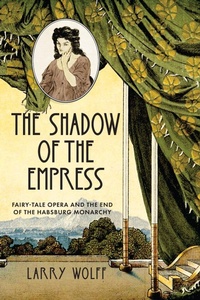
The Shadow of the Empress
Fairy-Tale Opera and the End of the Habsburg Monarchy
Published on 2. May 2023
Book
Hardback
452 pages
978-1-5036-3458-9 (ISBN)
Description
A beguiling exploration of the last Habsburg monarchs' grip on Europe's historical and cultural imagination.
In 1919 the last Habsburg rulers, Emperor Karl and Empress Zita, left Austria, going into exile. That same year, the fairy-tale opera Die Frau ohne Schatten (The Woman Without a Shadow), featuring a mythological emperor and empress, premiered at the Vienna Opera. Viennese poet Hugo von Hofmannsthal and German composer Richard Strauss created Die Frau ohne Schatten through the bitter years of World War I, imagining it would triumphantly appear after the victory of the German and Habsburg empires. Instead, the premiere came in the aftermath of catastrophic defeat.
The Shadow of the Empress: Fairy-Tale Opera and the End of the Habsburg Monarchy explores how the changing circumstances of politics and society transformed their opera and its cultural meanings before, during, and after the First World War.
Strauss and Hofmannsthal turned emperors and empresses into fantastic fairy-tale characters; meanwhile, following the collapse of the Habsburg monarchy after the war, their real-life counterparts, removed from political life in Europe, began to be regarded as anachronistic, semi-mythological figures. Reflecting on the seismic cultural shifts that rocked post-imperial Europe, Larry Wolff follows the story of Karl and Zita after the loss of their thrones. Karl died in 1922, but Zita lived through the rise of Nazism, World War II, and the Cold War. By her death in 1989, she had herself become a fairy-tale figure, a totem of imperial nostalgia.
Wolff weaves together the story of the opera's composition and performance; the end of the Habsburg monarchy; and his own family's life in and exile from Central Europe, providing a rich new understanding of Europe's cataclysmic twentieth century, and our contemporary relationship to it.
In 1919 the last Habsburg rulers, Emperor Karl and Empress Zita, left Austria, going into exile. That same year, the fairy-tale opera Die Frau ohne Schatten (The Woman Without a Shadow), featuring a mythological emperor and empress, premiered at the Vienna Opera. Viennese poet Hugo von Hofmannsthal and German composer Richard Strauss created Die Frau ohne Schatten through the bitter years of World War I, imagining it would triumphantly appear after the victory of the German and Habsburg empires. Instead, the premiere came in the aftermath of catastrophic defeat.
The Shadow of the Empress: Fairy-Tale Opera and the End of the Habsburg Monarchy explores how the changing circumstances of politics and society transformed their opera and its cultural meanings before, during, and after the First World War.
Strauss and Hofmannsthal turned emperors and empresses into fantastic fairy-tale characters; meanwhile, following the collapse of the Habsburg monarchy after the war, their real-life counterparts, removed from political life in Europe, began to be regarded as anachronistic, semi-mythological figures. Reflecting on the seismic cultural shifts that rocked post-imperial Europe, Larry Wolff follows the story of Karl and Zita after the loss of their thrones. Karl died in 1922, but Zita lived through the rise of Nazism, World War II, and the Cold War. By her death in 1989, she had herself become a fairy-tale figure, a totem of imperial nostalgia.
Wolff weaves together the story of the opera's composition and performance; the end of the Habsburg monarchy; and his own family's life in and exile from Central Europe, providing a rich new understanding of Europe's cataclysmic twentieth century, and our contemporary relationship to it.
Reviews / Votes
"In Larry Wolff's brilliant telling, an opera's fairy-tale empress and a real-life Habsburg empress come to embody the phantom political culture of an empire that to this day maintains a powerful hold over Central and Eastern European institutions and imagination."-Pieter M. Judson, author of The Habsburg Empire: A New History "This alluring and original work of history explores the parallel lives of a twentieth century opera, the twilight of the Habsburg Empire, and its last emperor and empress. Politics is woven into the opera's creation and its later life. In this brilliant book, art imitates life, and life art, through mirror images, shadows and the unexpected destinies of historic personages."-Leon Botstein, Bard College "Larry Wolff's dual biography of Richard Strauss and Hugo von Hofmannsthal's fictional empress (The Woman without a Shadow, premiered in 1919) and the last Habsburg empress Zita, who lived until 1989, is a silver rose of a book-a brilliant account of an imperfect operatic masterpiece, its allegorical investments, and its call for the repopulation and humanization of Europe in the wake of World War I."-Michael P. Steinberg, author of The Afterlife of Moses "The Shadow of the Empress has many virtues: great erudition, lively writing, and undeniable energy."-Celia Applegate, Austrian History YearbookMore details
Edition
New edition
Language
English
Place of publication
Palo Alto
United States
Target group
Professional and scholarly
Edition type
New edition
Product notice
Cloth
Illustrations
13 figures, 22 halftones, 1 map
Dimensions
Height: 231 mm
Width: 155 mm
Thickness: 33 mm
Weight
748 gr
ISBN-13
978-1-5036-3458-9 (9781503634589)
Copyright in bibliographic data and cover images is held by Nielsen Book Services Limited or by the publishers or by their respective licensors: all rights reserved.
Schweitzer Classification
Other editions
Additional editions

E-Book
05/2023
1st Edition
Stanford University Press
€50.99
Available for download
Person
Larry Wolff is Silver Professor in the Department of History at New York University. His books with Stanford University Press include Inventing Eastern Europe, Venice and the Slavs, The Idea of Galicia, The Singing Turk, and Woodrow Wilson and the Reimagining of Eastern Europe.
Content
Introduction: Pulling Roots
1. Giving Language Time
2. The Transported Word: Wheatley's Part
3. Voices of the Ground: Blake's Language in Deep Time
4. Radical Diversions: Wordsworth's Overgrowth
5. The Primitive Today: Thoreau in the Wild
Conclusion: Deracination
1. Giving Language Time
2. The Transported Word: Wheatley's Part
3. Voices of the Ground: Blake's Language in Deep Time
4. Radical Diversions: Wordsworth's Overgrowth
5. The Primitive Today: Thoreau in the Wild
Conclusion: Deracination