

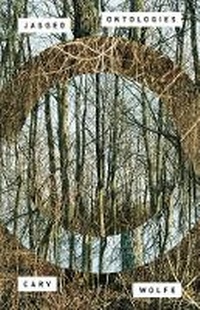
Jagged Ontologies
Volume 81
Published on 15. June 2026
Book
Hardback
216 pages
978-1-5179-2105-7 (ISBN)
Description
Rethinking life, justice, and the biosphere through the sharp edges of jagged ontology
In this groundbreaking book, Cary Wolfe dismantles some of the most entrenched assumptions in contemporary interdisciplinary thought, foremost among them the idea that "flat" ontologies are adequate to the challenge of a robust, posthumanist pluralism. Against the fantasy of nature as an interconnected, egalitarian web, Wolfe proposes a "jagged ontology" in which species and systems intersect not through seamless cooperation but through friction, contestation, and uneven exchange. Wolfe pushes back equally, however, against the reductive tendencies of neo-Darwinian competitive individualism, insisting that what separates us from the world is also what binds us to it - a paradox at the core of all living systems, where autopoietic closure unexpectedly creates environmental openness.
Through a combination of systems theory, deconstruction, theoretical biology, and biopolitical philosophy, Wolfe develops a radically posthumanist framework for addressing the ethical, social, and political stakes of life in the biosphere. Extending his approach across disciplines and practices-from ecological theory and continental philosophy to law, public policy, and contemporary art-he lays bare the contradictions embedded in even the most progressive attempts to account for the imbrication of the human and the more-than-human. Through a detailed and long-overdue examination of the popular notion of sympoiesis and a skeptical reading of the anthropomorphism of the "new forestry," Wolfe reveals how well-intentioned theories can undermine the very posthumanist pluralism that they claim to champion.
More than a critique, Jagged Ontologies opens onto new philosophical terrain for understanding multispecies justice, environmental responsibility, and the structural dynamics of individuation and creativity in the biosphere. Here, Wolfe offers a crucial rethinking of what it means to live and think ethically in a shared yet jagged world.
Retail e-book files for this title are screen-reader friendly with images accompanied by short alt text and/or extended descriptions.
In this groundbreaking book, Cary Wolfe dismantles some of the most entrenched assumptions in contemporary interdisciplinary thought, foremost among them the idea that "flat" ontologies are adequate to the challenge of a robust, posthumanist pluralism. Against the fantasy of nature as an interconnected, egalitarian web, Wolfe proposes a "jagged ontology" in which species and systems intersect not through seamless cooperation but through friction, contestation, and uneven exchange. Wolfe pushes back equally, however, against the reductive tendencies of neo-Darwinian competitive individualism, insisting that what separates us from the world is also what binds us to it - a paradox at the core of all living systems, where autopoietic closure unexpectedly creates environmental openness.
Through a combination of systems theory, deconstruction, theoretical biology, and biopolitical philosophy, Wolfe develops a radically posthumanist framework for addressing the ethical, social, and political stakes of life in the biosphere. Extending his approach across disciplines and practices-from ecological theory and continental philosophy to law, public policy, and contemporary art-he lays bare the contradictions embedded in even the most progressive attempts to account for the imbrication of the human and the more-than-human. Through a detailed and long-overdue examination of the popular notion of sympoiesis and a skeptical reading of the anthropomorphism of the "new forestry," Wolfe reveals how well-intentioned theories can undermine the very posthumanist pluralism that they claim to champion.
More than a critique, Jagged Ontologies opens onto new philosophical terrain for understanding multispecies justice, environmental responsibility, and the structural dynamics of individuation and creativity in the biosphere. Here, Wolfe offers a crucial rethinking of what it means to live and think ethically in a shared yet jagged world.
Retail e-book files for this title are screen-reader friendly with images accompanied by short alt text and/or extended descriptions.
Reviews / Votes
"Full of potentiality and sheer cleverness, Jagged Ontologies is an impressive, sharp, important intervention that will sharpen the autopoietic-sympoietic divide. Cary Wolfe seeks to find where things might be taken, what new thoughts can be brought into being, what avenues might be opened and explored." -Grant Farred, author of The Prettiest Woman: Nostalgia for Late Industrial Capitalism"Cary Wolfe's distinctive approach to biopolitics powerfully dovetails deconstruction and systems theory. With strong attention to simplistic notions of sympoiesis and individualistic neo-Darwinism, Jagged Ontologies positions itself on a lively frontier of intellectual inquiry." -Timothy Clark, author of The Value of Ecocriticism
More details
Series
Language
English
Place of publication
Minnesota
United States
Target group
Professional and scholarly
Illustrations
3 black and white illustrations and 4 color plates
Dimensions
Height: 216 mm
Width: 140 mm
Thickness: 11 mm
Weight
397 gr
ISBN-13
978-1-5179-2105-7 (9781517921057)
Copyright in bibliographic data and cover images is held by Nielsen Book Services Limited or by the publishers or by their respective licensors: all rights reserved.
Schweitzer Classification
Person
Cary Wolfe is founding director of 3CT: Center for Critical and Cultural Theory and Bruce and Elizabeth Dunlevie Professor Emeritus of English at Rice University and fellow at the Berggruen Institute. He is author of several books, including Art and Posthumanism: Essays, Encounters, Conversations and What Is Posthumanism? and editor of Zoontologies: The Question of the Animal, all from Minnesota.
Content
Contents
Introduction: Why "Jagged"?
1. What "the Animal" Can (Therefore) Teach "the Anthropocene"
2. Sympoiesis Dreaming
3. How (Not) to Keep the Forest Weird
4. Everything Is (Not) Connected: Biopolitics and Jagged Ecologies in Big Bend
5. Animality, Infirmity, Disability, Citizenship: The Biopolitical Drama of Joseph Beuys
6. Posthumanism Thinks the "Political": How Autopoiesis Radicalizes Foucault
7. What Species Is Multispecies Justice?
Notes
Index
Introduction: Why "Jagged"?
1. What "the Animal" Can (Therefore) Teach "the Anthropocene"
2. Sympoiesis Dreaming
3. How (Not) to Keep the Forest Weird
4. Everything Is (Not) Connected: Biopolitics and Jagged Ecologies in Big Bend
5. Animality, Infirmity, Disability, Citizenship: The Biopolitical Drama of Joseph Beuys
6. Posthumanism Thinks the "Political": How Autopoiesis Radicalizes Foucault
7. What Species Is Multispecies Justice?
Notes
Index