

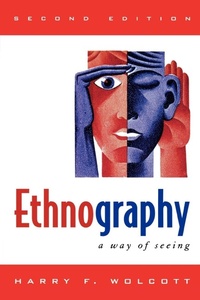
Ethnography
A Way of Seeing
2nd Edition
Published on 28. January 2008
Book
Paperback/Softback
352 pages
978-0-7591-1169-1 (ISBN)
Description
One of anthropology's leading writers on ethnographic methods, Harry Wolcott discusses the fundamental nature of ethnographic studies. Tracing its development from its disciplinary origins in sociology and anthropology, he points out what is distinctive about ethnography and what it means to conduct research in the ethnographic tradition. In this engaging and thought-provoking book, Wolcott distinguishes ethnography as more than just a set of field methods and practices, separating it from many related qualitative research traditions as 'a way of seeing' through the lens of culture. For both beginning and experienced ethnographers in a wide range of disciplines, Wolcott's book will provide important ideas for improving research practice.
Reviews / Votes
This second edition draws readers closer to Wolcott's vision of the interpretive stance that underlies ethnography. In an era when ethnographers may be challenged to articulate how their work contributes to different kinds of knowledge, this book shows the way. -- Peter Demerath, University of Minnesota; former president, Council on Anthropology and Education This casual yet informed synthesis, written in an egaging style, is what sets Wolcott's book apart from the humdrum of texts that discuss methods formally, often in a staccato, bland, and abstracted tone, usually detatched from application....Wolcott's excursion is a wonderful raft ride through the flows, eddies, and rapids of anthropological experience that is always theoretically informed. * H-Afrarts * My students are always impressed with Wolcott's engaging writing style, wit, and no nonsense approach to fieldwork. Ethnography: A Way of Seeing highlights the importance of creativity and common sense in doing fieldwork. -- Douglas Foley, The University of Texas at AustinMore details
Edition
2nd edition
Language
English
Place of publication
California
United States
Dimensions
Height: 229 mm
Width: 152 mm
Thickness: 19 mm
Weight
513 gr
ISBN-13
978-0-7591-1169-1 (9780759111691)
Copyright in bibliographic data and cover images is held by Nielsen Book Services Limited or by the publishers or by their respective licensors: all rights reserved.
Schweitzer Classification
Other editions
Additional editions
E-Book
01/2008
2nd Edition
AltaMira Press
€47.49
Available for download
E-Book
01/2008
2nd Edition
AltaMira Press
€47.49
Available for download
Person
Harry F. Wolcott (1929-2012) was professor emeritus in the Department of Anthropology at the University of Oregon and a leading author in anthropology and research methods. Wolcott's major works include anthropological studies of American education: Teachers Versus Technocrats and The Man in the Principal's Office: An Ethnography. He also wrote extensively on fieldwork and writing: Transforming Qualitative Data; The Art of Fieldwork; Ethnography: A Way of Seeing; and Writing Up Qualitative Data and is the author of the more recent Sneaky Kid and Its Aftermath: Ethics and Intimacy in Fieldwork (all published by AltaMira Press).
Content
Chapter 1 Ethnography in the Good Old Days
Chapter 2 Where in the World Do You Think You Are Going?
Chapter 3 Ethnography as a Way of Looking
Chapter 4 Ethnography as a Way of Seeing
Chapter 5 Traditional Ethnography and Ethnographic Traditions
Chapter 6 Ethnography from Inside Out
Chapter 7 Hurried Ethnography for Harried Ethnographers
Chapter 8 Ethnography's Many Faces
Chapter 9 Does It Matter Whether or nor It's Ethnography?
Chapter 10 Ethnography as a Piece of Cake
Chapter 11 Writing with Culture
Chapter 12 Writing Ethnography
Chapter 13 Ethnography Matters: Looking Ahead, Looking Back
Chapter 2 Where in the World Do You Think You Are Going?
Chapter 3 Ethnography as a Way of Looking
Chapter 4 Ethnography as a Way of Seeing
Chapter 5 Traditional Ethnography and Ethnographic Traditions
Chapter 6 Ethnography from Inside Out
Chapter 7 Hurried Ethnography for Harried Ethnographers
Chapter 8 Ethnography's Many Faces
Chapter 9 Does It Matter Whether or nor It's Ethnography?
Chapter 10 Ethnography as a Piece of Cake
Chapter 11 Writing with Culture
Chapter 12 Writing Ethnography
Chapter 13 Ethnography Matters: Looking Ahead, Looking Back