

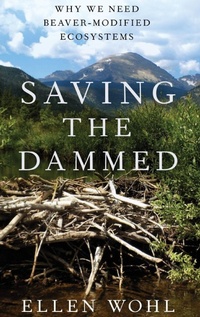
Saving the Dammed
Why We Need Beaver-Modified Ecosystems
Published on 10. September 2019
Book
Hardback
206 pages
978-0-19-094352-3 (ISBN)
Description
The ability of beavers to create an abundant habitat for a diverse array of plants and animals has been analyzed time and again. The disappearance of beavers across the northern hemisphere, and what this effects, has yet to be comprehensively studied. Saving the Dammed analyzes the beneficial role of beavers and their dams in the ecosystem of a river, focusing on one beaver meadow in Colorado. In her latest book, Ellen Wohl contextualizes North St. Vrain Creek by discussing the implications of the loss of beavers across much larger areas. Saving the Dammed raises awareness of rivers as ecosystems and the role beavers play in sustaining the ecosystem surrounding rivers by exploring the macrocosm of global river alteration, wetland loss, and the reduction in ecosystem services. The resulting reduction in ecosystem services span things such as flood control, habitat abundance and biodiversity, and nitrate reduction. Allowing readers to follow her as she crawls through seemingly impenetrable spaces with slow and arduous movements, Wohl provides a detailed narrative of beaver meadows.
Saving the Dammed takes readers through twelve months at a beaver meadow in Colorado's Rocky Mountain National Park, exploring how beavers change river valleys and how the decline in beaver populations has altered river ecosystems. As Wohl analyzes and discusses the role beavers play in the ecosystem of a river, readers get to follow her through tight, seemingly impenetrable, crawl spaces as she uncovers the benefit of dams.
Saving the Dammed takes readers through twelve months at a beaver meadow in Colorado's Rocky Mountain National Park, exploring how beavers change river valleys and how the decline in beaver populations has altered river ecosystems. As Wohl analyzes and discusses the role beavers play in the ecosystem of a river, readers get to follow her through tight, seemingly impenetrable, crawl spaces as she uncovers the benefit of dams.
Reviews / Votes
This book shows how profoundly beavers contribute to ecosystem functioning and thus human well-being. Chapters of the book are perfect starting points for group discussions on the complex workings of nature. * Conservation Biology * This book has a potentially broad appeal, because it straddles both observational nature writing and more formal scientific-type writing, and I can see academics, practitioners, and naturephiles all encountering snippets of information that will fascinate them-and scratching their chins in contemplation . . . Saving the Dammed provides a plethora of clear, concise evidence as to why we need beaver-modified ecosystems. * Alan Law, University of Stirling, Mountain Research and Development * Ellen brings together the manifold benefits that wetlands bring, for nutrient cycling, carbon and nitrogen storage, by flow moderating and improving groundwater levels and in restoring biodiverse habitats. A highly readable education on just how much more we can gain by reconnecting our rivers and flood plains, and harnessing nature to mitigate centuries of our impacts. It is as relevant in Europe as it is to North America, whether we are blessed with beavers or have to imitate their green engineering. * Fiona Bowles, Vice Chair, River Restoration Centre Board of Directors *More details
Language
English
Place of publication
New York
United States
Target group
Professional and scholarly
Dimensions
Height: 240 mm
Width: 161 mm
Thickness: 16 mm
Weight
479 gr
ISBN-13
978-0-19-094352-3 (9780190943523)
Copyright in bibliographic data and cover images is held by Nielsen Book Services Limited or by the publishers or by their respective licensors: all rights reserved.
Schweitzer Classification
Other editions
Additional editions
E-Book
06/2019
OUP eBook
€43.49
Available for download
Person
Ellen Wohl is a native of Ohio. She received a Bachelor of Science in geology from Arizona State University and a PhD in geosciences from the University of Arizona. She has been on the faculty at Colorado State University since 1989. Wohl has conducted fieldwork worldwide, and her research focuses on rivers, including the effects of beavers on river process and form. She is a Fellow of the American Geophysical Union and the Geological Society of America.
Content
Introduction:
-The Beaver Meadow on North St. Vrain Creek
-The Great Drying
-A Watery Microcosm
January:
-Of Rocks and Ice
-The Setting
-The Rocks
-The Ice
-After the Glaciers
February:
-About Beavers
-The Meadow in February
-Worth a Dam
-About Beavers
-The Family Tree of Beavers
-The Southern Colonists
-Where Beavers Belong
March:
-Water Superheroes
-The Meadow in March
-Fire, Flood, and Drought
-Water Superheroes
April:
-Six Degrees of Connectivity
-A Rolling Sand Grain Makes No Soil
-To Make a Meadow It Takes a Beaver and One Dam
-Beavers Versus Glaciers
-Only Connect... or Disconnect
May:
-Plugging the Nutrient Leaks
-Biogeochemical Engineers
-Carbon Stored Versus Carbon Lost
June:
-The Thin Green Line
-The Beavers and the Forest
-The Thin Green Line
-Green Engineering
July:
-Of Fish and Frogs and Flying Things
-A Fish in Every Pond
-Cutthroat Competition
August:
-Legacy Effects
-Creating a Fur Desert
-Colorado Mountain Men
-A Legacy of Absence
September:
-Alternate Realities
-Beaver Meadows and Elk Grasslands
-Nature Green in Tooth and Paw
October:
-Of Beavers and Humans
-Lessons Not Yet Learned
-Beaver Leas
-Appreciating Beavers
November:
-Beavers to the Rescue
-Leave it to Beavers
-Beavers to the Rescue
December:
-Saving the Dammed
-Taking the Pulse of the North St. Vrain Beaver Meadow
-Ecosystem Services
-Betting on Beavers
Bibliography
Index
-The Beaver Meadow on North St. Vrain Creek
-The Great Drying
-A Watery Microcosm
January:
-Of Rocks and Ice
-The Setting
-The Rocks
-The Ice
-After the Glaciers
February:
-About Beavers
-The Meadow in February
-Worth a Dam
-About Beavers
-The Family Tree of Beavers
-The Southern Colonists
-Where Beavers Belong
March:
-Water Superheroes
-The Meadow in March
-Fire, Flood, and Drought
-Water Superheroes
April:
-Six Degrees of Connectivity
-A Rolling Sand Grain Makes No Soil
-To Make a Meadow It Takes a Beaver and One Dam
-Beavers Versus Glaciers
-Only Connect... or Disconnect
May:
-Plugging the Nutrient Leaks
-Biogeochemical Engineers
-Carbon Stored Versus Carbon Lost
June:
-The Thin Green Line
-The Beavers and the Forest
-The Thin Green Line
-Green Engineering
July:
-Of Fish and Frogs and Flying Things
-A Fish in Every Pond
-Cutthroat Competition
August:
-Legacy Effects
-Creating a Fur Desert
-Colorado Mountain Men
-A Legacy of Absence
September:
-Alternate Realities
-Beaver Meadows and Elk Grasslands
-Nature Green in Tooth and Paw
October:
-Of Beavers and Humans
-Lessons Not Yet Learned
-Beaver Leas
-Appreciating Beavers
November:
-Beavers to the Rescue
-Leave it to Beavers
-Beavers to the Rescue
December:
-Saving the Dammed
-Taking the Pulse of the North St. Vrain Beaver Meadow
-Ecosystem Services
-Betting on Beavers
Bibliography
Index