

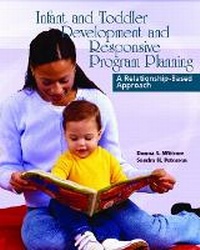
Infant and Toddler Development and Responsive Program Planning
A Relationship-Based Approach
Published on 7. November 2005
Book
Paperback/Softback
456 pages
978-0-13-099241-3 (ISBN)
Description
This comprehensive introduction to infant and toddler development, responsive program planning, and responsive relationship-based curriculum incorporates all of the themes crucial to providing quality education and care to our youngest, very capable members of society. Woven through this book is the importance of:
recognizing the capacities in every child
recognizing and respecting individuality and diversity in all children (in every chapter, as well as with in a separate chapter on children with special needs)
understanding family culture and ecology's influence on children
understanding and implementing the components of a quality program
Early childhood educators using this book will learn many practical aspects of the relationship-based approach, such as:
how to interact with infants and toddlers to promote development
how to use a responsive, relationship-based approach and in the daily curriculum daily
how to use routines, transitions, and other opportunities to respond and relate to infants and toddlers
how to plan for individual children and groups
how to set up the environment to promote development
how to document observations
how to respond to common guidance issues
how to be professional and ethical
recognizing the capacities in every child
recognizing and respecting individuality and diversity in all children (in every chapter, as well as with in a separate chapter on children with special needs)
understanding family culture and ecology's influence on children
understanding and implementing the components of a quality program
Early childhood educators using this book will learn many practical aspects of the relationship-based approach, such as:
how to interact with infants and toddlers to promote development
how to use a responsive, relationship-based approach and in the daily curriculum daily
how to use routines, transitions, and other opportunities to respond and relate to infants and toddlers
how to plan for individual children and groups
how to set up the environment to promote development
how to document observations
how to respond to common guidance issues
how to be professional and ethical
Reviews / Votes
"This book is filled with theory, content and context gems. It will not only benefit students of child development, but parents, child care providers, and early interventionists as well. It clearly and accurately presents how infants and toddlers develop, and how that development is best facilitated." -- J. Ronald Lally, Ed D., Co-Director WestEd, Center for Child & Family Studies, San Francisco, CA"This is a beautifully written book. The writing style is fluent and clear. The writing level is appropriate for undergraduate students. This text is special and stands out because it emphasizes the critical nature of early intimate loving interactions with caregivers in order for a baby to flourish. The key strength is the completeness of coverage...This work's coverage is far broader than that of many other texts currently available." -- Alice S. Honig, Syracuse University
"I do not know of other texts that address both comprehensive infant development as well as curriculum development and program planning. I certainly would consider adopting this text in my courses. Child development must be the basis of working with infants, toddlers, and families, and I think this text captures that philosophy." -- Holly Brophy-Herb, Michigan State University
More details
Language
English
Place of publication
United States
Publishing group
Pearson Education (US)
Target group
Professional and scholarly
Dimensions
Height: 254 mm
Width: 203 mm
Weight
794 gr
ISBN-13
978-0-13-099241-3 (9780130992413)
Copyright in bibliographic data and cover images is held by Nielsen Book Services Limited or by the publishers or by their respective licensors: all rights reserved.
Schweitzer Classification
Other editions
New editions
Donna S. Wittmer | Sandy Petersen
Infant and Toddler Development and Responsive Program Planning
A Relationship-Based Approach
Book
08/2009
2nd Edition
Pearson
€78.06
Article exhausted; check for reprint
Persons
Sandy Petersen
Sandy Petersen is writer/ program analyst with the Early Head Start National Resource Center at Zero to Three. Ms. Petersen also coordinates Zero to Three's task force on Early Learning Guidelines for Infants and Toddlers. She is also part of the WestEd Program for Infant Toddler Caregivers, by developing and teaching the module on special needs. Before joining Zero to Three, she was Coordinator of Training and Technical Assistance for Early Childhood Initiatives at the Colorado Department of Education and continues to work on Colorado's Expanding Quality in Infant and Toddler Care Initiative. She was one of the primary authors of Colorado's "Building Blocks", preschool content standards in reading and mathematics, and the Guidelines for the IFSP and Service Coordination.
Ms. Petersen has direct service experience in early intervention, infant-parent psychotherapy, and child care. She has a Master's degree in Educational Psychology and completed doctoral coursework in Early Childhood Special Education at the University of California - Berkeley.
Donna Wittmer
Donna Wittmer has been a professor of Early Childhood Education at the University of Colorado at Denver and Health Sciences Center for 17 years. She has taught a variety of courses for students obtaining their MA in Early Childhood Education and a license to teach in Early Childhood Special Education (ages 0-5). Prior to becoming a professor in Colorado, she taught behavioral pediatrics at the Health Sciences Center in Syracuse for eight years. She also was the coordinator and provided assessment and intervention services, on a grant from New York State, for five years on the Onondaga Nation for children (birth to six) and their families
Dr. Wittmer's Ph.D. is in Child, Family, and Community Studies from Syracuse University where she studied infant and toddler development, behavior, and intervention with Dr. Alice Honig and Dr. Ron Lally (now the creator and coordinator of PITC). She taught several courses at Syracuse University in the department of Child, Family, and Community Studies before moving to Colorado in 1990.
Infant and Toddler Development and Responsive Program Planning and PITC
The authors have both taught for PITC's national faculty. Their text embraces and captures the PITC language and philosophy and incorporates suggestions for use of the PITC videos throughout a course. You will find many quotes from Dr. Ron Lally in the book. The instructor's manual recommends specific PITC videos that instructor's could use when teaching a particular chapter. Donna and Sandy recommend that all of the PITC videos be used when instructors teach with their textbook. Ron Lally, creator and coordinator of PITC, wrote a strong recommendation for the textbook.
Both Sandy Petersen and Donna Wittmer are fellows of ZERO-THREE and have written articles for the ZERO to THREE journal. They have presented at national conferences numerous times. During their fellowship years, they studied with Berry Brazelton, Stanley Greenspan, Jeree Pawl, and Dolores Norton.
The authors have been on the faculty of the Colorado Department of Education's Infant and Toddler Expanding Quality Initiative (EQI) for approximately six years. The model is a trainer of trainer's model. The faculty of the EQI have taught over 100 Colorado community teachers/coaches to use a 48 clock-hour course developed by the faculty to train 2000 infant/toddler caregivers to provide responsive and relationship-based care to infants and toddlers. Donna Wittmer, with Sandy Petersen and other faculty members, have created the RELATE-A Coaching Tool for Relationship-Based Practice that is used by the community teachers to coach the infant/toddler caregivers.
Sandy Petersen is writer/ program analyst with the Early Head Start National Resource Center at Zero to Three. Ms. Petersen also coordinates Zero to Three's task force on Early Learning Guidelines for Infants and Toddlers. She is also part of the WestEd Program for Infant Toddler Caregivers, by developing and teaching the module on special needs. Before joining Zero to Three, she was Coordinator of Training and Technical Assistance for Early Childhood Initiatives at the Colorado Department of Education and continues to work on Colorado's Expanding Quality in Infant and Toddler Care Initiative. She was one of the primary authors of Colorado's "Building Blocks", preschool content standards in reading and mathematics, and the Guidelines for the IFSP and Service Coordination.
Ms. Petersen has direct service experience in early intervention, infant-parent psychotherapy, and child care. She has a Master's degree in Educational Psychology and completed doctoral coursework in Early Childhood Special Education at the University of California - Berkeley.
Donna Wittmer
Donna Wittmer has been a professor of Early Childhood Education at the University of Colorado at Denver and Health Sciences Center for 17 years. She has taught a variety of courses for students obtaining their MA in Early Childhood Education and a license to teach in Early Childhood Special Education (ages 0-5). Prior to becoming a professor in Colorado, she taught behavioral pediatrics at the Health Sciences Center in Syracuse for eight years. She also was the coordinator and provided assessment and intervention services, on a grant from New York State, for five years on the Onondaga Nation for children (birth to six) and their families
Dr. Wittmer's Ph.D. is in Child, Family, and Community Studies from Syracuse University where she studied infant and toddler development, behavior, and intervention with Dr. Alice Honig and Dr. Ron Lally (now the creator and coordinator of PITC). She taught several courses at Syracuse University in the department of Child, Family, and Community Studies before moving to Colorado in 1990.
Infant and Toddler Development and Responsive Program Planning and PITC
The authors have both taught for PITC's national faculty. Their text embraces and captures the PITC language and philosophy and incorporates suggestions for use of the PITC videos throughout a course. You will find many quotes from Dr. Ron Lally in the book. The instructor's manual recommends specific PITC videos that instructor's could use when teaching a particular chapter. Donna and Sandy recommend that all of the PITC videos be used when instructors teach with their textbook. Ron Lally, creator and coordinator of PITC, wrote a strong recommendation for the textbook.
Both Sandy Petersen and Donna Wittmer are fellows of ZERO-THREE and have written articles for the ZERO to THREE journal. They have presented at national conferences numerous times. During their fellowship years, they studied with Berry Brazelton, Stanley Greenspan, Jeree Pawl, and Dolores Norton.
The authors have been on the faculty of the Colorado Department of Education's Infant and Toddler Expanding Quality Initiative (EQI) for approximately six years. The model is a trainer of trainer's model. The faculty of the EQI have taught over 100 Colorado community teachers/coaches to use a 48 clock-hour course developed by the faculty to train 2000 infant/toddler caregivers to provide responsive and relationship-based care to infants and toddlers. Donna Wittmer, with Sandy Petersen and other faculty members, have created the RELATE-A Coaching Tool for Relationship-Based Practice that is used by the community teachers to coach the infant/toddler caregivers.
Content
Chapter 1 A Relationship-Based Model and the Importance of the Infant and Toddler Years
Chapter 2 Infants, Toddlers, and Their Families
Chapter 3 Understanding and Using Theories
Chapter 4 Prenatal, Birth, and Brain Development
Chapter 5 Attachment and Emotional Relationships
Chapter 6 Social Development and Learning with Peers
Chapter 7 Cognitive Development and Learning
Chapter 8 Language Development and Learning
Chapter 9 Motor Development and Learning
Chapter 10 Responsive Programs: Quality, Health, Safety, and Nutrition
Chapter 11 Creating a Relationship-Based Curriculum
Chapter 12 Routines, Environments, and Opportunities: Day to Day the Relationship Way
Chapter 13 Respect, Reflect, and Relate: The 3 R Approach to Guidance
Chapter 14 Including Infants and Toddlers with Disabilities in Child Development and Education Programs
Chapter 15 The Infant-Toddler Professional: Identity, Relationships, and Resources
Appendix A The Rights of the Child
Appendix B Planning Guides (Blank forms)
Appendix C Phasing Your Toddler into the Program
Appendix D Indoor Opportunities for Different Ages and Stages
Appendix E The New York State Infant Toddler Care and Education Competencies
Chapter 2 Infants, Toddlers, and Their Families
Chapter 3 Understanding and Using Theories
Chapter 4 Prenatal, Birth, and Brain Development
Chapter 5 Attachment and Emotional Relationships
Chapter 6 Social Development and Learning with Peers
Chapter 7 Cognitive Development and Learning
Chapter 8 Language Development and Learning
Chapter 9 Motor Development and Learning
Chapter 10 Responsive Programs: Quality, Health, Safety, and Nutrition
Chapter 11 Creating a Relationship-Based Curriculum
Chapter 12 Routines, Environments, and Opportunities: Day to Day the Relationship Way
Chapter 13 Respect, Reflect, and Relate: The 3 R Approach to Guidance
Chapter 14 Including Infants and Toddlers with Disabilities in Child Development and Education Programs
Chapter 15 The Infant-Toddler Professional: Identity, Relationships, and Resources
Appendix A The Rights of the Child
Appendix B Planning Guides (Blank forms)
Appendix C Phasing Your Toddler into the Program
Appendix D Indoor Opportunities for Different Ages and Stages
Appendix E The New York State Infant Toddler Care and Education Competencies