

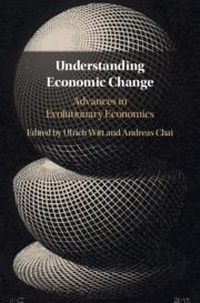
Understanding Economic Change
Advances in Evolutionary Economics
Published on 29. November 2018
Book
Hardback
408 pages
978-1-107-13620-5 (ISBN)
Description
Although the economy has always been changing, ever more innovations now seem to accelerate the transformation process. Are there any laws governing the incessant global change? Does it accord with our intentions and desires and make us happier? Do our institutions and our democracies cope with the challenges? How does economic theory explain what is going on? In this volume, experts in the field discuss the advances that evolutionary economics has made in exploring questions like these. The broad range of topics include a review of the development of the field: its conceptual and methodological characteristics are outlined; problems posed by macroeconomic evolution and the institutional challenges are highlighted; and, last but not least, the implications of the evolution of the economy for wellbeing and sustainability are addressed. Taken together, the contributions demonstrate the potential of an evolutionary paradigm for making sense of economic change and for assessing its consequences.
Reviews / Votes
'This welcome collection of essays offers a rich perspective on the history and philosophy of evolutionary economics. It delves deep into core themes such as generalized Darwinism, institutions and bounded rationality, long-run economic development and evolutionary welfare theory, while also offering original applications to land use conflicts and unsustainable consumption.' Jeroen van den Bergh, ICREA Research Professor, Universitat Autonoma de Barcelona 'As Ulrich Witt and Andreas Chai put it in their introduction, it is time for some stocktaking concerning progress in evolutionary economics. This excellent collection of essays performs that task admirably: a number of leading authors review developments in the field with erudition and careful criticism. This is a milestone volume.' Geoffrey M. Hodgson, University of Hertfordshire 'Evolutionary economics is in transition following a very productive and enlightening era when Nelson and Winter's 'replicator dynamics' perspective was its reference point. The past decade has witnessed the rise of competing perspectives such as: rule based complex systems; game theoretical micro-foundations; general Darwinian theory; socio-biological models, where biology is not just used as an analogy. Although there is general agreement that economic evolution should be modelled, explicitly, as a historical process, methodological differences have become more marked. In this volume a very prominent set of contributors explain their different positions. The result is a very interesting and stimulating set of essays that are well-written and accessible to both evolutionary and mainstream economists and their students. Anyone who wishes to know what the key issues and debates are in evolutionary economics today need look no further than this excellent volume.' John Foster, University of Queensland 'More than one century after Thorsten Veblen coined the label evolutionary economics there is still no consensus on what constitutes the core of an evolutionary approach in economics. This volume will be welcome by readers interested in learning about the current state of the field and its prospective development. The essays collected represent the principal versions of evolutionary thinking in contemporary economics, covering methodological, theoretical and normative issues. The editors' Introduction provides helpful guidance in tracing the history of the field, placing the collected essays into a broader context and pointing to prospects for theoretical convergence and integration.' Viktor J. Vanberg, University of Freiburg, GermanyMore details
Language
English
Place of publication
Cambridge
United Kingdom
Target group
Professional and scholarly
Product notice
sewn/stitched
Cloth over boards
Illustrations
9 Tables, black and white; 11 Line drawings, black and white
Dimensions
Height: 236 mm
Width: 161 mm
Thickness: 27 mm
Weight
684 gr
ISBN-13
978-1-107-13620-5 (9781107136205)
Copyright in bibliographic data and cover images is held by Nielsen Book Services Limited or by the publishers or by their respective licensors: all rights reserved.
Schweitzer Classification
Other editions
Additional editions
Book
08/2022
Cambridge University Press
€44.00
Shipment within 15-20 days
E-Book
11/2018
Cambridge University Press
€93.49
Available for download
E-Book
11/2018
Cambridge University Press
€112.99
Available for download
Persons
Ulrich Witt is Past Director of the Evolutionary Economics Group at the Max Planck Institute of Economics in Jena, Germany. He has published a vast number of articles and books on evolutionary economics and is Editor-in-chief of the Journal of Bioeconomics. Andreas Chai is an applied economist and Head of Economics and Business Statistics at Griffith University, Australia. Andreas has published in various economic journals, including the Journal of Economic Perspectives and the Cambridge Journal of Economics.
Content
Part I. Introduction: 1. Evolutionary economics: taking stock of its progress and emerging challenges Ulrich Witt and Andreas Chai; Part II. Conceptual and Methodological Problems: 2. Missed connections and opportunities foregone: a counterfactual history of twentieth century economics Brian J. Loasby; 3. Science, technology, and knowledge: what historians can learn from an evolutionary approach Joel Mokyr; 4. Generalized Darwinism in evolutionary economics: the devil is in the details Jack Vromen; Part III. Perspectives on Evolutionary Macroeconomics: 5. Macroeconomic evolution: long run development and short run policies Richard H. Day; 6. Evolutionary micro-founded technical change and the Kaldor-Verdoorn law: estimates from an artificial world Andre Lorentz; Part IV. Advances in Explaining and Assessing Institutional Evolution: 7. Democracy, rationality and religion Dennis C. Mueller; 8. On the evolution of organizational governance: divided governance and survival in the long run Roger D. Congleton; 9. Strategic interaction and externalities: FD-games and pollution Reinoud Joosten; 10. Fairness in urban land use: an evolutionary contribution to law and economics Christian Schubert; Part V. Evolutionary Perspectives on Welfare and Sustainability: 11. As innovations drive economic change, do they also improve our welfare? Martin Binder and Ulrich Witt; 12. Sustainable consumption patterns and the malleability of consumer preferences: an evolutionary perspective Andreas Chai.