

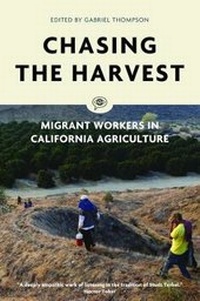
Chasing the Harvest
Migrant Workers in California Agriculture
Published on 16. May 2017
Book
Hardback
320 pages
978-1-78663-378-1 (ISBN)
Description
Lives from an invisible community - the migrant farmworkers of the United States
The Grapes of Wrath brought national attention to the condition of California's migrant farmworkers in the 1930s. Cesar Chavez and the United Farm Workers' grape and lettuce boycotts captured the imagination of the United States in the 1960s and '70s. Yet today, the stories of the more than 800,000 men, women, and children working in California's fields - one third of the nation's agricultural work force - are rarely heard, despite the persistence of wage theft, dangerous working conditions, and uncertain futures. This book of oral histories makes the reality of farm work visible in accounts of hardship, bravery, solidarity, and creativity in California's fields, as real people struggle to win new opportunities for future generations.
Among the narrators:
Maricruz, a single mother fired from a packing plant after filing a sexual assault complaint against her supervisor.
Roberto, a vineyard laborer in the scorching Coachella Valley who became an advocate for more humane working conditions after his teenage son almost died of heatstroke.
Oscar, an elementary school teacher in Salinas who wants to free his students from a life in the fields, the fate that once awaited him as a child.
The Grapes of Wrath brought national attention to the condition of California's migrant farmworkers in the 1930s. Cesar Chavez and the United Farm Workers' grape and lettuce boycotts captured the imagination of the United States in the 1960s and '70s. Yet today, the stories of the more than 800,000 men, women, and children working in California's fields - one third of the nation's agricultural work force - are rarely heard, despite the persistence of wage theft, dangerous working conditions, and uncertain futures. This book of oral histories makes the reality of farm work visible in accounts of hardship, bravery, solidarity, and creativity in California's fields, as real people struggle to win new opportunities for future generations.
Among the narrators:
Maricruz, a single mother fired from a packing plant after filing a sexual assault complaint against her supervisor.
Roberto, a vineyard laborer in the scorching Coachella Valley who became an advocate for more humane working conditions after his teenage son almost died of heatstroke.
Oscar, an elementary school teacher in Salinas who wants to free his students from a life in the fields, the fate that once awaited him as a child.
Reviews / Votes
"The voices are defiant and nuanced, aware of the human complexities that spill across bureaucratic categories and arbitrary borders."-Siddhartha Deb, The Baffler
"A deeply moving tribute to the lives of the California farm workers, and their journey from Mexican villages into the cruel machinery of American agribusiness."
-Hector Tobar, author of Deep Down Dark
"Cumulatively, these portraits form a nuanced mosaic of life in the fields-the good, the bad, the mundane, the tragic and the heroic."
-Miriam Pawel, author of The Crusades of Cesar Chavez
"Not just an intimate, but an insider, look at the lives of California's farmworkers."
-Elaine Elinson, San Francisco Chronicle
More details
Series
Language
English
Place of publication
London
United Kingdom
Dimensions
Height: 210 mm
Width: 140 mm
Thickness: 23 mm
Weight
502 gr
ISBN-13
978-1-78663-378-1 (9781786633781)
Copyright in bibliographic data and cover images is held by Nielsen Book Services Limited or by the publishers or by their respective licensors: all rights reserved.
Schweitzer Classification
Person
Gabriel Thompson is an independent journalist who has written for the New York Times, Harper's, New York, Slate, Mother Jones, Virginia Quarterly Review, and the Nation. His articles about labor and immigration have won a number of prizes, including the Studs Terkel Media Award and the Sidney Award. His most recent book is America's Social Arsonist: Fred Ross and Grassroots Organizing in the Twentieth Century.