

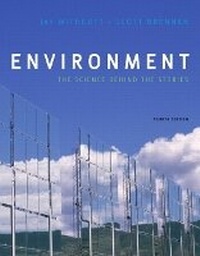
Environment
The Science behind the Stories Plus MasteringEnvironmentalScience with eText -- Access Card Package
4th Edition
Published on 28. March 2011
Book
Mixed media product
816 pages
978-0-321-71273-8 (ISBN)
Description
ALERT: Before you purchase, check with your instructor or review your course syllabus to ensure that you select the correct ISBN. Several versions of Pearson's MyLab & Mastering products exist for each title, including customized versions for individual schools, and registrations are not transferable. In addition, you may need a CourseID, provided by your instructor, to register for and use Pearson's MyLab & Mastering products.
Packages
Access codes for Pearson's MyLab & Mastering products may not be included when purchasing or renting from companies other than Pearson; check with the seller before completing your purchase.
Used or rental books
If you rent or purchase a used book with an access code, the access code may have been redeemed previously and you may have to purchase a new access code.
Access codes
Access codes that are purchased from sellers other than Pearson carry a higher risk of being either the wrong ISBN or a previously redeemed code. Check with the seller prior to purchase.
--Environment: The Science behind the Stories captures your interest with a revolutionary new approach to environmental science. Integrated central case studies woven throughout each chapter, use real-life stories to give you a tangible and engaging framework around which to learn and understand the science behind environmental issues. Printed on FSC (Forest Stewardship Council) certified paper, the newly revised Fourth Edition engages you through the addition of new EnvisionIt photo essays and is now available with MasteringEnvironmentalScience (TM), the most effective and widely used learning and assessment system.
Packages
Access codes for Pearson's MyLab & Mastering products may not be included when purchasing or renting from companies other than Pearson; check with the seller before completing your purchase.
Used or rental books
If you rent or purchase a used book with an access code, the access code may have been redeemed previously and you may have to purchase a new access code.
Access codes
Access codes that are purchased from sellers other than Pearson carry a higher risk of being either the wrong ISBN or a previously redeemed code. Check with the seller prior to purchase.
--Environment: The Science behind the Stories captures your interest with a revolutionary new approach to environmental science. Integrated central case studies woven throughout each chapter, use real-life stories to give you a tangible and engaging framework around which to learn and understand the science behind environmental issues. Printed on FSC (Forest Stewardship Council) certified paper, the newly revised Fourth Edition engages you through the addition of new EnvisionIt photo essays and is now available with MasteringEnvironmentalScience (TM), the most effective and widely used learning and assessment system.
More details
Edition
4th edition
Language
English
Place of publication
San Francisco
United States
Publishing group
Pearson Education (US)
Target group
Professional and scholarly
Dimensions
Height: 276 mm
Width: 216 mm
ISBN-13
978-0-321-71273-8 (9780321712738)
Copyright in bibliographic data is held by Nielsen Book Services Limited or its licensors: all rights reserved.
Schweitzer Classification
Other editions
New editions

Jay H. Withgott | Matthew Laposata
Environment
The Science Behind the Stories Plus MasteringEnvironmentalScience with Etext -- Access Card Package
Book
09/2013
5th Edition
Benjamin Cummings
€138.64
Article exhausted; check for reprint
Book
10/2010
4th Edition
Pearson
€128.74
Article exhausted; check for reprint
Previous edition
Book
11/2007
3rd Edition
Benjamin Cummings
€103.34
Article exhausted; check for reprint
Persons
Jay H. Withgott
Jay H. Withgott is a science and environmental writer with a background in scientific research and teaching. He holds degrees from Yale University, the University of Arkansas, and the University of Arizona. As a researcher, he has published scientific papers on topics in ecology, evolution, animal behavior, and conservation biology in journals including Proceedings of the National Academy of Sciences, Proceedings of the Royal Society of London B, Evolution, and Animal Behavior. He has taught university-level laboratory courses in ecology, ornithology, vertebrate diversity, anatomy, and general biology.
As a science writer, Jay has authored articles for a variety of journals and magazines including Science, New Scientist, BioScience, Smithsonian, Current Biology, Conservation in Practice, and Natural History. He combines his scientific expertise with his past experience as a reporter and editor for daily newspapers to make science accessible and engaging for general audiences.
Jay lives with his wife, biologist Susan Masta, in Portland, Oregon.
Scott Brennan
Scott Brennan has taught environmental science, ecology, resource policy, and journalism at Western Washington University and at Walla Walla Community College. He has also worked as a journalist, photographer, and consultant.
Jay H. Withgott is a science and environmental writer with a background in scientific research and teaching. He holds degrees from Yale University, the University of Arkansas, and the University of Arizona. As a researcher, he has published scientific papers on topics in ecology, evolution, animal behavior, and conservation biology in journals including Proceedings of the National Academy of Sciences, Proceedings of the Royal Society of London B, Evolution, and Animal Behavior. He has taught university-level laboratory courses in ecology, ornithology, vertebrate diversity, anatomy, and general biology.
As a science writer, Jay has authored articles for a variety of journals and magazines including Science, New Scientist, BioScience, Smithsonian, Current Biology, Conservation in Practice, and Natural History. He combines his scientific expertise with his past experience as a reporter and editor for daily newspapers to make science accessible and engaging for general audiences.
Jay lives with his wife, biologist Susan Masta, in Portland, Oregon.
Scott Brennan
Scott Brennan has taught environmental science, ecology, resource policy, and journalism at Western Washington University and at Walla Walla Community College. He has also worked as a journalist, photographer, and consultant.
Content
I. FOUNDATIONS OF ENVIRONMENTAL SCIENCE
1. Science and Sustainability:An Introduction to Environmental Science
2. Earth's Physical Systems: Matter, Energy, and Geology
3. Evolution, Biodiversity, and Population Ecology
4. Species Interactions and Community Ecology
5. Environmental Systems and Ecosystem Ecology
6. Environmental Ethics and Economics: Values and Choices
7. Environmental Policy: Decision Making and Problem Solving
II. ENVIRONMENTAL ISSUES AND THE SEARCH FOR SOLUTIONS
8. Human Population
9. Soil and Agriculture
10. Agriculture, Biotechnology, and the Future of Food
11. Biodiversity and Conservation Biology
12. Forests, Their Management, and Parks and Protected Areas
13. The Urban Environment: Creating Livable and Sustainable Cities
14. Environmental Health and Toxicology
15. Freshwater Systems and Resources
16. Marine and Coastal Systems and Resources
17. Atmospheric Science and Air Pollution
18. Global Climate Change
19. Fossil Fuels, Their Impacts, and Energy Conservation
20. Conventional Energy Alternatives
21. New Renewable Energy Alternatives
22. Managing Our Waste
23. Minerals and Mining
24. Sustainable Solutions
1. Science and Sustainability:An Introduction to Environmental Science
2. Earth's Physical Systems: Matter, Energy, and Geology
3. Evolution, Biodiversity, and Population Ecology
4. Species Interactions and Community Ecology
5. Environmental Systems and Ecosystem Ecology
6. Environmental Ethics and Economics: Values and Choices
7. Environmental Policy: Decision Making and Problem Solving
II. ENVIRONMENTAL ISSUES AND THE SEARCH FOR SOLUTIONS
8. Human Population
9. Soil and Agriculture
10. Agriculture, Biotechnology, and the Future of Food
11. Biodiversity and Conservation Biology
12. Forests, Their Management, and Parks and Protected Areas
13. The Urban Environment: Creating Livable and Sustainable Cities
14. Environmental Health and Toxicology
15. Freshwater Systems and Resources
16. Marine and Coastal Systems and Resources
17. Atmospheric Science and Air Pollution
18. Global Climate Change
19. Fossil Fuels, Their Impacts, and Energy Conservation
20. Conventional Energy Alternatives
21. New Renewable Energy Alternatives
22. Managing Our Waste
23. Minerals and Mining
24. Sustainable Solutions