

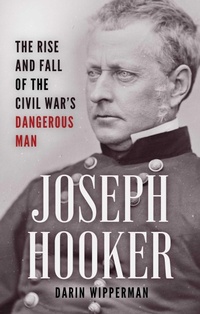
Joseph Hooker
The Rise and Fall of the Civil War's Dangerous Man
Will be published approx. on 17. November 2026
Book
Hardback
320 pages
978-0-8117-7810-7 (ISBN)
Description
In an army all too often marked by caution, Joseph Hooker was a fighter. Aggressive on the battlefield and sometimes brilliant, he led from the front and knew how to sustain the morale of his men, who loved him. At least as bold behind the scenes, the ambitious Hooker was also an intriguer and self-promoter who criticized superiors and angled for high command. Before Lincoln elevated Hooker to head the Army of the Potomac, his predecessor Ambrose Burnside recommended the general's dismissal. In his letter of promotion, Lincoln told Hooker bluntly: “I am not quite satisfied with you.” After the war Ulysses Grant called him “a dangerous man.”
In this landmark new biography, the first in more than eighty years, Darrin Wipperman narrates the rise and fall of this colorful and perplexing Civil War commander.
After the disaster at First Bull Run in 1861, Lincoln needed generals, and the pugnacious Hooker fit the bill. He became “Fighting Joe” during George McClellan’s Peninsula campaign. At Antietam in September 1862, the war’s bloodiest day, Hooker’s First Corps spearheaded the Union attack, slashing through the Cornfield at dawn and fighting the legendary Stonewall Jackson to a stalemate. Three months later at Fredericksburg, he vocally opposed Burnside's plans.
Appointed to lead the Army of the Potomac in the wake of the Fredericksburg debacle, Hooker rejuvenated the army in a masterly feat of reform and reorganization and then crafted an audacious plan to defeat Robert E. Lee at Chancellorsville in May 1863. But Hooker suddenly became tentative and Lee scored perhaps his most brilliant tactical victory of the war. Hooker recovered, but he had few friends left to save him when tensions boiled over during Lee’s invasion of the North in the summer of 1863. He was relieved three days before the Battle of Gettysburg and was sent West, where he skillfully led two corps at Chattanooga, which would be renamed the Twentieth Corps for the Atlanta Campaign. When Sherman passed him over for army command. Hooker resigned and spent the rest of the war in the backwater of Cincinnati.
Drawing on new sources that have become available during the past eight decades, this biography offers fresh perspectives on General Joseph Hooker, a man of obvious talent whose ambition made him a respected battlefield leader but ultimately undermined him. Among other questions, Wipperman answers how Hooker ended up in high command, what went wrong at Chancellorsville, and what made him “a dangerous man.” Informative as well as entertaining, this is essential Civil War reading.
In this landmark new biography, the first in more than eighty years, Darrin Wipperman narrates the rise and fall of this colorful and perplexing Civil War commander.
After the disaster at First Bull Run in 1861, Lincoln needed generals, and the pugnacious Hooker fit the bill. He became “Fighting Joe” during George McClellan’s Peninsula campaign. At Antietam in September 1862, the war’s bloodiest day, Hooker’s First Corps spearheaded the Union attack, slashing through the Cornfield at dawn and fighting the legendary Stonewall Jackson to a stalemate. Three months later at Fredericksburg, he vocally opposed Burnside's plans.
Appointed to lead the Army of the Potomac in the wake of the Fredericksburg debacle, Hooker rejuvenated the army in a masterly feat of reform and reorganization and then crafted an audacious plan to defeat Robert E. Lee at Chancellorsville in May 1863. But Hooker suddenly became tentative and Lee scored perhaps his most brilliant tactical victory of the war. Hooker recovered, but he had few friends left to save him when tensions boiled over during Lee’s invasion of the North in the summer of 1863. He was relieved three days before the Battle of Gettysburg and was sent West, where he skillfully led two corps at Chattanooga, which would be renamed the Twentieth Corps for the Atlanta Campaign. When Sherman passed him over for army command. Hooker resigned and spent the rest of the war in the backwater of Cincinnati.
Drawing on new sources that have become available during the past eight decades, this biography offers fresh perspectives on General Joseph Hooker, a man of obvious talent whose ambition made him a respected battlefield leader but ultimately undermined him. Among other questions, Wipperman answers how Hooker ended up in high command, what went wrong at Chancellorsville, and what made him “a dangerous man.” Informative as well as entertaining, this is essential Civil War reading.
More details
Person
Darin Wipperman has worked as a reporter and editor for weekly newspapers in New Hampshire. He holds bachelor’s and master’s degrees from the University of Northern Iowa. He is author of First for the Union: Life and Death in a Civil War Army Corps from Antietam to Gettysburg (Stackpole, 2020), Burnside’s Boys: The Union’s Ninth Corps and the Civil War in the East (Stackpole, 2023), and Thunderbolt to the Rebels: The United States Sharpshooters in the Civil War (Stackpole, 2025). He lives in Lancaster, New Hampshire.
Content
Contents
List of Maps
Acknowledgments
Preface
Introduction: “The Fair Fame of the Army”
Chapter One: “As Likely to be Struck by Lightning”
Chapter Two: “Sooner Die Game Than Retrograde”
Chapter Three: “This Great Demoralization”
Chapter Four: “Steadiness, Resolution, and Courage”
Chapter Five: “Never My Fortune to Witness”
Chapter Six: “An Invading Army Should Do Nothing but Advance”
Chapter Seven: “All Will Be Ours”
Chapter Eight: “No Success to Us”
Chapter Nine: “We May Anticipate Glorious Results”
Chapter Ten: “If I was in a Christian Country”
Chapter Eleven: “Justice and Self-Respect Alike”
Chapter Twelve: “Let Them Go into History as They Ought”
Conclusion: “We Will Meet Over the Divide”
Notes
Bibliography
Index
List of Maps
Southern Maryland
Peninsula Campaign
Second Bull Run
To Antietam
Battle of Antietam
Fredericksburg
Chancellorsville
Chancellorsville – May 3, 1863
Chattanooga
Atlanta Campaign
List of Maps
Acknowledgments
Preface
Introduction: “The Fair Fame of the Army”
Chapter One: “As Likely to be Struck by Lightning”
Chapter Two: “Sooner Die Game Than Retrograde”
Chapter Three: “This Great Demoralization”
Chapter Four: “Steadiness, Resolution, and Courage”
Chapter Five: “Never My Fortune to Witness”
Chapter Six: “An Invading Army Should Do Nothing but Advance”
Chapter Seven: “All Will Be Ours”
Chapter Eight: “No Success to Us”
Chapter Nine: “We May Anticipate Glorious Results”
Chapter Ten: “If I was in a Christian Country”
Chapter Eleven: “Justice and Self-Respect Alike”
Chapter Twelve: “Let Them Go into History as They Ought”
Conclusion: “We Will Meet Over the Divide”
Notes
Bibliography
Index
List of Maps
Southern Maryland
Peninsula Campaign
Second Bull Run
To Antietam
Battle of Antietam
Fredericksburg
Chancellorsville
Chancellorsville – May 3, 1863
Chattanooga
Atlanta Campaign