

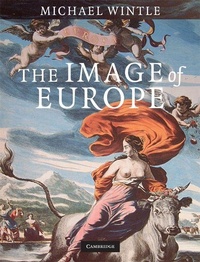
The Image of Europe
Visualizing Europe in Cartography and Iconography throughout the Ages
Published on 3. September 2009
Book
Hardback
560 pages
978-0-521-88634-5 (ISBN)
Description
This book is a major study of visual representations of Europe, from the classical world to the present day, in maps, icons, the arts and graphic images of all kinds. Europe has been variously represented as the demi-goddess Europa, a bull, a horse, a son of Noah, a Magus, a queen, and the Empress of the World. This richly illustrated book charts how these visualizations of the continent have altered over time; how they interact with changing ideas of the extent and nature of Europe in relation to the other continents; and how these images have influenced and been influenced by the 'reality' of Europe. Spanning the ages from the Ancient Greeks to the European Union, this history of three millennia of Europe and its representations is an important contribution to ongoing debates about the nature of European identity.
Reviews / Votes
'The book has been beautifully produced. It is, in both design and realization, a magisterial study.' Robert Lethbridge, Journal of European Studies 'The Image of Europe is that rarest of achievements, a conceptually ambitious, profoundly learned book, written with admirable clarity of expression and a pleasing lightness of touch.' Imago MundiMore details
Series
Language
English
Place of publication
Cambridge
United Kingdom
Target group
Professional and scholarly
Illustrations
33 Plates, color; 11 Maps; 147 Halftones, unspecified
Dimensions
Height: 260 mm
Width: 183 mm
Thickness: 34 mm
Weight
1235 gr
ISBN-13
978-0-521-88634-5 (9780521886345)
Copyright in bibliographic data and cover images is held by Nielsen Book Services Limited or by the publishers or by their respective licensors: all rights reserved.
Schweitzer Classification
Person
Michael Wintle studied at Cambridge and Ghent Universities, and now holds the chair of European History at the University of Amsterdam, where he directs the degree programmes in European Studies. His research interests are in European identity and especially the visual representation of Europe, European industrialization, and the modern history of the Low Countries. He has published widely on Dutch and European history; recent books include An Economic and Social History of the Netherlands (2000); The Idea of a United Europe (2000); Ideas of Europe since 1914 (2002); Image into Identity (2006); and Imagining Europe (2008).
Content
1. The identity of Europe and the image of Europe: concepts, theory, methods; 2. A changing concept of Europe; 3. The ancient world, and the myth of Europa and the Bull; 4. The Middle Ages; 5. The Renaissance; 6. Civilization and empire in the age of enlightenment: the long eighteenth century; 7. The age of nationalism and new imperialism; 8. Changing visual representations of Europe in the twentieth century; 9. General conclusion.