

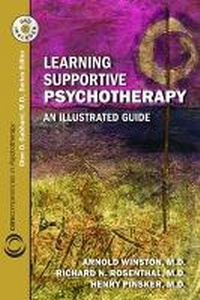
Learning Supportive Psychotherapy
An Illustrated Guide
Published on 30. October 2011
Book
Paperback/Softback
211 pages
978-1-58562-399-0 (ISBN)
Description
Mastering the art of supportive psychotherapy demands years of training and experience - and Learning Supportive Psychotherapy: An Illustrated Guide paves the way. This book, along with the accompanying DVD, serves as a trustworthy guide to mastering the rudiments of supportive psychotherapy from the initial interview through the therapeutic progression to the very last session.
The authors, preeminent figures in psychiatry, describe the basic principles and objectives of supportive psychotherapy, with emphasis on the critical importance of the therapeutic relationship and how to develop a positive therapeutic alliance. They have written an extremely accessible text that provides practical hands-on instruction to beginning psychotherapists, social workers, psychiatric nurses, and others who require the fundamentals of psychotherapeutic patient care.
Supportive psychotherapy has been recognized as a core competency, and readers seeking the requisite skills will find an advantage in this volume's beneficial features: Insightful perspective on the origins and development of supportive psychotherapy, locating it on the psychodynamic therapy spectrum, and distinguishing it from the expressive psychotherapies in terms of objectives, process, and outcomes; Expert instruction on conducting a thorough assessment and evaluation of a patient, with emphasis on techniques for conducting a comprehensive initial interview, exploring the patient's manifesting problems, taking an accurate patient history, eliciting useful information, and identifying supportive measures - all of which are crucial to establishing a therapeutic relationship; Specialized focus on useful techniques, including alliance building, esteem building, encouragement, promoting adaptive behaviors, anticipatory guidance, reducing and preventing anxiety, naming the problem, rationalizing and reframing, expanding awareness, clarification, interpretation, and much more; Critical information on how to intervene in a crisis to facilitate the patient's personal growth rather than physical and psychological deterioration; Significant clinical illustrations, vignettes, and case studies to help the reader make connections between theoretical concepts and real-world applications.
This text follows one of the three formats now required for psychiatry residency training by the Accreditation Council for Graduate Medical Education (ACGME) and provides newly credentialed psychiatrists with the basic tools needed to treat the broad range of patients they encounter. Like the other books in the Core Competencies series, it is a valuable adjunct to the traditional methods of psychotherapy education and an indispensable resource for the profession.
The authors, preeminent figures in psychiatry, describe the basic principles and objectives of supportive psychotherapy, with emphasis on the critical importance of the therapeutic relationship and how to develop a positive therapeutic alliance. They have written an extremely accessible text that provides practical hands-on instruction to beginning psychotherapists, social workers, psychiatric nurses, and others who require the fundamentals of psychotherapeutic patient care.
Supportive psychotherapy has been recognized as a core competency, and readers seeking the requisite skills will find an advantage in this volume's beneficial features: Insightful perspective on the origins and development of supportive psychotherapy, locating it on the psychodynamic therapy spectrum, and distinguishing it from the expressive psychotherapies in terms of objectives, process, and outcomes; Expert instruction on conducting a thorough assessment and evaluation of a patient, with emphasis on techniques for conducting a comprehensive initial interview, exploring the patient's manifesting problems, taking an accurate patient history, eliciting useful information, and identifying supportive measures - all of which are crucial to establishing a therapeutic relationship; Specialized focus on useful techniques, including alliance building, esteem building, encouragement, promoting adaptive behaviors, anticipatory guidance, reducing and preventing anxiety, naming the problem, rationalizing and reframing, expanding awareness, clarification, interpretation, and much more; Critical information on how to intervene in a crisis to facilitate the patient's personal growth rather than physical and psychological deterioration; Significant clinical illustrations, vignettes, and case studies to help the reader make connections between theoretical concepts and real-world applications.
This text follows one of the three formats now required for psychiatry residency training by the Accreditation Council for Graduate Medical Education (ACGME) and provides newly credentialed psychiatrists with the basic tools needed to treat the broad range of patients they encounter. Like the other books in the Core Competencies series, it is a valuable adjunct to the traditional methods of psychotherapy education and an indispensable resource for the profession.
Reviews / Votes
This slim volume, published by American Psychiatric Association's official press, APPI, is an eloquently written, easy-to-follow text that speaks directly to fledging psychiatrists (and other therapists) who are acquiring a new skill and are being educated about the value of that skill at the same time. This book could just as easily be called Re-Learning Supportive Therapy, since it includes information that will appeal to seasoned practitioners This book is essential for those learning supportive therapy, and it is equally recommended for anyone wanting a refresher course. It offers easy-to-understand explanations of changes that have occurred in therapeutic approaches over the decades. The recommendations are bolstered by hard outcomes data, plus basic facts about treatment trends. -- Sharon Packer, M.D. * Metapsychology Online Reviews, 2013 *More details
Language
English
Place of publication
VA
United States
Target group
Professional and scholarly
US School Grade: College Graduate Student and over
Illustrations
6 line drawings, 7 tables
Dimensions
Height: 228 mm
Width: 152 mm
Thickness: 11 mm
Weight
370 gr
ISBN-13
978-1-58562-399-0 (9781585623990)
Copyright in bibliographic data and cover images is held by Nielsen Book Services Limited or by the publishers or by their respective licensors: all rights reserved.
Schweitzer Classification
Other editions
Previous edition

Arnold Winston | Richard N. Rosenthal | Henry Pinsker
Introduction to Supportive Psychotherapy
Book
04/2004
American Psychiatric Press Inc.
€65.81
Article exhausted; check for reprint
Persons
Arnold Winston, M.D., is Chairman of the Department of Psychiatry and Behavioral Sciences at Beth Israel Medical Center in New York, New York, and Professor and Vice Chairman of the Department of Psychiatry and Behavioral Sciences at Albert Einstein College of Medicine in Bronx, New York.
Richard N. Rosenthal, M.D., is Chairman of the Department of Psychiatry and Behavioral Health at St. Luke's-Roosevelt Hospital Center, and the Arthur J. Antenucci Professor of Clinical Psychiatry and Senior Associate Dean at Columbia University College of Physicians and Surgeons in New York, New York.
Henry Pinsker, M.D., is the Honorary Attending in the Department of Psychiatry & Behavioral Sciences at Beth Israel Medical Center, and Clinical Professor of Psychiatry (retired) at Mount Sinai School of Medicine in New York, New York.
Richard N. Rosenthal, M.D., is Chairman of the Department of Psychiatry and Behavioral Health at St. Luke's-Roosevelt Hospital Center, and the Arthur J. Antenucci Professor of Clinical Psychiatry and Senior Associate Dean at Columbia University College of Physicians and Surgeons in New York, New York.
Henry Pinsker, M.D., is the Honorary Attending in the Department of Psychiatry & Behavioral Sciences at Beth Israel Medical Center, and Clinical Professor of Psychiatry (retired) at Mount Sinai School of Medicine in New York, New York.
Content
IntroductionAcknowledgmentsDVD ContentsChapter 1. The Concept of Supportive PsychotherapyChapter 2. Principles and Mode of ActionChapter 3. Assessment, Case Formulation, and Goal SettingVignette 1: AssessmentChapter 4. TechniquesVignette 2: Severe, Persistent Mental Illness in an Uncooperative PatientVignette 3: Supportive-Expressive TreatmentChapter 5. General Framework of Supportive PsychotherapyChapter 6. The Therapeutic RelationshipVignette 4: Addressing a MisallianceChapter 7. Crisis InterventionVignette 5: Crisis InterventionChapter 8. Applicability to Special PopulationsVignette 6: Substance Use DisorderChapter 9. Evaluating Competence and Outcome ResearchReferencesIndex