

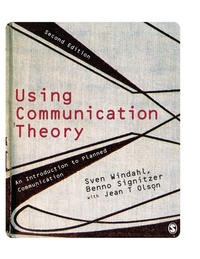
Using Communication Theory
An Introduction to Planned Communication
2nd Edition
Published on 18. November 2008
Book
Hardback
312 pages
978-1-4129-4838-8 (ISBN)
Description
"Using Communication Theory was a rarity in bridging the gap between ideas and practice. It was itself a model of good communication and in its second, revised edition, it is still a most reliable and accessible guide to the lessons that communication theory and research offer to practitioners, especially in planning for change."
- Denis McQuail, Professor Emeritus, University of Amsterdam
"Using Communication Theory has become a classic in the education of communication. It is the comprehensive and self-evident source for theories and models, forming the base for the study of professions requiring communication planning."
- Larsake Larsson, OErebro University
What does theory have to do with the practice of communication? Communication planning is used daily by thousands of people: public relations practitioners, technical writers, information campaigners, advertising professionals, organization consultants, educators, health communicators and more. Without a solid understanding of communication theory, practitioners have difficulty getting their messages heard.
The second edition of this best-selling textbook has been updated with the student firmly in mind. With new learning features that directly engage with the practical side of theory, students will:
Practice what they learn with activities and exercises.
Apply their own experiences to theory through prompts to reflection.
Consolidate their learning with highlighted definitions and lists of key terms.
Take it further with boxed excerpts from classic texts.
Showing how theories relate directly to the planning and experience of effective communication, Using Communication Theory - 2nd Edition provides indispensable insights into the practical nature of communication theory. In today's landscape of communication overload, this book remains an essential, authoritative guide for both students and practitioners.
- Denis McQuail, Professor Emeritus, University of Amsterdam
"Using Communication Theory has become a classic in the education of communication. It is the comprehensive and self-evident source for theories and models, forming the base for the study of professions requiring communication planning."
- Larsake Larsson, OErebro University
What does theory have to do with the practice of communication? Communication planning is used daily by thousands of people: public relations practitioners, technical writers, information campaigners, advertising professionals, organization consultants, educators, health communicators and more. Without a solid understanding of communication theory, practitioners have difficulty getting their messages heard.
The second edition of this best-selling textbook has been updated with the student firmly in mind. With new learning features that directly engage with the practical side of theory, students will:
Practice what they learn with activities and exercises.
Apply their own experiences to theory through prompts to reflection.
Consolidate their learning with highlighted definitions and lists of key terms.
Take it further with boxed excerpts from classic texts.
Showing how theories relate directly to the planning and experience of effective communication, Using Communication Theory - 2nd Edition provides indispensable insights into the practical nature of communication theory. In today's landscape of communication overload, this book remains an essential, authoritative guide for both students and practitioners.
Reviews / Votes
Using Communication Theory was a rarity in bridging the gap between ideas and practice. It was itself a model of good communication and in its second, revised edition, it is still a most reliable and accessible guide to the lessons that communication theory and research offer to practitioners, especially in planning for change. -- Denis McQuail Using Communication Theory has became a classic in the education of communication. It is the comprehensive and self-evident source for theories and models, forming the base for the study of professions requiring communication planning. -- Larsake LarssonMore details
Edition
2nd Revised edition
Language
English
Place of publication
Thousand Oaks
United States
Target group
College/higher education
Edition type
Revised edition
Dimensions
Height: 241 mm
Width: 196 mm
Thickness: 21 mm
Weight
783 gr
ISBN-13
978-1-4129-4838-8 (9781412948388)
Copyright in bibliographic data and cover images is held by Nielsen Book Services Limited or by the publishers or by their respective licensors: all rights reserved.
Schweitzer Classification
Other editions
Additional editions
Sven Windahl | Benno Signitzer | Jean T. Olson
Using Communication Theory
An Introduction to Planned Communication
Book
11/2008
2nd Edition
SAGE Publications Inc
€71.00
Shipment within 10-20 days
Sven Windahl | Benno Signitzer | Jean T. Olson
Using Communication Theory
An Introduction to Planned Communication
E-Book
11/2008
2nd Edition
SAGE Publications Ltd
€94.99
Available for download
Sven Windahl | Benno Signitzer | Jean T. Olson
Using Communication Theory
An Introduction to Planned Communication
E-Book
11/2008
2nd Edition
SAGE Publications Ltd
€94.99
Available for download
Previous edition

Sven Windahl | Benno Signitzer | Jean T. Olson
Using Communication Theory
An Introduction to Planned Communication
Book
11/1991
1st Edition
SAGE Publications Ltd
€69.51
Article exhausted; check for reprint
Content
Introduction
PART ONE: THE BASICS
Conceptual Tools
The Nature of Communication Planning
Not All Problems Are Communication Problems
Categorization of Basic Strategies
PART TWO: THEORETICAL APPROACHES TO COMMUNICATION PLANNING
Multi-Step Flow Approaches (1): The Two-Step Model
Multi-Step Flow Approaches (2): Diffusion of Innovations Theory
A Network Approach
Systems Theory Perspectives
Social Marketing Perspectives
Communication Campaigns: A Meeting Place for Different Approaches
PART THREE: THE ELEMENTS OF MASS COMMUNICATION THEORIES
The Sender/Communicator
The Message
The Medium
The Audience
Effects
PART ONE: THE BASICS
Conceptual Tools
The Nature of Communication Planning
Not All Problems Are Communication Problems
Categorization of Basic Strategies
PART TWO: THEORETICAL APPROACHES TO COMMUNICATION PLANNING
Multi-Step Flow Approaches (1): The Two-Step Model
Multi-Step Flow Approaches (2): Diffusion of Innovations Theory
A Network Approach
Systems Theory Perspectives
Social Marketing Perspectives
Communication Campaigns: A Meeting Place for Different Approaches
PART THREE: THE ELEMENTS OF MASS COMMUNICATION THEORIES
The Sender/Communicator
The Message
The Medium
The Audience
Effects