

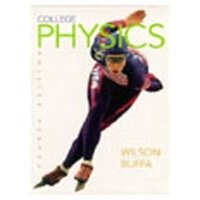
College Physics
4th Edition
Published on 13. August 1999
Book
Hardback
1003 pages
978-0-13-082444-8 (ISBN)
Description
For the college-level algebra-based physics course.
This student-friendly text presents the fundamental principles of physics in a clear and concise manner. Emphasizing conceptual understanding as that basis for mastering a variety of problem-solving tools, the text provides a wide range of relevant applications and illustrative examples. The focus is on the broad view of physics-on the crucial role it plays in the everyday world.
This student-friendly text presents the fundamental principles of physics in a clear and concise manner. Emphasizing conceptual understanding as that basis for mastering a variety of problem-solving tools, the text provides a wide range of relevant applications and illustrative examples. The focus is on the broad view of physics-on the crucial role it plays in the everyday world.
More details
Edition
4th edition
Language
English
Place of publication
United States
Publishing group
Pearson Education (US)
Target group
Professional and scholarly
Dimensions
Width: 275 mm
Thickness: 39 mm
Weight
2292 gr
ISBN-13
978-0-13-082444-8 (9780130824448)
Copyright in bibliographic data and cover images is held by Nielsen Book Services Limited or by the publishers or by their respective licensors: all rights reserved.
Schweitzer Classification
Other editions
New editions
Jerry D. Wilson | Anthony J. Buffa
College Physics
Book
08/2002
5th Edition
Pearson
€58.17
Article exhausted; check for reprint
Previous edition

Wilson
College Physics
Book
02/1990
Longman Higher Education
€139.57
Article exhausted; check different version
Persons
Jerry D. Wilson, a native of Ohio, is now Emeritus Professor of Physics and former Chair of the Division of Biological and Physical Sciences at Lander University in Greenwood, South Carolina. He received his B.S. degree from Ohio University, M.S. degree from Union College, and in 1970, a Ph.D. from Ohio University. He earned his M.S. degree while employed as a Materials Behavior Physicist by the General Electric Co.
As a doctoral graduate student, Professor Wilson held the faculty rank of Instructor and began teaching physical science courses. During this time, he co-authored a physical science text that is now in its eighth edition. In conjunction with his teaching career, Professor Wilson continued his writing and has authored or co-authored six titles. Having retired from full-time teaching, he continues to write, including The Curiosity Corner, a weekly column for local newspapers, which now can also be found on the Internet.
With several competitive books available, one may wonder why another algebra-based physics text was written. Having taught introductory physics many times, I was well aware of the needs of students and the difficulties they have in mastering the subject. I decided to write a text that presents the basic physics principles in a clear and concise manner, with illustrative examples that help resolve the major difficulty in learning physics: problem solving. Also, I wanted to write a text that is relevant so as to show students how physics applies in their everyday world - how things work and why things happen. Once the basics are learned, these follow naturally.
- Jerry Wilson
Anthony J. Buffa received his B.S. degree in physics from Rensselaer Polytechnic Institute and both his M.S. and Ph.D. degrees in physics from the University of Illinois, Urbana-Champaign. In 1970, Professor Buffa joined the faculty at California Polytechnic State University, San Luis Obispo, where he is currently Professor of Physics, and has been a research associate with the Department of Physics Radioanalytical Facility since 1980.
Professor Buffa's main interest continues to be teaching. He has taught courses at Cal Poly ranging from introductory physical science to quantum mechanics, has developed and revised many laboratory experiments, and taught elementary physics to local teachers in an NSF-sponsored workshop. Combining physics with his interests in art and architecture, Dr. Buffa develops his own artwork and sketches, which he uses to increase his effectiveness in teaching physics.
I try to teach my students the crucial role physics plays in understanding all aspects of the world around them - whether it be technology, biology, astronomy, or any other field. In that regard, I emphasize conceptual understanding before number crunching. To this end, I rely heavily on visual methods. I hope the artwork and other pedagogical features in this book assist you in achieving your own teaching goals for your students.
- Tony Buffa
As a doctoral graduate student, Professor Wilson held the faculty rank of Instructor and began teaching physical science courses. During this time, he co-authored a physical science text that is now in its eighth edition. In conjunction with his teaching career, Professor Wilson continued his writing and has authored or co-authored six titles. Having retired from full-time teaching, he continues to write, including The Curiosity Corner, a weekly column for local newspapers, which now can also be found on the Internet.
With several competitive books available, one may wonder why another algebra-based physics text was written. Having taught introductory physics many times, I was well aware of the needs of students and the difficulties they have in mastering the subject. I decided to write a text that presents the basic physics principles in a clear and concise manner, with illustrative examples that help resolve the major difficulty in learning physics: problem solving. Also, I wanted to write a text that is relevant so as to show students how physics applies in their everyday world - how things work and why things happen. Once the basics are learned, these follow naturally.
- Jerry Wilson
Anthony J. Buffa received his B.S. degree in physics from Rensselaer Polytechnic Institute and both his M.S. and Ph.D. degrees in physics from the University of Illinois, Urbana-Champaign. In 1970, Professor Buffa joined the faculty at California Polytechnic State University, San Luis Obispo, where he is currently Professor of Physics, and has been a research associate with the Department of Physics Radioanalytical Facility since 1980.
Professor Buffa's main interest continues to be teaching. He has taught courses at Cal Poly ranging from introductory physical science to quantum mechanics, has developed and revised many laboratory experiments, and taught elementary physics to local teachers in an NSF-sponsored workshop. Combining physics with his interests in art and architecture, Dr. Buffa develops his own artwork and sketches, which he uses to increase his effectiveness in teaching physics.
I try to teach my students the crucial role physics plays in understanding all aspects of the world around them - whether it be technology, biology, astronomy, or any other field. In that regard, I emphasize conceptual understanding before number crunching. To this end, I rely heavily on visual methods. I hope the artwork and other pedagogical features in this book assist you in achieving your own teaching goals for your students.
- Tony Buffa
Content
I. MECHANICS.
1. Units and Problem Solving.
2. Kinematics: Description of Motion.
3. Motion in Two Dimensions.
4. Force and Motion.
5. Work and Energy.
6. Momentum and Collisions.
7. Circular Motion and Gravitation.
8. Rotational Motion and Equilibrium.
9. Solids and Fluids.
II. THERMODYNAMICS.
10. Temperature.
11. Heat.
12. Thermodynamics.
III. OSCILLATIONS AND WAVE MOTION.
13. Vibrations and Waves.
14. Sound.
IV. ELECTRICITY AND MAGNETISM.
15. Electric Charge, Forces, and Fields.
16. Electric Potential, Energy, and Capacitance.
17. Electric Current and Resistance.
18. Basic Electric Circuits.
19. Magnetism.
20. Electromagnetic Induction.
21. AC Circuits.
V. OPTICS.
22. Geometrical Optics: Reflection and Refraction of Light.
23. Mirrors and Lenses.
24. Physical Optics: The Wave Nature of Light.
25. Optical Instruments.
VI. MODERN PHYSICS.
26. Relativity.
27. Quantum Physics.
28. Quantum Mechanics and Atomic Physics.
29. The Nucleus.
30. Nuclear Reactions and Elementary Particles.
APPENDICES.
Appendix I. Mathematical Relationships.
Appendix II. Kinetic Theory of Gases.
Appendix III. Planetary Data.
Appendix IV. Alphabetical Listing of the Chemical Elements.
Appendix V. Properties of Selected Isotopes.
Answers to Follow-up Exercises.
Answers to Odd-numbered Exercises.
Photo Credits.
Index.
1. Units and Problem Solving.
2. Kinematics: Description of Motion.
3. Motion in Two Dimensions.
4. Force and Motion.
5. Work and Energy.
6. Momentum and Collisions.
7. Circular Motion and Gravitation.
8. Rotational Motion and Equilibrium.
9. Solids and Fluids.
II. THERMODYNAMICS.
10. Temperature.
11. Heat.
12. Thermodynamics.
III. OSCILLATIONS AND WAVE MOTION.
13. Vibrations and Waves.
14. Sound.
IV. ELECTRICITY AND MAGNETISM.
15. Electric Charge, Forces, and Fields.
16. Electric Potential, Energy, and Capacitance.
17. Electric Current and Resistance.
18. Basic Electric Circuits.
19. Magnetism.
20. Electromagnetic Induction.
21. AC Circuits.
V. OPTICS.
22. Geometrical Optics: Reflection and Refraction of Light.
23. Mirrors and Lenses.
24. Physical Optics: The Wave Nature of Light.
25. Optical Instruments.
VI. MODERN PHYSICS.
26. Relativity.
27. Quantum Physics.
28. Quantum Mechanics and Atomic Physics.
29. The Nucleus.
30. Nuclear Reactions and Elementary Particles.
APPENDICES.
Appendix I. Mathematical Relationships.
Appendix II. Kinetic Theory of Gases.
Appendix III. Planetary Data.
Appendix IV. Alphabetical Listing of the Chemical Elements.
Appendix V. Properties of Selected Isotopes.
Answers to Follow-up Exercises.
Answers to Odd-numbered Exercises.
Photo Credits.
Index.