

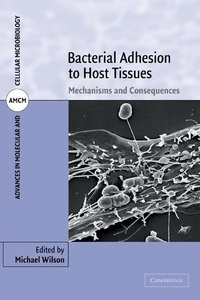
Bacterial Adhesion to Host Tissues
Mechanisms and Consequences
Published on 28. January 2010
Book
Paperback/Softback
360 pages
978-0-521-12675-5 (ISBN)
Description
This book is about the adhesion of bacteria to their human hosts. Although adhesion is essential for maintaining members of the normal microflora in/on their host, it is also the crucial first stage in any infectious disease. It is important, therefore, to fully understand the mechanisms underlying bacterial adhesion so that we may be able to develop methods of maintaining our normal (protective) microflora, and of preventing pathogenic bacteria from initiating an infectious process. These topics are increasingly important because of the growing prevalence of antibiotic-resistant bacteria and, consequently, the need to develop alternative approaches for the prevention and treatment of infectious diseases. This book describes the bacterial structures responsible for adhesion and the molecular mechanisms underlying the adhesion process. It also deals with the consequences of adhesion for both the adherent bacterium and the host cell/tissue to which it has adhered.
Reviews / Votes
Review of the hardback: '... a compact source of information on the current state of the art in a selection of bacterial-host systems.' Roy Russell, Microbiology Today Review of the hardback: 'The authors are to be commended for this timely and important endeavour ... certainly be of interest to a broad population of microbiologists and graduate students.' ASM NewsMore details
Series
Language
English
Place of publication
Cambridge
United Kingdom
Target group
Professional and scholarly
Product notice
Paperback (trade)
Illustrations
Worked examples or Exercises
Dimensions
Height: 229 mm
Width: 152 mm
Thickness: 19 mm
Weight
522 gr
ISBN-13
978-0-521-12675-5 (9780521126755)
Copyright in bibliographic data and cover images is held by Nielsen Book Services Limited or by the publishers or by their respective licensors: all rights reserved.
Schweitzer Classification
Other editions
Additional editions
E-Book
12/2004
1st Edition
Cambridge University Press
€38.49
Available for download
Book
03/2002
Cambridge University Press
€141.36
No shipping information available
Person
Content
Part I. Bacterial Adhesins and Adhesive Structures: 1. Surface protein adhesins of staphylococci T. J. Foster; 2. Mechanisms of utilisation of host signalling molecules by respiratory mucosal pathogens Mumtaz Virji; 3. Surface structures of oral streptococci involved in adhesion Roderick McNab, Pauline S. Handley and Howard F. Jenkinson; 4. Regulation and function of phase variation in Escherichia coli Ian Blomfield; 5. Regulation of capsule expression Clare Taylor and Ian Roberts; 6. Role of pili in Haemophilus influenzae adherence, colonization, and disease Janet R. Gilsdorf; Part II. Effect of Adhesion on Bacterial Structure and Function: 7. Transcriptional regulation of meningococcal gene expression upon adhesion to target cells Muhamed-Kheir Taha; 8. Induction of protein secretion by Yersinia enteroclitica through contact with eukaryotic cells Dorothy E. Pierson; 9. Functional modulation of pathogenic bacteria upon contact with host target cells Andreass U. Kresse, Frank Ebel and Carlos A. Guzman; Part III. Consequences of Bacterial Adhesion for the Host: 10. Adhesion, signal transduction and mucosal inflammation Catharina Svanborg et al.; 11. Adhesion of oral spirochaetes to host cells and its cytopathogenic consequences Richard P. Ellen; 12. Interactions between enteropathogenic Escherichia coli and epithelial cells Elizabeth L. Hartland, Gad Frankel and Stuart Knutton; 13. Host cell responses to Porphyromonas gingivalis and Actinobacillus actinomycetemcomitans Richard Lamont.