

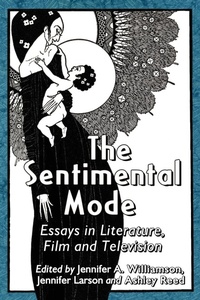
The Sentimental Mode
Essays in Literature, Film and Television
Published on 7. March 2014
Book
Paperback/Softback
224 pages
978-0-7864-7341-0 (ISBN)
Description
This collection of new essay examines how authors of the 20th and 21st centuries continue the use of sentimental forms and tropes of 19th century literature. Current literary and cultural critical consensus seems to maintain that Americans engaged in a turn-of-the-century refutation of the sentimental mode; an analysis of 20th and 21st century narratives, however, reveals an ongoing use of sentimental expression that draws upon its ability to instruct and influence readers through their emotions.
While these later narratives employ aspects of the sentimental mode, many of them also engage in a critique of the failures of the sentimental, deconstructing 19th century perspectives on race, class and gender and the ways they are promoted by sentimental ideals.
While these later narratives employ aspects of the sentimental mode, many of them also engage in a critique of the failures of the sentimental, deconstructing 19th century perspectives on race, class and gender and the ways they are promoted by sentimental ideals.
More details
Language
English
Place of publication
Jefferson, NC
United States
Target group
College/higher education
Interest Age: From 18 years
Product notice
Paperback (trade)
Illustrations
5 photos, notes, bibliographies, index
Dimensions
Height: 229 mm
Width: 152 mm
Thickness: 13 mm
Weight
371 gr
ISBN-13
978-0-7864-7341-0 (9780786473410)
Copyright in bibliographic data and cover images is held by Nielsen Book Services Limited or by the publishers or by their respective licensors: all rights reserved.
Schweitzer Classification
Persons
Jennifer A. Williamson is a gender specialist with an international development organization in the Washington, D.C., area where she lives. Jennifer Larson teaches literature, film and writing at the University of North Carolina, Chapel Hill. She lives in Chapel Hill. Ashley Reed teaches in the Department of English and Comparative Literature at the University of North Carolina, Chapel Hill. She lives in Chapel Hill.
Content
Table of Contents
Preface
Introduction: American Sentimentalism from the Nineteenth Century to the Present (Jennifer A. Williamson)
Doctor Jekyll and Mister Jim Crow: Medical Professionalism, Race and Postsentimentalism in The Marrow of Tradition (Brian Sweeney)
Sentimental Satire in Anita Loos's Gentlemen Prefer Blondes (Lisa Mendelman)
"Grimly sentimental": Pleasure, Trauma and Djuna Barnes's Ryder (Julie Taylor)
"Violent and sentimental by turns": Labor Defender, Sentimentalism and the American Literary Left?(Nathaniel Cadle)
"You give a damn about so many things I don't": Hemingway's Gendered Sentimentalism in "The Snows of Kilimanjaro" and
"The Short, Happy Life of Francis Macomber" (Michael T. Wilson)
Sentimentalism and Celebrity Culture: Mae West as Novelist (Anne-Marie Evans)
Swedenborgian Sentimentalism in John Rechy's City of Night (Maria DeGuzman)
"Shame, thas a shame": The -Anti-Sentiment of Sapphire's Push and The Kid (Erica D. Galioto)
Profitable Sentiments: HBO's The Wire and Harriet Beecher Stowe's Uncle Tom's Cabin (Kristin J. Jacobson)
Race, Religion and Sentimentalism in Gilead and Home (Elizabeth A. Ellis)
Madea's Middle Class: Sentimental Spaces in Tyler Perry's Madea's Family Reunion and Why Did I Get Married? (Ashley Reed and Jennifer Larson)
About the Contributors
Index
Preface
Introduction: American Sentimentalism from the Nineteenth Century to the Present (Jennifer A. Williamson)
Doctor Jekyll and Mister Jim Crow: Medical Professionalism, Race and Postsentimentalism in The Marrow of Tradition (Brian Sweeney)
Sentimental Satire in Anita Loos's Gentlemen Prefer Blondes (Lisa Mendelman)
"Grimly sentimental": Pleasure, Trauma and Djuna Barnes's Ryder (Julie Taylor)
"Violent and sentimental by turns": Labor Defender, Sentimentalism and the American Literary Left?(Nathaniel Cadle)
"You give a damn about so many things I don't": Hemingway's Gendered Sentimentalism in "The Snows of Kilimanjaro" and
"The Short, Happy Life of Francis Macomber" (Michael T. Wilson)
Sentimentalism and Celebrity Culture: Mae West as Novelist (Anne-Marie Evans)
Swedenborgian Sentimentalism in John Rechy's City of Night (Maria DeGuzman)
"Shame, thas a shame": The -Anti-Sentiment of Sapphire's Push and The Kid (Erica D. Galioto)
Profitable Sentiments: HBO's The Wire and Harriet Beecher Stowe's Uncle Tom's Cabin (Kristin J. Jacobson)
Race, Religion and Sentimentalism in Gilead and Home (Elizabeth A. Ellis)
Madea's Middle Class: Sentimental Spaces in Tyler Perry's Madea's Family Reunion and Why Did I Get Married? (Ashley Reed and Jennifer Larson)
About the Contributors
Index