

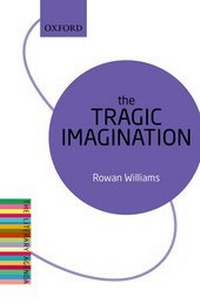
The Tragic Imagination
The Literary Agenda
Published on 29. September 2016
Book
Paperback/Softback
178 pages
978-0-19-873641-7 (ISBN)
Description
The Literary Agenda is a series of short polemical monographs about the importance of literature and of reading in the wider world and about the state of literary education inside schools and universities. The category of 'the literary' has always been contentious. What is clear, however, is how increasingly it is dismissed or is unrecognised as a way of thinking or an arena for thought. It is sceptically challenged from within, for example, by the sometimes rival claims of cultural history, contextualized explanation, or media studies. It is shaken from without by even greater pressures: by economic exigency and the severe social attitudes that can follow from it; by technological change that may leave the traditional forms of serious human communication looking merely antiquated. For just these reasons this is the right time for renewal, to start reinvigorated work into the meaning and value of literary reading.
This short but thought-provoking volume asks the question 'What is it that tragedy makes us know?'. The focus is on tragedy as a mode of representing the experience of radical suffering, pain, or loss, a mode of narrative through which we come to know certain things about ourselves and our world--about its fragility and ours. Through a mixture of historical discussion and close reading of a number of dramatic texts--from Sophocles to Sarah Kane--the book addresses a wide range of debates: how tragedy is defined, whether there is such a thing as 'absolute tragedy', various modern attempts to rework the classical heritage and the relation of comedy to tragedy. There is also a fresh discussion of whether religious--particularly Christian--discourse is inimical to the tragic, and of the necessary tension between tragic narrative and certain kinds of political as well as religious rhetoric. Rowan Williams argues that tragic drama both articulates failure and frailty and, in affirming the possibility of narrating the story of traumatic loss, refuses to settle for passivity, resignation, or despair. In this sense, it still shows the trace of its ritual and religious roots. And in challenging two-dimensional models of society, power, humanity and human knowing, it remains an intrinsic part of any fully humanist culture.
This short but thought-provoking volume asks the question 'What is it that tragedy makes us know?'. The focus is on tragedy as a mode of representing the experience of radical suffering, pain, or loss, a mode of narrative through which we come to know certain things about ourselves and our world--about its fragility and ours. Through a mixture of historical discussion and close reading of a number of dramatic texts--from Sophocles to Sarah Kane--the book addresses a wide range of debates: how tragedy is defined, whether there is such a thing as 'absolute tragedy', various modern attempts to rework the classical heritage and the relation of comedy to tragedy. There is also a fresh discussion of whether religious--particularly Christian--discourse is inimical to the tragic, and of the necessary tension between tragic narrative and certain kinds of political as well as religious rhetoric. Rowan Williams argues that tragic drama both articulates failure and frailty and, in affirming the possibility of narrating the story of traumatic loss, refuses to settle for passivity, resignation, or despair. In this sense, it still shows the trace of its ritual and religious roots. And in challenging two-dimensional models of society, power, humanity and human knowing, it remains an intrinsic part of any fully humanist culture.
Reviews / Votes
There are insights and humane wisdom to be found on every page of Williams's study ... As Williams's incisive readings suggest, great tragedies can yield crucial moral knowledge. Preparing oneself to receive this knowledge, though, likely requires an imagination formed by other liturgies. Even then, perhaps, to watch a tragedy is to undertake a risk that promises no certain insight. * Steven Knepper, Commonweal Magazine * The Tragic Imagination proves rewarding. Williams offers intelligent - and not straighforwardly theological - readings of Madea, Antigone, King Lear, Othello, and modern plays by Sarah Kane and Edward Bond. * Clare Carlisle, Times Literary Supplement *More details
Series
Language
English
Place of publication
Oxford
United Kingdom
Target group
College/higher education
Professional and scholarly
Dimensions
Height: 194 mm
Width: 144 mm
Thickness: 10 mm
Weight
184 gr
ISBN-13
978-0-19-873641-7 (9780198736417)
Copyright in bibliographic data and cover images is held by Nielsen Book Services Limited or by the publishers or by their respective licensors: all rights reserved.
Schweitzer Classification
Other editions
Additional editions
E-Book
09/2016
1st Edition
OUP eBook
€12.49
Available for download
E-Book
09/2016
1st Edition
OUP eBook
€12.49
Available for download
Person
Content
Introduction
1: Handling danger: the political roots of tragedy
2: Acknowledgement and hiddenness: what does tragedy make us know?
3: Reconciliation and its discontents: thinking with Hegel
4: Absolute tragedy and moral extremity
5: Tragedy against pessimism: religious discourse and tragic drama
6: Conclusions
1: Handling danger: the political roots of tragedy
2: Acknowledgement and hiddenness: what does tragedy make us know?
3: Reconciliation and its discontents: thinking with Hegel
4: Absolute tragedy and moral extremity
5: Tragedy against pessimism: religious discourse and tragic drama
6: Conclusions