

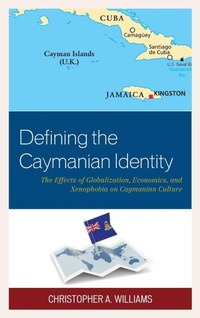
Defining the Caymanian Identity
The Effects of Globalization, Economics, and Xenophobia on Caymanian Culture
Published on 16. December 2015
Book
Hardback
274 pages
978-0-7391-9005-0 (ISBN)
Description
Defining the Caymanian Identity analyzes the factions and schisms surging throughout the multicultural, multi-ethnic, and polarized Cayman Islands to identify who or what is considered a Caymanian. In the modern world where Caymanian traditions have all but been eclipsed, or forgotten, often due to incoming, overpowering cultural sensibilities, it is a challenge to know where traditional Caymanian culture begins and modern Caymanian culture ends. With this idea in mind, Christopher A. Williams investigates the pervasive effects of globalization, multiculturalism, economics, and xenophobia on an authentic, if dying, indigenous Caymanian culture. This book introduces and expounds the provocative solution that the continued prosperity of the Cayman Islands and their so-called indigenous people may well depend on a synergistic moral link between Caymanianness and foreignness, between Caymanianness and modernity.
Reviews / Votes
This book is an insightful study of identity formation, belonging, and indigeneity in the Cayman Islands, a small British dependency in the Caribbean, which has seen high levels of in-migration in recent decades. Its strength is its 'insider' perspective, and its presentation of testimonies from a very wide range of present-day natives and residents of these islands. -- Bridget Brereton, Emerita Professor of History, University of the West Indies, St Augustine, Trinidad & Tobago The Cayman Islands, known primarily for tourism and financial services, have thus far attracted little scholarly attention, but, as Christopher Williams shows in this insightful study, they are an ideal case study for inquiries into the effects of globalization and multicultural identity formation. Employing methodologies drawn from history, cultural studies, and sociology, Christopher Williams's lucidly written work shows us the highly contested nature of Caymanian history, and communal and individual identity; just as importantly, he demonstrates that developments in the Caymans offer important lessons for the study of the entire Caribbean region. -- Natalie Zacek, University of Manchester In this impressive study, Williams provides an extensive, enriching, and persuasive account of the encounters and impact of globalization on contemporary Caymanian culture and identity. The breadth of this book's analysis, scope of enquiry, and audacity of its critique will undoubtedly reshape our understanding, and perhaps influence the direction of emerging scholarship on the Caymanian identity. -- Abou Jeng, Centre for Research, Development and Social Justice AdvocacyMore details
Language
English
Place of publication
United States
Publishing group
Bloomsbury Publishing Plc
Target group
College/higher education
Professional and scholarly
Illustrations
2 b/w photos; 2 tables; 3 graphs;
Dimensions
Height: 235 mm
Width: 157 mm
Thickness: 21 mm
Weight
600 gr
ISBN-13
978-0-7391-9005-0 (9780739190050)
Copyright in bibliographic data and cover images is held by Nielsen Book Services Limited or by the publishers or by their respective licensors: all rights reserved.
Schweitzer Classification
Other editions
Additional editions
Christopher A. Williams
Defining the Caymanian Identity
The Effects of Globalization, Economics, and Xenophobia on Caymanian Culture
E-Book
12/2015
1st Edition
Lexington Books
€48.49
Available for download
Person
Christopher Williams is assistant professor of history, English, and philosophy at the University College of the Cayman Islands.
Content
Chapter One: Becoming Native Caymanian
Chapter Two: The More Things Change: The Stubborn Decline of Racialism During Immediate Post-Emancipation
Chapter Three: And Then There was Light: The Shaping Conditions of a Distinct National-Cultural Caymanian Identity and its Subsequent Traditionalisms
Chapter Four: Bringing Traditionalist Ideas and Conceptions to Bear on a Cultural Caymanian Identity Beset by Material Hardship
Chapter Five: The Sustenance of Caymanian Identity in Geographical Displacement: A Case Study Approach
Chapter Six: Outgrowing the Surrogate Mother: Accounting for the Dramatic Shift in Caymanian Perceptions toward Jamaica and Jamaicans During the Federation Era
Chapter Seven: Proliferating Caymanianness: Accounting for the Factors that Lead to Division within Caymanian Nationality
Chapter Eight: Theory in Practice: Bringing the Legitimacy of Carnival and the Carnivalesque to Bear on Fractured Rhetorical Caymanian Culture
Conclusion: Why Can't We All Just Get Along?
Chapter Two: The More Things Change: The Stubborn Decline of Racialism During Immediate Post-Emancipation
Chapter Three: And Then There was Light: The Shaping Conditions of a Distinct National-Cultural Caymanian Identity and its Subsequent Traditionalisms
Chapter Four: Bringing Traditionalist Ideas and Conceptions to Bear on a Cultural Caymanian Identity Beset by Material Hardship
Chapter Five: The Sustenance of Caymanian Identity in Geographical Displacement: A Case Study Approach
Chapter Six: Outgrowing the Surrogate Mother: Accounting for the Dramatic Shift in Caymanian Perceptions toward Jamaica and Jamaicans During the Federation Era
Chapter Seven: Proliferating Caymanianness: Accounting for the Factors that Lead to Division within Caymanian Nationality
Chapter Eight: Theory in Practice: Bringing the Legitimacy of Carnival and the Carnivalesque to Bear on Fractured Rhetorical Caymanian Culture
Conclusion: Why Can't We All Just Get Along?