

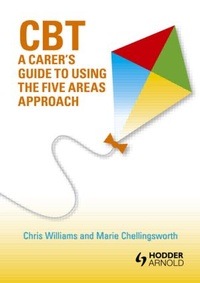
CBT: A Carer's Guide to the Five Areas Approach
1st Edition
Published on 30. June 2020
Book
Paperback/Softback
288 pages
978-1-4441-4597-7 (ISBN)
Description
Every year, in the UK two million people become carers. This book offers support to carers, for their own well-being and also to help them offer emotional support to the people they care for. It is essential reading for practitioners involved in introducing the use of cognitive behavioural therapy (CBT) to carers. It covers:
- how to support someone in 10, 20 or 60 minutes using the successful and proven five areas model
- the challenges faced by carers and how to overcome these when using guided CBT self-help
- how to offer support face-to-face, or using telephone, email or classes
- practical information and advice for all those wishing to use the five areas guided CBT interventions in their clinical practice or at home
- how to introduce, support and review progress using the Plan, Do, Review model
- a description of the wide range of five areas resources and how to use them with carers and their friends or relatives
? support scripts and linked online resources
The book is essential reading for general practitioners, psychologists, psychological well-being practitioners (PWPs), self-help support workers, carers' associations, coaches, counsellors, nurses, occupational therapists, psychiatrists and other practitioners or carers wishing to incorporate CBT as part of their practice and services.
- how to support someone in 10, 20 or 60 minutes using the successful and proven five areas model
- the challenges faced by carers and how to overcome these when using guided CBT self-help
- how to offer support face-to-face, or using telephone, email or classes
- practical information and advice for all those wishing to use the five areas guided CBT interventions in their clinical practice or at home
- how to introduce, support and review progress using the Plan, Do, Review model
- a description of the wide range of five areas resources and how to use them with carers and their friends or relatives
? support scripts and linked online resources
The book is essential reading for general practitioners, psychologists, psychological well-being practitioners (PWPs), self-help support workers, carers' associations, coaches, counsellors, nurses, occupational therapists, psychiatrists and other practitioners or carers wishing to incorporate CBT as part of their practice and services.
More details
Language
English
Place of publication
London
United Kingdom
Publishing group
Taylor & Francis Ltd
Target group
Professional and scholarly
General, Professional, and Professional Practice & Development
Illustrations
45 artworks
Dimensions
Height: 246 mm
Width: 174 mm
ISBN-13
978-1-4441-4597-7 (9781444145977)
Copyright in bibliographic data and cover images is held by Nielsen Book Services Limited or by the publishers or by their respective licensors: all rights reserved.
Schweitzer Classification
Persons
Chris Williams BSc (Hons) MBCHB MMedSc MD FRCPsych, Professor of Psychosocial Psychiatry and Honorary Consultant Psychiatrist, University of Glasgow, Glasgow, UK
Marie Chellingsworth RMN Dip Nursing BSc (Hons), MSc Course Director (IAPT) and Senior Lecturer in Psychological Therapies, Faculty of Medicine and Health Sciences, School of Nursing, Midwifery and Physiotherapy, University of Nottingham, and Senior Fellow of the Institute of Mental Health
Marie Chellingsworth RMN Dip Nursing BSc (Hons), MSc Course Director (IAPT) and Senior Lecturer in Psychological Therapies, Faculty of Medicine and Health Sciences, School of Nursing, Midwifery and Physiotherapy, University of Nottingham, and Senior Fellow of the Institute of Mental Health
Content
Section 1: Working out how things are at the moment
Chapter 1: How am I coping as a carer?
Chapter 2: Looking after yourself
Section 2: Being an effective carer
Chapter 3: How do people cope with illness?
Chapter 4: Offering effective support
Chapter 5: Changing how we communicate
Chapter 6: Helping tackle avoidance and reduced activity
Section 3: Tools we can use for ourselves or those we care for
Chapter 7: Improving sleep Chapter 7: Tackling worrying thoughts
Chapter 8. Tackling common problems
Section 5: If/When caring comes to an end
Chapter 10: Coping with bereavement
Chapter 1: How am I coping as a carer?
Chapter 2: Looking after yourself
Section 2: Being an effective carer
Chapter 3: How do people cope with illness?
Chapter 4: Offering effective support
Chapter 5: Changing how we communicate
Chapter 6: Helping tackle avoidance and reduced activity
Section 3: Tools we can use for ourselves or those we care for
Chapter 7: Improving sleep Chapter 7: Tackling worrying thoughts
Chapter 8. Tackling common problems
Section 5: If/When caring comes to an end
Chapter 10: Coping with bereavement