

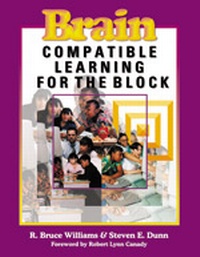
Brain-Compatible Learning for the Block
1st Edition
Published on 1. June 1999
Book
Paperback/Softback
176 pages
978-1-57517-182-1 (ISBN)
Description
Brain-Compatible Learning for the Block is the perfect guide for lesson planning. It quickly summarizes findings on brain research, demonstrates how block scheduling fits perfectly with the research results and then details curriculum, instruction, and assessments. All lessons in this handbook can be implemented immediately, and each chapter features sample lesson formats that show which multiple intelligences and standards it targets.
More details
Language
English
Place of publication
Thousand Oaks
United States
Publishing group
SAGE Publications Inc
Target group
Professional and scholarly
Weight
552 gr
ISBN-13
978-1-57517-182-1 (9781575171821)
Copyright in bibliographic data and cover images is held by Nielsen Book Services Limited or by the publishers or by their respective licensors: all rights reserved.
Schweitzer Classification
Other editions
New editions
R. Bruce Williams | Steven E. Dunn
Brain-Compatible Learning for the Block
Book
02/2008
2nd Edition
Corwin Press Inc
€38.80
Shipment within 10-20 days
Persons
Bruce Williams has more than thirty five years of international consulting experience, and is noted for his expertise in group facilitation and in planning and team building methodologies. Williams' specialty is facilitating participative, interactive group workshops whether they are focused on strategic planning and consensus building or instructional methodologies for the classroom. He has conducted successful workshops on brain compatible learning and school change facilitation, and he frequently presents in the areas of cooperative learning, higher order thinking skills, and authentic assessment. With seven years' experience in teaching English as a second language in Japan and Korea, Williams is highly experienced in working with diverse populations. Thirty-six years' experience in adult training also make him a valuable resource in facilitating school change. In addition to conference workshops in 2002 in Australia and New Zealand, he has been invited three times to present workshops for teachers in Singapore. In April of 2004, Williams was the keynote speaker for 400 principals and teachers in Beijing. Steven E. Dunn, Ed.D., currently resides in Wichita, Kansas with his twin sons. His two daughters live and work in Chicago, Illinois. Dr. Dunn joined the School of Education faculty at Newman University in the fall of 2002. Before joining the Newman faculty, Dr. Dunn worked as an independent consultant beginning in 1992. His mission as a consultant was to provide professional development in effective instructional strategies, learning theories, service learning, curriculum development, classroom management, and related educational topics. During the decade he was a full-time consultant, Dr. Dunn was an author, trainer and consultant for several educational and business agencies including USAID Mission in Bosnia-Herzegovina Education Department Brcko District; International Youth Foundation in Skopje, Macedonia; Quest International and Lion's International throughout the United States and in Iceland, Poland, and Lithuania; Skylight International Renewal Institute throughout the United States; Ted Anders Company from Atlanta, Georgia; National Children's Educational Reform Foundation in Hartford, Connecticut and Dallas, Texas; American Management Systems and Army JROTC in Hampton, Virginia; National Endowment for Financial Education (NEFE) in Denver, Colorado; and Church of God Hispanic Educational Ministries in Cleveland, Tennessee. Dr. Dunn earned his bachelor's and master's degrees from Utah State University, and his Ed.D. from Brigham Young University. He was a high school English teacher and coach at Weber High School in Ogden, Utah. He has also taught on the faculties of Bowling Green State University in Bowling Green, Ohio and Utah State University in Logan, Utah. Dr. Dunn currently teaches graduate education courses at Newman University.
Content
Foreword
Preface
Introduction: Tools of the Trade
1. Physiology and Philosophy
2. Block Scheduling: Time for Brain-Compatible Learning
3. Content and Curriculum
4. Instruction: The Art and Science of Teaching in the Block
5. Assessment: Measuring Achievement and Growth in the Block
6. Four-Phase Lesson and Unit Design
Appendix: Using Internet Resources to Energize Learning in the Block
Glossary
Bibliography
Index
Preface
Introduction: Tools of the Trade
1. Physiology and Philosophy
2. Block Scheduling: Time for Brain-Compatible Learning
3. Content and Curriculum
4. Instruction: The Art and Science of Teaching in the Block
5. Assessment: Measuring Achievement and Growth in the Block
6. Four-Phase Lesson and Unit Design
Appendix: Using Internet Resources to Energize Learning in the Block
Glossary
Bibliography
Index