

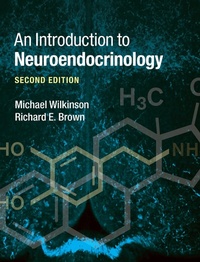
An Introduction to Neuroendocrinology
2nd Edition
Published on 4. June 2015
Book
Hardback
496 pages
978-0-521-80647-3 (ISBN)
Description
How does the brain regulate sexual behavior, or control our body weight? How do we cope with stress? Addressing these questions and many more besides, this thoroughly revised new edition reflects the significant advances that have been made in the study of neuroendocrinology over the last twenty years. The text examines the importance of the hypothalamus in regulating hormone secretion from the endocrine glands, describing novel sites of hormone release including bone, heart, skeletal muscle and liver. The role of steroid hormone, neurotransmitter and peptide receptors, and the molecular responses of target tissues, is integrated into the discussion of the neuroendocrine brain, especially through changes in gene expression. Particular attention is attached to neuropeptides, including their profound influence on behavior. Complete with new full-color figures throughout, along with review and essay questions for each chapter, this is an ideal resource for undergraduate and graduate students of neuroscience, psychology, biology and physiology.
Reviews / Votes
'This is an up to date, lucidly written and beautifully illustrated textbook which goes far beyond what one would consider 'classic neuroendocrinology' of the hypothalamic-pituitary axis. It has a comprehensive overview of the entire endocrine system including hormones secreted by fat, muscle, bone and liver and an excellent chapter on the nervous system, neurotransmitters and their receptors. There is also full coverage of hormone synthesis, transport and how they act on target cells, covering all hormones of the endocrine system. ... There are excellent chapter summaries, references and assessment questions both for students and teachers. The beautifully designed figures, all in full colour with comprehensive legends, succinctly summarise many aspects of the text or illustrate scientific data. Numerous tables provide reference summaries. It is a must for all undergraduates and graduate students interested in range of scientific disciplines.' Saffron Whitehead, St George's Hospital Medical School, University of LondonMore details
Edition
2nd Revised edition
Language
English
Place of publication
Cambridge
United Kingdom
Target group
College/higher education
Edition type
Revised edition
Product notice
sewn/stitched
Cloth over boards
Illustrations
Worked examples or Exercises; 46 Tables, black and white; 6 Halftones, unspecified; 172 Halftones, color; 7 Line drawings, color
Dimensions
Height: 260 mm
Width: 208 mm
Thickness: 31 mm
Weight
1286 gr
ISBN-13
978-0-521-80647-3 (9780521806473)
Copyright in bibliographic data and cover images is held by Nielsen Book Services Limited or by the publishers or by their respective licensors: all rights reserved.
Schweitzer Classification
Other editions
Additional editions

Michael Wilkinson | Richard E. Brown
An Introduction to Neuroendocrinology
E-Book
08/2015
2nd Edition
Cambridge University Press
€69.49
Available for download
Michael Wilkinson
Introduction to Neuroendocrinology
E-Book
06/2015
Cambridge University Press
€58.99
Available for download
Previous edition

Richard Brown
An Introduction to Neuroendocrinology
Book
01/1994
Cambridge University Press
€86.66
Article exhausted; check for reprint
Persons
Michael Wilkinson has forty years of experience in teaching neuroscience and neuroendocrinology to undergraduate and graduate students as a Professor in the Department of Obstetrics and Gynaecology and IWK Health Centre, Dalhousie University, Halifax, Canada. His research laboratory has focused on neurodevelopmental aspects of female reproduction with a specific interest in the neuroendocrine regulation of hypothalamic function, including the impact of sex hormones on sleep. Richard E. Brown is a University Research Professor in the Department of Psychology and Neuroscience at Dalhousie University. He has taught courses on hormones and behavior, measuring behavior and the neurobiology of learning and memory for more than thirty-five years. His research is on mouse models of Alzheimer's disease, Fragile X Syndrome, ADHD and other neurological disorders. He is currently examining the age-related hormonal changes in transgenic Alzheimer's mice.
Content
Preface; Acknowledgements; List of abbreviations; 1. Classification of chemical messengers; 2. The endocrine glands and their hormones; 3. The pituitary gland and its hormones; 4. The hypothalamic hormones; 5. Neurotransmitters; 6. Neurotransmitter and neuropeptide control of hypothalamic, pituitary and other hormones; 7. Regulation of hormone synthesis, storage, release, transport and deactivation; 8. Regulation of hormone levels in the bloodstream; 9. Steroid and thyroid hormone receptors; 10. Receptors for peptide hormones, neuropeptides, and neurotransmitters; 11. Neuropeptides I: classification, synthesis and colocalization with classical neurotransmitters; 12. Neuropeptides II: function; 13. Cytokines and the interaction between the neuroendocrine and immune systems; 14. Methods for the study of behavioural neuroendocrinology; 15. An overview of behavioural neuroendocrinology: present, past and future; Index.