

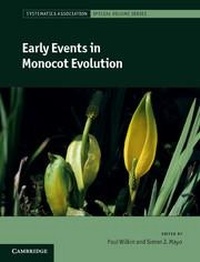
Early Events in Monocot Evolution
Published on 30. May 2013
Book
Hardback
378 pages
978-1-107-01276-9 (ISBN)
Description
Tracing the evolution of one of the most ancient major branches of flowering plants, this is a wide-ranging survey of state-of-the-art research on the early clades of the monocot phylogenetic tree. It explores a series of broad but linked themes, providing for the first time a detailed and coherent view of the taxa of the early monocot lineages, how they diversified and their importance in monocots as a whole. Featuring contributions from leaders in the field, the chapters trace the evolution of the monocots from largely aquatic ancestors. Topics covered include the rapidly advancing field of monocot fossils, aquatic adaptations in pollen and anther structure and pollination strategies and floral developmental morphology. The book also presents a new plastid sequence analysis of early monocots and a review of monocot phylogeny as a whole, placing in an evolutionary context a plant group of major ecological, economic and horticultural importance.
More details
Series
Language
English
Place of publication
Cambridge
United Kingdom
Target group
College/higher education
Professional and scholarly
Product notice
sewn/stitched
Cloth over boards
Illustrations
9 Tables, black and white; 20 Plates, color; 44 Halftones, unspecified; 7 Halftones, color; 44 Line drawings, unspecified; 13 Line drawings, color
Dimensions
Height: 249 mm
Width: 185 mm
Thickness: 23 mm
Weight
1021 gr
ISBN-13
978-1-107-01276-9 (9781107012769)
Copyright in bibliographic data and cover images is held by Nielsen Book Services Limited or by the publishers or by their respective licensors: all rights reserved.
Schweitzer Classification
Other editions
Additional editions
Paul Wilkin
Early Events in Monocot Evolution
E-Book
05/2013
Cambridge University Press
€76.49
Available for download
Paul Wilkin | Simon J. Mayo
Early Events in Monocot Evolution
E-Book
05/2013
1st Edition
Cambridge University Press
€90.49
Available for download
Persons
Paul Wilkin is Lilioid and Alismatid Monocots and Ferns Team Leader in the Herbarium, Library, Art and Archives Directorate of the Royal Botanic Gardens, Kew. His main research foci are systematics of Dioscoreales (yams and their allies) and Dracaenoids (dragon trees and mother-in-law's tongues), lilioid monocots widely used in human diet and horticulture, with taxa of high conservation and ecological importance. He is principal investigator of the eMonocot biodiversity informatics project. Simon J. Mayo is an Honorary Research Associate at the Royal Botanic Gardens, Kew. Since 1977 he has worked on the systematics and phylogeny of the Araceae, the largest plant family of the early divergent clades in monocots. He has been active in postgraduate teaching in Brazilian universities since 1988, focussing on monocot families and especially the Araceae.
Content
List of contributors; Preface; 1. A well-supported phylogenetic framework for the monocot order Alismatales reveals multiple losses of the plastid NADH dehydrogenase complex and a strong long-branch effect W. J. D. Iles, S. Y. Smith and S. W. Graham; 2. The fossil record of non-commelinid monocots S. Y. Smith; 3. Is syncarpy an ancestral condition in monocots and core eudicots? D. D. Sokoloff, M. V. Remizowa and P. J. Rudall; 4. Diversification of pollen and tapetum in early-divergent monocots C. A. Furness; 5. Macroecological correlates of global monocot species richness F. A. Jones, B. Sobkowiak, C. D. L. Orme, R. Govaerts and V. Savolainen; 6. In time and with water... the systematics of alismatid monocotyledons D. H. Les and N. P. Tippery; 7. Evolution of floral traits in relation to pollination mechanisms in Hydrocharitaceae N. Tanaka, K. Uehara and J. Murata; 8. Patterns of bract reduction in racemose inflorescences of early-divergent monocots M. V. Remizowa, D. D. Sokoloff and P. J. Rudall; 9. Recent progress in the phylogenetics and classification of the Araceae S. J. Mayo, J. Bogner and N. Cusimano; 10. The first evolutionary classification of the Araceae: A. Engler's natural system S. J. Mayo and J. Bogner; 11. Aroid floral morphogenesis in relation to phylogeny D. Barabe; 12. Some observations on the homology of the daffodil corona R. W. Scotland; 13. Anther, ovule and embryological characters in Velloziaceae in relation to the systematics of Pandanales M. G. Sajo, R. Mello-Silva and P. J. Rudall; 14. Contrasting patterns of support among plastid genes and genomes for major clades of the Monocotyledons J. I. Davis, J. R. McNeal, C. F. Barrett, M. W. Chase, J. I. Cohen, M. R. Duvall, T. J. Givnish, S. W. Graham, G. Petersen, J. C. Pires, O. Seberg, D. W. M. Stevenson and J. Leebens-Mack; Index.