

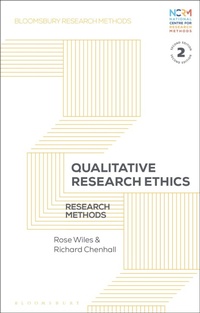
Qualitative Research Ethics
Research Methods
2nd Edition
Published on 19. February 2026
Book
Paperback/Softback
208 pages
978-1-350-42502-6 (ISBN)
Description
This book provides a concise and easily-digested overview of the field of research ethics, highlighting the key issues and everyday ethical dilemmas that researchers are likely to face in different contexts.
Covering a range of methods, the book provides clear guidance for researchers on how to identify an approach that fits with their moral and intellectual framework. It explores ethical issues relating to 'traditional' research methods as well as to new and emerging methods and approaches - particularly visual and online methods.
Chenhall builds on the success of the first edition by providing an international focus, including examples, resources and regulations from around the world and updating current and relevant regulations, guides and ethics statements from countries including Australia, New Zealand, the UK and the US. In addition, the book includes updates to current issues in qualitative research ethics, covering key contemporary topics such as ethical issues raised by emerging approaches in qualitative research, qualitative research in online environments, Indigenous methodologies and data governance for Indigenous/First Nation populations, and institutional ethics requirements. The book also contains new sections on data sharing and big data, data sovereignty and artificial intelligence.
Covering a range of methods, the book provides clear guidance for researchers on how to identify an approach that fits with their moral and intellectual framework. It explores ethical issues relating to 'traditional' research methods as well as to new and emerging methods and approaches - particularly visual and online methods.
Chenhall builds on the success of the first edition by providing an international focus, including examples, resources and regulations from around the world and updating current and relevant regulations, guides and ethics statements from countries including Australia, New Zealand, the UK and the US. In addition, the book includes updates to current issues in qualitative research ethics, covering key contemporary topics such as ethical issues raised by emerging approaches in qualitative research, qualitative research in online environments, Indigenous methodologies and data governance for Indigenous/First Nation populations, and institutional ethics requirements. The book also contains new sections on data sharing and big data, data sovereignty and artificial intelligence.
More details
Series
Edition
2nd edition
Language
English
Place of publication
London
United Kingdom
Publishing group
Bloomsbury Publishing PLC
Target group
College/higher education
Dimensions
Height: 139 mm
Width: 215 mm
Thickness: 20 mm
Weight
218 gr
ISBN-13
978-1-350-42502-6 (9781350425026)
Copyright in bibliographic data and cover images is held by Nielsen Book Services Limited or by the publishers or by their respective licensors: all rights reserved.
Schweitzer Classification
Other editions
Additional editions
E-Book
01/2026
2nd Edition
Bloomsbury Academic
€19.99
Available for download
E-Book
01/2026
2nd Edition
Bloomsbury Academic
€19.99
Available for download
Persons
Rose Wiles retired from academia in 2016 after a research career in qualitative research methods and the sociology of health at the University of Southampton, UK. She continues to take an interest in issues relating to research ethics.
Richard Chenhall is Professor of Medical Anthropology at the University of Melbourne, Australia. He has conducted research with Indigenous communities and organisations for over 20 years.
Richard Chenhall is Professor of Medical Anthropology at the University of Melbourne, Australia. He has conducted research with Indigenous communities and organisations for over 20 years.
Content
Series foreword
1. Introduction
2. Thinking Ethically: Approaches to Research Ethics
3. Informed Consent
4. Anonymity and Confidentiality
5. Risk and Safety
6. Ethical Dilemmas
7. What Next for Research Ethics?
Further Reading and Resources
1. Introduction
2. Thinking Ethically: Approaches to Research Ethics
3. Informed Consent
4. Anonymity and Confidentiality
5. Risk and Safety
6. Ethical Dilemmas
7. What Next for Research Ethics?
Further Reading and Resources