

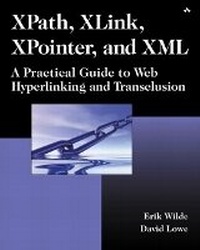
XPath, XLink, XPointer, and XML
A Practical Guide to Web Hyperlinking and Transclusion
Published on 5. August 2002
Book
Paperback/Softback
304 pages
978-0-201-70344-3 (ISBN)
Description
Although the Web has grown continuously since its introduction in the early 90's, its technical foundations have remained relatively stable. However, the introduction of XML, along with a sequence of related technologies such as XPath, XLink, and XPointer, has heralded a substantial change in the way in which content can be managed. The most significant of these changes is with respect to the hypermedia functionality which is enabled by the new technologies of XLink and XPointer, especially richer linking and navigation models. This book will describe the new hypermedia features of the XLink/XPointer-enabled Web for developers who are interested in how these new concepts can be used for Web publishing. This book will offer its readers an overview of hypertext and hypermedia possibilities as well as the possibilities of the particular hypertext technologies that are currently being developed for the Web.
More details
Language
English
Place of publication
Boston
United States
Publishing group
Pearson Education (US)
Target group
College/higher education
Dimensions
Height: 234 mm
Width: 187 mm
Thickness: 18 mm
Weight
620 gr
ISBN-13
978-0-201-70344-3 (9780201703443)
Copyright in bibliographic data and cover images is held by Nielsen Book Services Limited or by the publishers or by their respective licensors: all rights reserved.
Schweitzer Classification
Persons
Dr. Erik Wilde is lecturer and senior researcher at the Swiss Federal Institute of Technology in Zuerich, Switzerland, where his work focuses on the technical foundations of the World Wide Web and XML. He is the author of Wilde's WWW (Springer-Verlag, 1999).
Dr. David Lowe is an associate professor and the Associate Dean in the Faculty of Engineering at the University of Technology, Sydney, Australia. He has published more than 65 refereed papers, is on numerous Web conference committees, and is the information management theme editor for the Journal of Digital Information. He is coauthor of Hypermedia and the Web: An Engineering Approach (Wiley, 1999).
0201703440AB06182002
Dr. David Lowe is an associate professor and the Associate Dean in the Faculty of Engineering at the University of Technology, Sydney, Australia. He has published more than 65 refereed papers, is on numerous Web conference committees, and is the information management theme editor for the Journal of Digital Information. He is coauthor of Hypermedia and the Web: An Engineering Approach (Wiley, 1999).
0201703440AB06182002
Content
List of Figures.
List of Tables.
Foreword.
Preface.
About the Authors.
Introduction.
Information Linking.
The Web.
XML.
Conclusions.
I. FOUNDATIONS: THE WEB WE WANT.
1. Current Technology.
The Internet Environment.
Connecting to the Internet.
How the Internet Works.
The World Wide Web.
Information Linking in the WWW.
The Web's Linking Model.
A Broader View of Linking in the Web.
Shortcomings of the Web Linking Model.
Current Solutions.
Conclusions.
2. Hypermedia Concepts and Alternatives to the Web.
What Is Hypermedia?
History of Hypermedia.
Definition of Hypermedia.
Hypermedia Concepts.
Representing Information Associations.
Formalizing Linking Concepts.
Usage Scenarios: Hypermedia Support for Information Utilization.
Scenario Description.
Discussion.
Conclusions.
3. Conceptual Viewpoint.
References versus Links.
Resource Identification: URL, URI, and URN.
Persistence of Identifiers and References.
Persistence of Identifiers.
Persistence of References.
Third-Party Links and Linkbases.
Multi-Ended Links.
Generic Links.
Typed Links.
Conclusions.
II. TECHNIQUE: THE WEB'S NEW LOOK.
4. Related Technologies.
XML Core Standards.
XML Namespaces.
XML Base.
XML Inclusions.
XML External Entities.
XLink.
XML Information Set.
Extensible Hypertext Markup Language.
Extensible Stylesheet Language.
XSL Transformations.
XSL Formatting Objects.
Resource Description Framework.
Conclusions.
5. XML Path Language.
General Model.
Root Node.
Element Node.
Attribute Node.
Namespace Node.
Processing Instruction Node.
Comment Node.
Text Node.
Example.
Location Paths.
Location Steps.
Axes.
Node Tests.
Predicates.
Abbreviations.
Examples.
Expressions.
Functions.
Boolean Functions.
Number Functions.
String Functions.
Node Set Functions.
Examples.
Future Developments.
Conclusions.
6. XML Pointer Language.
General Model.
XPointer Data Model.
XPointer Data Model Examples.
XPointer Forms.
Bare Names.
Child Sequences.
Full XPointers.
Functions.
Using XPointers.
XPointer Character Escaping.
XPointers and Namespaces.
How to Compose XPointers.
Persistence.
Future Developments.
Conclusions.
7. XML Linking Language.
Embedding Links into XML Documents.
Link Types and Element Types.
XLink Link Types.
XLink Element Types.
Attributes.
Element Type Attribute.
Locator Attribute.
Semantic Attributes.
Behavior Attributes.
Traversal Attributes.
Interpretation of XLinks.
Processing.
Conformance.
Usage.
XLink Element and Attribute Declaration.
Extending XLink.
Using XLink for Linkbases.
The Future of XLink.
Conclusions.
III. APPLICATION: WEAVING THE WEB WE WANT.
8. Authoring Aspects.
Practical Issues.
Lack of Presentation Semantics.
Unclear Processing Model.
Tool Support.
Loss of Context.
Legal Issues.
More Complex Authoring.
Emerging Support for XLink and XPointer.
Support in Existing Browsers.
Parsers and Code Libraries.
Hand-Coded Support.
Development Tools.
Authoring Approaches.
Identifying Things to Link.
Controlling Linking and Ensuring Link Integrity.
Link Semantics.
Accessibility and Usability.
Conclusions.
9. Transitioning to a New Model.
Alternative Approaches.
Issues.
Alternatives.
Example Strategies.
Internal Hybrid, External No Change.
Internal Hybrid, External Hybrid.
Content Negotiation.
Migration of Content.
Building New Sites.
Conclusions.
Epilogue.
References.
Index. 0201703440T07112002
List of Tables.
Foreword.
Preface.
About the Authors.
Introduction.
Information Linking.
The Web.
XML.
Conclusions.
I. FOUNDATIONS: THE WEB WE WANT.
1. Current Technology.
The Internet Environment.
Connecting to the Internet.
How the Internet Works.
The World Wide Web.
Information Linking in the WWW.
The Web's Linking Model.
A Broader View of Linking in the Web.
Shortcomings of the Web Linking Model.
Current Solutions.
Conclusions.
2. Hypermedia Concepts and Alternatives to the Web.
What Is Hypermedia?
History of Hypermedia.
Definition of Hypermedia.
Hypermedia Concepts.
Representing Information Associations.
Formalizing Linking Concepts.
Usage Scenarios: Hypermedia Support for Information Utilization.
Scenario Description.
Discussion.
Conclusions.
3. Conceptual Viewpoint.
References versus Links.
Resource Identification: URL, URI, and URN.
Persistence of Identifiers and References.
Persistence of Identifiers.
Persistence of References.
Third-Party Links and Linkbases.
Multi-Ended Links.
Generic Links.
Typed Links.
Conclusions.
II. TECHNIQUE: THE WEB'S NEW LOOK.
4. Related Technologies.
XML Core Standards.
XML Namespaces.
XML Base.
XML Inclusions.
XML External Entities.
XLink.
XML Information Set.
Extensible Hypertext Markup Language.
Extensible Stylesheet Language.
XSL Transformations.
XSL Formatting Objects.
Resource Description Framework.
Conclusions.
5. XML Path Language.
General Model.
Root Node.
Element Node.
Attribute Node.
Namespace Node.
Processing Instruction Node.
Comment Node.
Text Node.
Example.
Location Paths.
Location Steps.
Axes.
Node Tests.
Predicates.
Abbreviations.
Examples.
Expressions.
Functions.
Boolean Functions.
Number Functions.
String Functions.
Node Set Functions.
Examples.
Future Developments.
Conclusions.
6. XML Pointer Language.
General Model.
XPointer Data Model.
XPointer Data Model Examples.
XPointer Forms.
Bare Names.
Child Sequences.
Full XPointers.
Functions.
Using XPointers.
XPointer Character Escaping.
XPointers and Namespaces.
How to Compose XPointers.
Persistence.
Future Developments.
Conclusions.
7. XML Linking Language.
Embedding Links into XML Documents.
Link Types and Element Types.
XLink Link Types.
XLink Element Types.
Attributes.
Element Type Attribute.
Locator Attribute.
Semantic Attributes.
Behavior Attributes.
Traversal Attributes.
Interpretation of XLinks.
Processing.
Conformance.
Usage.
XLink Element and Attribute Declaration.
Extending XLink.
Using XLink for Linkbases.
The Future of XLink.
Conclusions.
III. APPLICATION: WEAVING THE WEB WE WANT.
8. Authoring Aspects.
Practical Issues.
Lack of Presentation Semantics.
Unclear Processing Model.
Tool Support.
Loss of Context.
Legal Issues.
More Complex Authoring.
Emerging Support for XLink and XPointer.
Support in Existing Browsers.
Parsers and Code Libraries.
Hand-Coded Support.
Development Tools.
Authoring Approaches.
Identifying Things to Link.
Controlling Linking and Ensuring Link Integrity.
Link Semantics.
Accessibility and Usability.
Conclusions.
9. Transitioning to a New Model.
Alternative Approaches.
Issues.
Alternatives.
Example Strategies.
Internal Hybrid, External No Change.
Internal Hybrid, External Hybrid.
Content Negotiation.
Migration of Content.
Building New Sites.
Conclusions.
Epilogue.
References.
Index. 0201703440T07112002