

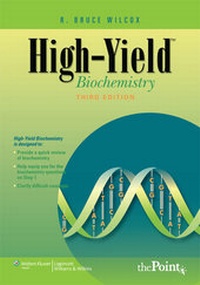
High-Yield (TM) Biochemistry
3rd Edition
Published on 17. February 2009
Book
Paperback/Softback
128 pages
978-0-7817-9924-9 (ISBN)
Description
Part of the popular High-Yield (TM) Series , this updated Third Edition provides a succinct, heavily illustrated review in outline format of medical biochemistry for students preparing for USMLE Step 1. Highlights of this edition include revised and updated chapters on gene expression and biomedical technology. More clinical correlates have been added throughout the text.
Part of the popular <b>High-Yield (TM) Series</b> , this updated Third Edition provides a succinct, heavily illustrated review in outline format of medical biochemistry for students preparing for USMLE Step 1. Highlights of this edition include revised and updated chapters on gene expression and biomedical technology. More clinical correlates have been added throughout the text.
Part of the popular <b>High-Yield (TM) Series</b> , this updated Third Edition provides a succinct, heavily illustrated review in outline format of medical biochemistry for students preparing for USMLE Step 1. Highlights of this edition include revised and updated chapters on gene expression and biomedical technology. More clinical correlates have been added throughout the text.
More details
Series
Edition
3rd edition
Language
English
Place of publication
Philadelphia
United States
Target group
College/higher education
Product notice
Paperback (trade)
Illustrations
68
Dimensions
Height: 254 mm
Width: 178 mm
Weight
249 gr
ISBN-13
978-0-7817-9924-9 (9780781799249)
Copyright in bibliographic data and cover images is held by Nielsen Book Services Limited or by the publishers or by their respective licensors: all rights reserved.
Schweitzer Classification
Other editions
Previous edition

R. Bruce Wilcox
High-yield Biochemistry
Book
05/2003
2nd Edition
Lippincott Williams and Wilkins
€36.04
Article exhausted; check for reprint
Content
Preface
Acknowledgments
<ul><li>
1 Acid-Base Relationships
</li><li>I.Acidic dissociation</li><li>II.Measures of acidity</li><li>III.Buffers</li><li>IV.Acid-base balance</li><li>V.Acid-base disorders</li><li>VI.Clinical relevance: diabetic ketoacidosis</li><li>
2 Amino Acids and Proteins
</li><li>I.Functions of proteins</li><li>II.Proteins as polypeptides</li><li>III.Protein structure</li><li>IV.Protein solubility and R-groups</li><li>V.Protein denaturation</li><li>VI.Clinical relevance</li><li>
3 Enzymes
</li><li>I.Energy relationships</li><li>II. Free-energy change</li><li>III.Enzymes as biological catalysts</li><li>IV. Michaelis-Menten equation</li><li>V. Lineweaver-Burk equation</li><li>VI.Enzyme</li><li>regulation </li><li>VII.Clinical relevance: methanol and ethylene glycol poisoning</li><li>
4 Citric Acid Cycle and Oxidative Phosphorylation
</li><li>I.Cellular energy and adenosine triphosphate</li><li>II.Citric acid cycle</li><li>III.Products of the citric acid cycle (one revolution)</li><li>IV.Synthetic function of the citric acid cycle</li><li>V.Regulation of the citric acid cycle</li><li>VI.Electron transport and oxidative phosphorylation</li><li>VII.Chemiosmotic hypothesis</li><li>VIII.Clinical relevance</li><li>
5 Carbohydrate Metabolism
</li><li>I.Carbohydrate digestion and absorption</li><li>II.Glycogen metabolism</li><li>III. Glycolysis</li><li>IV.Gluconeogenesis</li><li>V.Regulation of glycolysis and gluconeogenesis</li><li>VI.Pentose phosphate pathway</li><li>VII.Sucrose and lactose metaboli sm</li><li>VIII.Clinical relevance</li><li>
6 Lipid Metabolism
</li><li>I.Lipid function</li><li>II.Lipid digestion</li><li>III.Lipoprotein transport and metabolism</li><li>IV.Oxidation of fatty acids</li><li>V.Fatty acid synthesis</li><li>VI.Glycerolipid synthesis</li><li>VII.Sphingolipid synthesis</li><li>VIII.Cholesterol synthesis</li><li>IX. Clinical relevance</li><li>
7 Amino Acid Metabolism
</li><li>I. Functions of amino acids</li><li>II.Removal of amino acid nitrogen</li><li>III.Urea cycle and detoxification of NH+</li><li>IV.Carbon skeletons of amino acids</li><li>V.Clinical relevance: inherited (inborn) errors of amino acid metabolism</li><li>
8 Nucleotide Metabolism
</li><li>I.Nucleotide structure</li><li>II.Nucleotide function</li><li>III. Purine nucleotide synthesis</li><li>IV.Pyrimidine nucleotide synthesis</li><li>V.Deoxyribonucleotide synthesis</li><li>VI.Nucleotide degradation</li><li>VII.Clinical relevance</li><li>
9 Nutrition
</li><li>I.Energy needs</li><li>II.Macronutrients</li><li>III.Micronutrients: the fat-soluble vitamins</li><li>IV.Micronutrients: the water-soluble vitamins</li><li>V.Minerals</li><li>
10 Gene Expression
</li><li>I.Genetic information</li><li>II.DNA and RNA: nucleic acid structure</li><li>III.DNA synthesis (replication)</li><li>IV.Transcription</li><li>V.Translation (protein synthesis)</li><li>VI.Mutations</li><li>
11 Biochemical Technology
</li><li>I.Protein purification</li><li>II.Protein analysis</li><li>III.DNA analysis</li><li>IV.Cloning of recombinant DNA and protein</li><li>V.Clinical relevance</li><li>
12 Hormones
</li><li>I.Overview</li><li>II.Classification of hormones</li><li>III.Mechanisms of hormone action</li><li>IV.Hormones that regulate fuel metabolism</li><li>V.Hormones that regulate salt and water balance</li><li>VI.Hormones that regulate calcium and phosphate metabolism</li><li>VII.Hormones that regulate body size and metabolism</li><li>VIII.Hormones that regulate the male reproductive system</li><li>
abbreviated Table of Contents"</li></ul>
Acknowledgments
<ul><li>
1 Acid-Base Relationships
</li><li>I.Acidic dissociation</li><li>II.Measures of acidity</li><li>III.Buffers</li><li>IV.Acid-base balance</li><li>V.Acid-base disorders</li><li>VI.Clinical relevance: diabetic ketoacidosis</li><li>
2 Amino Acids and Proteins
</li><li>I.Functions of proteins</li><li>II.Proteins as polypeptides</li><li>III.Protein structure</li><li>IV.Protein solubility and R-groups</li><li>V.Protein denaturation</li><li>VI.Clinical relevance</li><li>
3 Enzymes
</li><li>I.Energy relationships</li><li>II. Free-energy change</li><li>III.Enzymes as biological catalysts</li><li>IV. Michaelis-Menten equation</li><li>V. Lineweaver-Burk equation</li><li>VI.Enzyme</li><li>regulation </li><li>VII.Clinical relevance: methanol and ethylene glycol poisoning</li><li>
4 Citric Acid Cycle and Oxidative Phosphorylation
</li><li>I.Cellular energy and adenosine triphosphate</li><li>II.Citric acid cycle</li><li>III.Products of the citric acid cycle (one revolution)</li><li>IV.Synthetic function of the citric acid cycle</li><li>V.Regulation of the citric acid cycle</li><li>VI.Electron transport and oxidative phosphorylation</li><li>VII.Chemiosmotic hypothesis</li><li>VIII.Clinical relevance</li><li>
5 Carbohydrate Metabolism
</li><li>I.Carbohydrate digestion and absorption</li><li>II.Glycogen metabolism</li><li>III. Glycolysis</li><li>IV.Gluconeogenesis</li><li>V.Regulation of glycolysis and gluconeogenesis</li><li>VI.Pentose phosphate pathway</li><li>VII.Sucrose and lactose metaboli sm</li><li>VIII.Clinical relevance</li><li>
6 Lipid Metabolism
</li><li>I.Lipid function</li><li>II.Lipid digestion</li><li>III.Lipoprotein transport and metabolism</li><li>IV.Oxidation of fatty acids</li><li>V.Fatty acid synthesis</li><li>VI.Glycerolipid synthesis</li><li>VII.Sphingolipid synthesis</li><li>VIII.Cholesterol synthesis</li><li>IX. Clinical relevance</li><li>
7 Amino Acid Metabolism
</li><li>I. Functions of amino acids</li><li>II.Removal of amino acid nitrogen</li><li>III.Urea cycle and detoxification of NH+</li><li>IV.Carbon skeletons of amino acids</li><li>V.Clinical relevance: inherited (inborn) errors of amino acid metabolism</li><li>
8 Nucleotide Metabolism
</li><li>I.Nucleotide structure</li><li>II.Nucleotide function</li><li>III. Purine nucleotide synthesis</li><li>IV.Pyrimidine nucleotide synthesis</li><li>V.Deoxyribonucleotide synthesis</li><li>VI.Nucleotide degradation</li><li>VII.Clinical relevance</li><li>
9 Nutrition
</li><li>I.Energy needs</li><li>II.Macronutrients</li><li>III.Micronutrients: the fat-soluble vitamins</li><li>IV.Micronutrients: the water-soluble vitamins</li><li>V.Minerals</li><li>
10 Gene Expression
</li><li>I.Genetic information</li><li>II.DNA and RNA: nucleic acid structure</li><li>III.DNA synthesis (replication)</li><li>IV.Transcription</li><li>V.Translation (protein synthesis)</li><li>VI.Mutations</li><li>
11 Biochemical Technology
</li><li>I.Protein purification</li><li>II.Protein analysis</li><li>III.DNA analysis</li><li>IV.Cloning of recombinant DNA and protein</li><li>V.Clinical relevance</li><li>
12 Hormones
</li><li>I.Overview</li><li>II.Classification of hormones</li><li>III.Mechanisms of hormone action</li><li>IV.Hormones that regulate fuel metabolism</li><li>V.Hormones that regulate salt and water balance</li><li>VI.Hormones that regulate calcium and phosphate metabolism</li><li>VII.Hormones that regulate body size and metabolism</li><li>VIII.Hormones that regulate the male reproductive system</li><li>
abbreviated Table of Contents"</li></ul>