

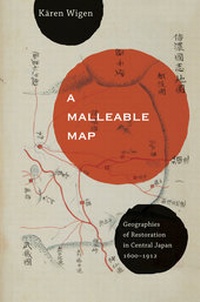
A Malleable Map
Geographies of Restoration in Central Japan, 1600-1912
1st Edition
Published on 23. April 2012
Book
Paperback/Softback
340 pages
978-0-520-27276-7 (ISBN)
Description
Karen Wigen probes regional cartography, choerography, and statecraft to redefine restoration (ishin) in modern Japanese history. As developed here, that term designates not the quick coup d'etat of 1868 but a three-centuries-long project of rehabilitating an ancient map for modern purposes. Drawing on a wide range of geographical documents from Shinano (present-day Nagano Prefecture), Wigen argues that both the founder of the Tokugawa Shogunate (1600-1868) and the reformers of the Meiji era (1868-1912) recruited the classical map to serve the cause of administrative reform. Nor were they alone; provincial men of letters played an equally critical role in bringing imperial geography back to life in the countryside. To substantiate these claims, Wigen traces the continuing career of the classical court's most important unit of governance - the province - in central Honshu.
More details
Series
Edition
First Edition
Language
English
Place of publication
Berkerley
United States
Target group
Professional and scholarly
Product notice
Paperback (trade)
Illustrations
16 color maps, 20 b-w maps, 5 line drawings, 14 tables
Dimensions
Height: 229 mm
Width: 152 mm
Thickness: 23 mm
Weight
499 gr
ISBN-13
978-0-520-27276-7 (9780520272767)
Copyright in bibliographic data and cover images is held by Nielsen Book Services Limited or by the publishers or by their respective licensors: all rights reserved.
Schweitzer Classification
Other editions
Additional editions
E-Book
05/2010
1st Edition
Naval Institute Press
€35.99
Available for download
Person
Karen Wigen is Professor of History at Stanford University. She is the author of The Making of a Japanese Periphery and co-author of The Myth of Continents: A Critique of Metageography, both from UC Press.
Content
Contents List of Illustrations Conventions Followed in the Text Acknowledgments Introduction Part One. A Province Defined 1. Shinano in the Nation 2. Shinano Up Close 3. Shinano in the World Part Two. A Province Restored 4. The Poetry of Statistics 5. Pedagogies of Place 6. A Pan-Provincial Press Conclusion Notes Bibliography Index