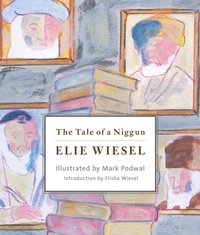
The Tale of a Niggun
Published on 17. November 2020
Book
Hardback
64 pages
978-0-8052-4363-5 (ISBN)
Description
Elie Wiesel's heartbreaking narrative poem about history, immortality, and the power of song, accompanied by magnificent full-color illustrations by award-winning artist Mark Podwal. Based on an actual event that occurred during World War II.
It is the evening before the holiday of Purim, and the Nazis have given the ghetto's leaders twenty-four hours to turn over ten Jews to be hanged to "avenge" the deaths of the ten sons of Haman, the villain of the Purim story, which celebrates the triumph of the Jews of Persia over potential genocide some 2,400 years ago. If the leaders refuse, the entire ghetto will be liquidated. Terrified, they go to the ghetto's rabbi for advice; he tells them to return the next morning. Over the course of the night the rabbi calls up the spirits of legendary rabbis from centuries past for advice on what to do, but no one can give him a satisfactory answer. The eighteenth-century mystic and founder of Hasidism, the Baal Shem Tov, tries to intercede with God by singing a niggun-a wordless, joyful melody with the power to break the chains of evil.
The next evening, when no volunteers step forward, the ghetto's residents are informed that in an hour they will all be killed. As the minutes tick by, the ghetto's rabbi teaches his assembled community the song that the Baal Shem Tov had sung the night before. And then the voices of these men, women, and children soar to the heavens.
How can the heavens not hear?
It is the evening before the holiday of Purim, and the Nazis have given the ghetto's leaders twenty-four hours to turn over ten Jews to be hanged to "avenge" the deaths of the ten sons of Haman, the villain of the Purim story, which celebrates the triumph of the Jews of Persia over potential genocide some 2,400 years ago. If the leaders refuse, the entire ghetto will be liquidated. Terrified, they go to the ghetto's rabbi for advice; he tells them to return the next morning. Over the course of the night the rabbi calls up the spirits of legendary rabbis from centuries past for advice on what to do, but no one can give him a satisfactory answer. The eighteenth-century mystic and founder of Hasidism, the Baal Shem Tov, tries to intercede with God by singing a niggun-a wordless, joyful melody with the power to break the chains of evil.
The next evening, when no volunteers step forward, the ghetto's residents are informed that in an hour they will all be killed. As the minutes tick by, the ghetto's rabbi teaches his assembled community the song that the Baal Shem Tov had sung the night before. And then the voices of these men, women, and children soar to the heavens.
How can the heavens not hear?
More details
Language
English
Place of publication
United States
Product notice
sewn/stitched
Cloth over boards
Illustrations
FULL-COLOR ILLUS. THROUGHOUT
Dimensions
Height: 190 mm
Width: 162 mm
Thickness: 14 mm
Weight
270 gr
ISBN-13
978-0-8052-4363-5 (9780805243635)
Copyright in bibliographic data and cover images is held by Nielsen Book Services Limited or by the publishers or by their respective licensors: all rights reserved.
Schweitzer Classification
Other editions
Additional editions