

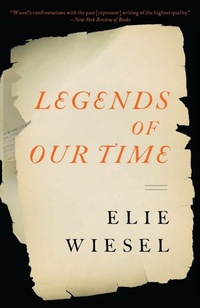
Legends of Our Time
Published on 6. April 2004
Book
Paperback/Softback
208 pages
978-0-8052-1175-7 (ISBN)
Description
As a child in Sighet, as a young boy in Auschwitz, as a teenage displaced person wandering through post-World War II Europe, as a young man at the beginning of his career as a writer, witness, and human-rights activist, Elie Wiesel had haunting, often surreal encounters with a wide range of people-sages, mystics, teachers, and dreamers. In Legends of Our Time, he shares with us some of their stories.
On a Tel Aviv bus, Wiesel encounters a notorious Auschwitz barracks chief who forces him to confront past demons that he thought had long since been laid to rest. While traveling through Spain, he is approached by a young Catholic man holding an ancient family document in an unfamiliar language; written in Hebrew in 1492 by the man's Marrano ancestor, it proudly proclaims to future generations the family's Jewish origins. Twenty years after being deported from Sighet, Wiesel returns to discover that the only thing missing are the towns 10,000 Jews and the collective memory of their ever having existed. In a Moscow synagogue in the fall on 1967, Wiesel finds a sanctuary filled with young Jews who have miraculously educated themselves in their history and ancient language, who sing Hebrew songs in the street as KGB agents take down names. And from a rabbi in Auschwitz who fasted on Yom Kippur, Wiesel leans that there is more than one way to confront a God who seems to have abandoned His people.
On a Tel Aviv bus, Wiesel encounters a notorious Auschwitz barracks chief who forces him to confront past demons that he thought had long since been laid to rest. While traveling through Spain, he is approached by a young Catholic man holding an ancient family document in an unfamiliar language; written in Hebrew in 1492 by the man's Marrano ancestor, it proudly proclaims to future generations the family's Jewish origins. Twenty years after being deported from Sighet, Wiesel returns to discover that the only thing missing are the towns 10,000 Jews and the collective memory of their ever having existed. In a Moscow synagogue in the fall on 1967, Wiesel finds a sanctuary filled with young Jews who have miraculously educated themselves in their history and ancient language, who sing Hebrew songs in the street as KGB agents take down names. And from a rabbi in Auschwitz who fasted on Yom Kippur, Wiesel leans that there is more than one way to confront a God who seems to have abandoned His people.
More details
Language
English
Place of publication
New York
United States
Product notice
Paperback (trade)
Dimensions
Height: 203 mm
Width: 132 mm
Thickness: 12 mm
Weight
266 gr
ISBN-13
978-0-8052-1175-7 (9780805211757)
Copyright in bibliographic data and cover images is held by Nielsen Book Services Limited or by the publishers or by their respective licensors: all rights reserved.
Schweitzer Classification
Other editions
Additional editions
Person
Elie Wiesel
Content
Introduction • vii
1. The Death of My Father • 1
2. My Teachers • 8
3. The Orphan • 16
4. An Evening Guest • 23
5. Yom Kippur: The Day Without Forgiveness • 31
6. An Old Acquaintance • 39
7. The Promise • 54
8. Testament of a Jew from Saragossa • 63
9. Moshe the Madman • 73
10. The Wandering Jew
11. The Last Return • 110
12. Appointment with Hate • 131
13. Moscow Revisited • 143
14. The Guilt We Share • 161
15. A Plea for the Dead • 174
1. The Death of My Father • 1
2. My Teachers • 8
3. The Orphan • 16
4. An Evening Guest • 23
5. Yom Kippur: The Day Without Forgiveness • 31
6. An Old Acquaintance • 39
7. The Promise • 54
8. Testament of a Jew from Saragossa • 63
9. Moshe the Madman • 73
10. The Wandering Jew
11. The Last Return • 110
12. Appointment with Hate • 131
13. Moscow Revisited • 143
14. The Guilt We Share • 161
15. A Plea for the Dead • 174